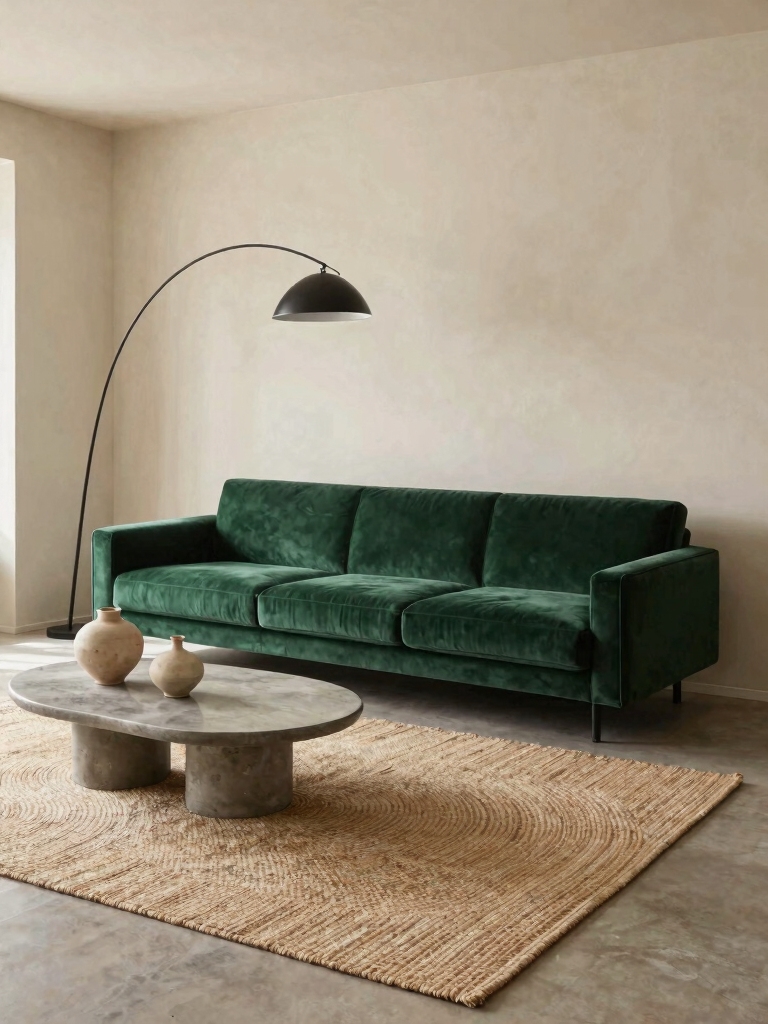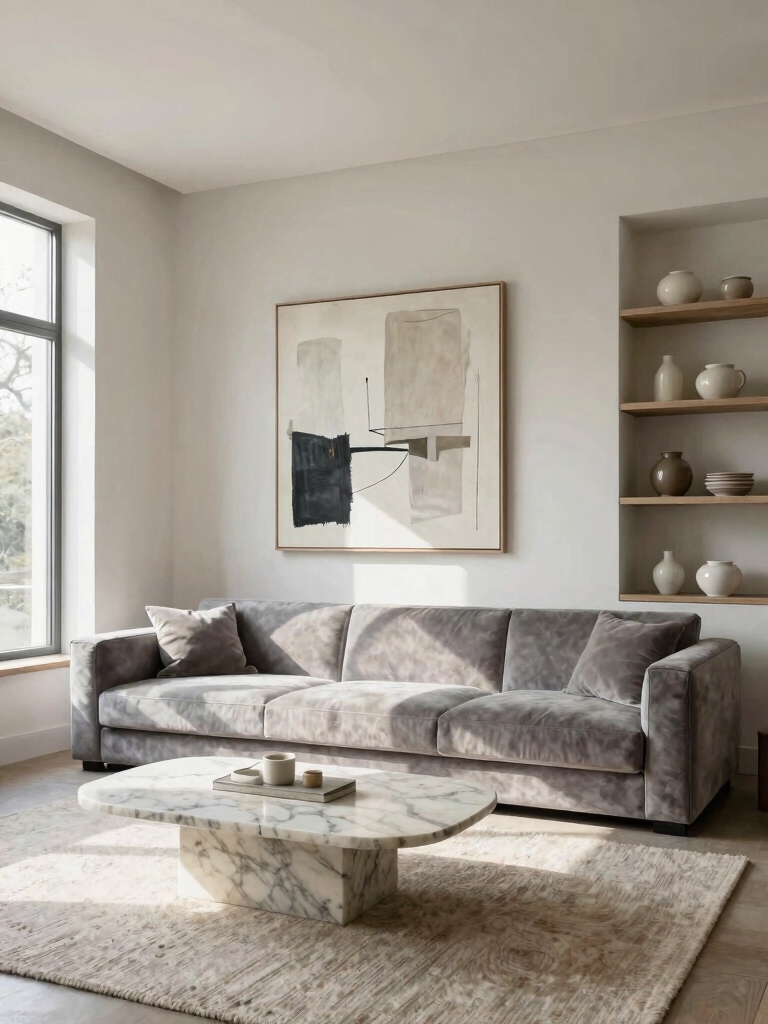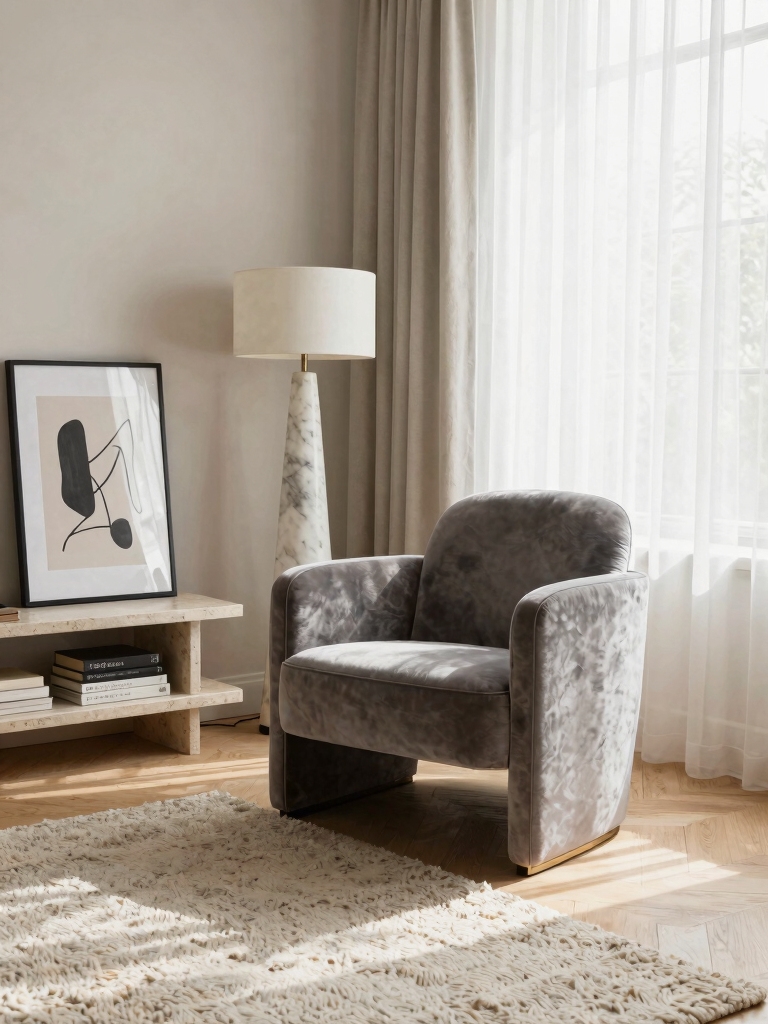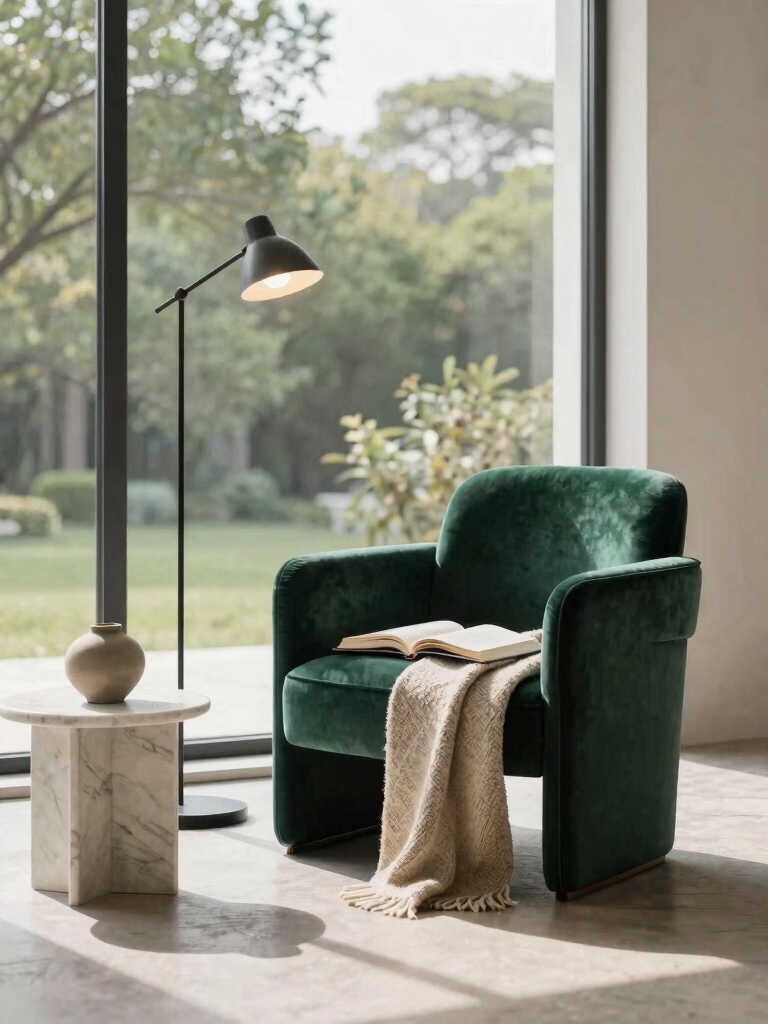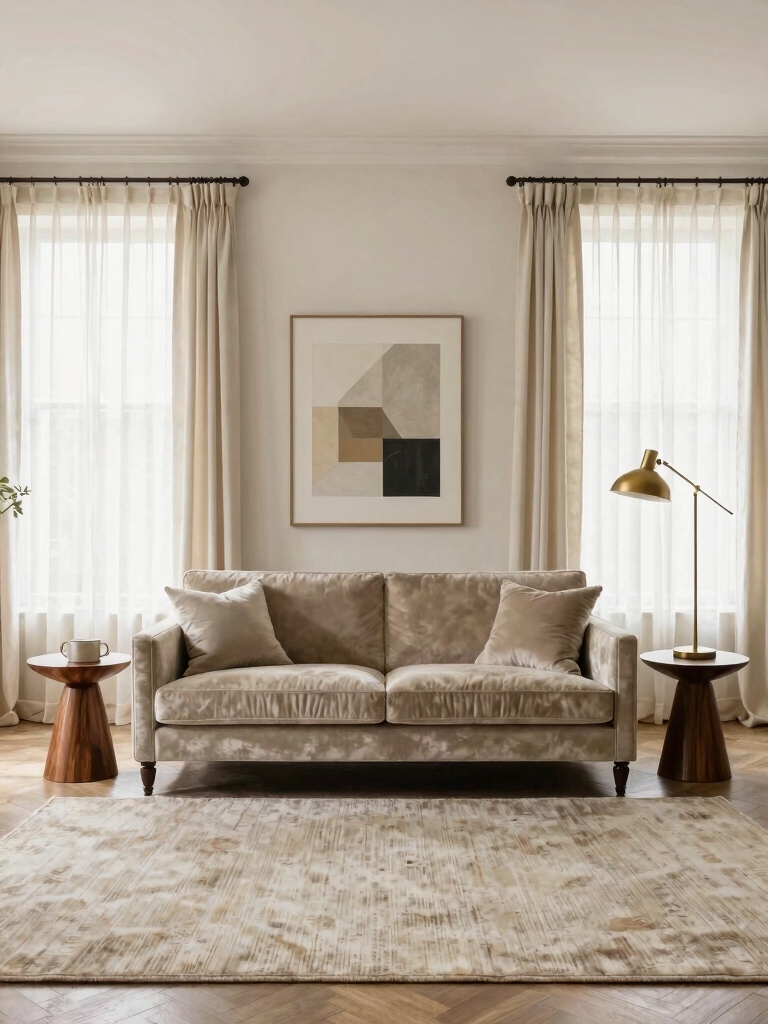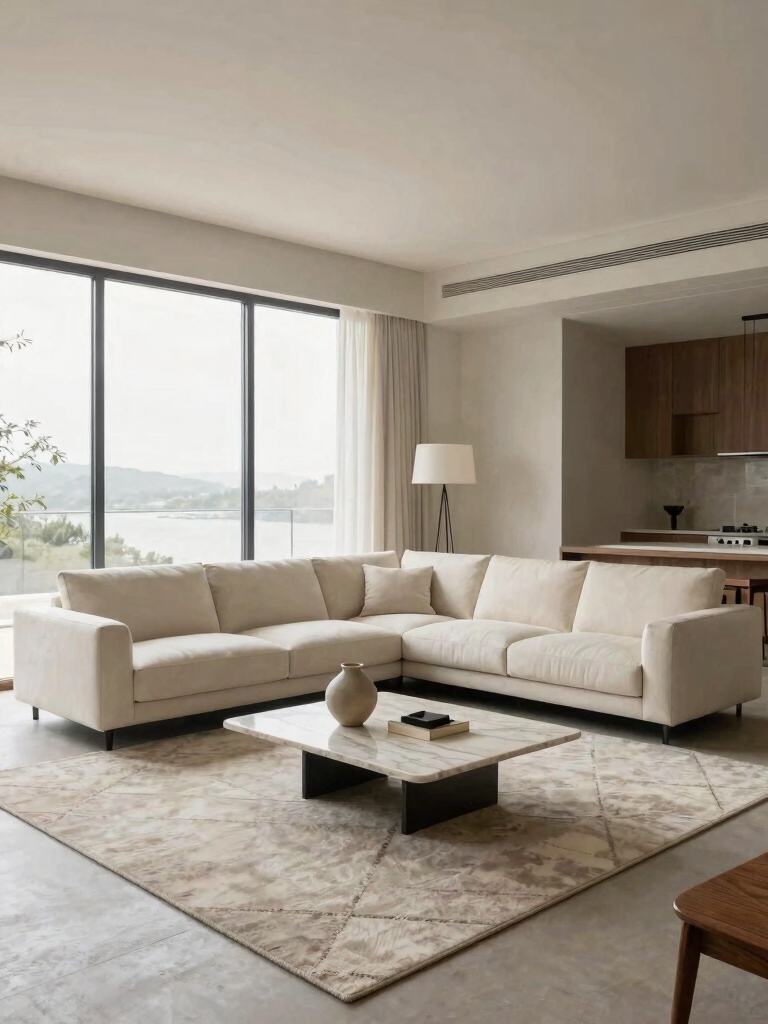
I’ve found you can double your space by creating clear zones. I float furniture away from walls for better flow and use an L-shaped sectional to define the primary sitting area. I swap bulky sofas for slim armchairs and add a multifunctional backless sofa as a divider. Anchoring everything with a large rug unifies the look. There are even more clever tricks to transform your room’s potential.
Float Your Furniture to Create Clear Zones
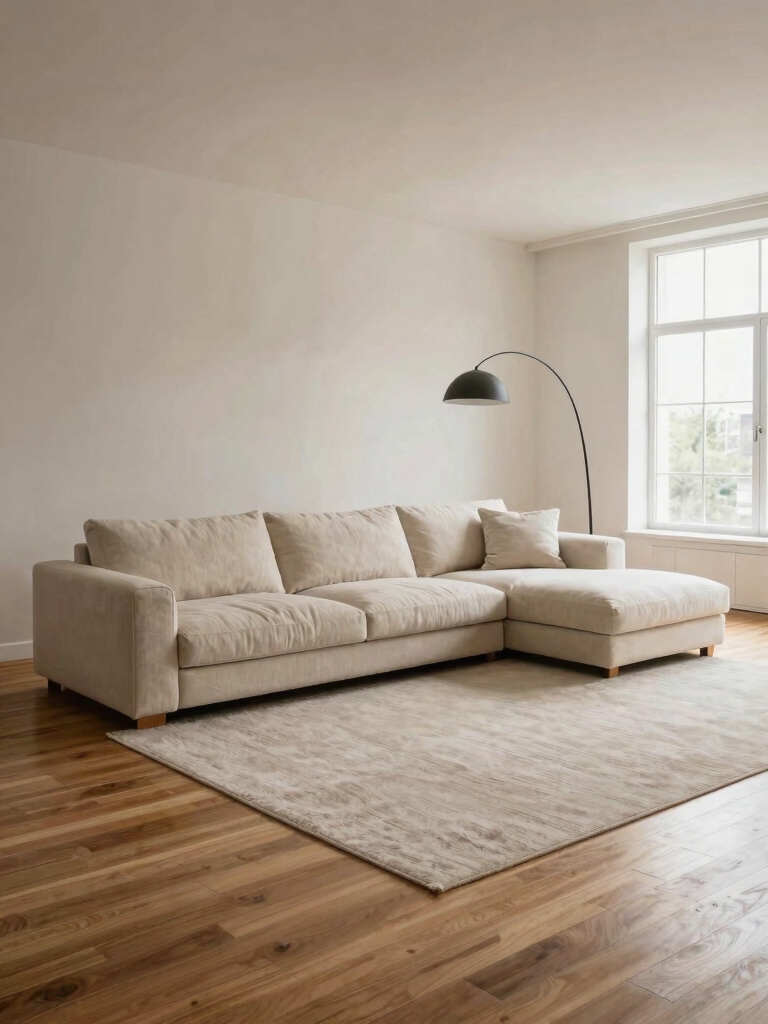
The first move I recommend for organizing your living room’s sitting area is to “float” your furniture away from the walls.
I pull my sofa and chairs inward, creating a clear conversational island. This instantly defines the zone, makes traffic flow around it, and actually makes the room feel larger.
I leave about a foot of breathing space behind each piece for balance and to access cords.
Floating furniture is one of the most effective decor tips to transform your small living room and elevate the whole space.
Start With a Space-Defining L-Shaped Sectional
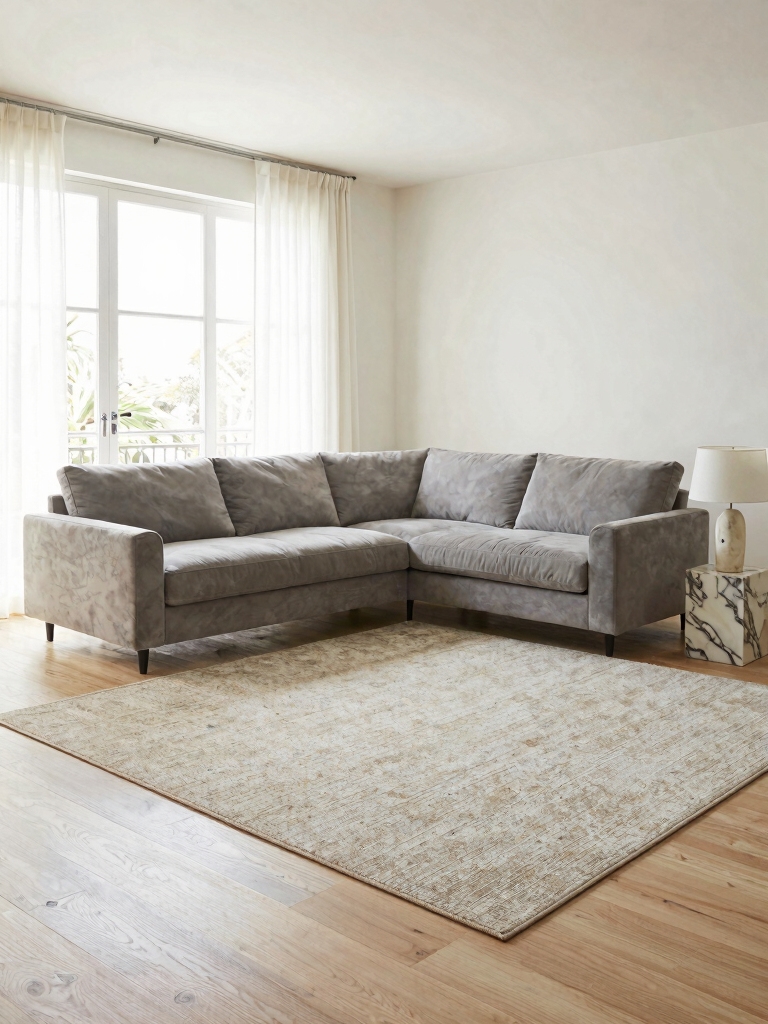
I often use an L-shaped sectional first because its long arms clearly carve out the primary seating zone.
This distinct shape also naturally creates a cozy secondary nook in the leftover corner. You can then fill that smaller area with a pair of chairs or a single reading spot.
For stylish living room tips that help compact homes feel inviting, incorporating multifunctional furniture is key to maximizing comfort and utility in small spaces.
Define The Primary Zone
Start by establishing your living room’s primary seating zone with a space-defining L-shaped sectional, which immediately anchors the room and tells you exactly where to relax.
I position the long side against a wall, letting the shorter chaise portion extend outward. This creates a distinct, welcoming corner for conversation and TV viewing, making the room’s main purpose instantly clear and functionally generous for guests.
Create A Secondary Nook
Once you’ve got your main zone settled with that L-shaped sectional, consider carving out a secondary nook by floating a second, smaller sectional, or even repurposing the chaise end of your primary one, to define a separate area for reading or quiet conversation.
Angle it toward a window or a small side table with a lamp. This creates an intimate corner that uses existing square footage without feeling crowded.
Swap a Bulky Sofa for Slim Armchairs
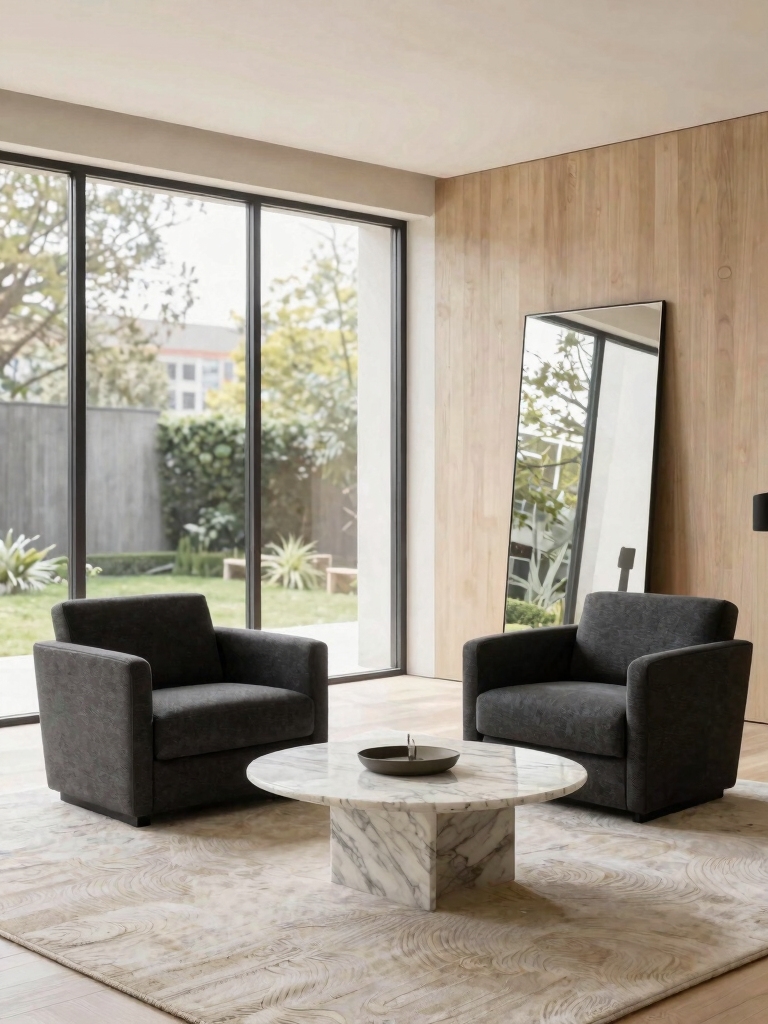
I often swap a bulky sofa for a pair of slim armchairs to free up floor space.
Look for leggy, streamlined designs with open bases that keep the room feeling light and airy.
Pairing two matching chairs creates a balanced conversation area, or I mix shapes and fabrics for a more collected look.
Using smart decor tips can further enhance the openness and functionality of your small living room.
Armchair Pairing Possibilities
If you’re looking to create a more open and airy feel, consider replacing your heavy sofa with a pair of slim armchairs.
I position them angled toward each other to foster conversation, leaving a clear walkway.
Using identical chairs in a light linen upholstery visually expands the area.
This creates distinct, flexible seating zones instead of one solid, space-consuming block.
Space-Saving Chair Designs
Moving from pairing armchairs to selecting them, slim profiles are key for space-saving designs.
I look for chairs with slender, tapered legs and narrow arms. A tight, upright back uses less floor area. This visual lightness keeps the room feeling open.
I avoid heavy skirts or wide wings, as they visually consume space. Instead, a clean-lined silhouette delivers ample seating without the bulk, freeing up valuable square footage for movement.
Use a Backless Sofa to Divide an Open Plan
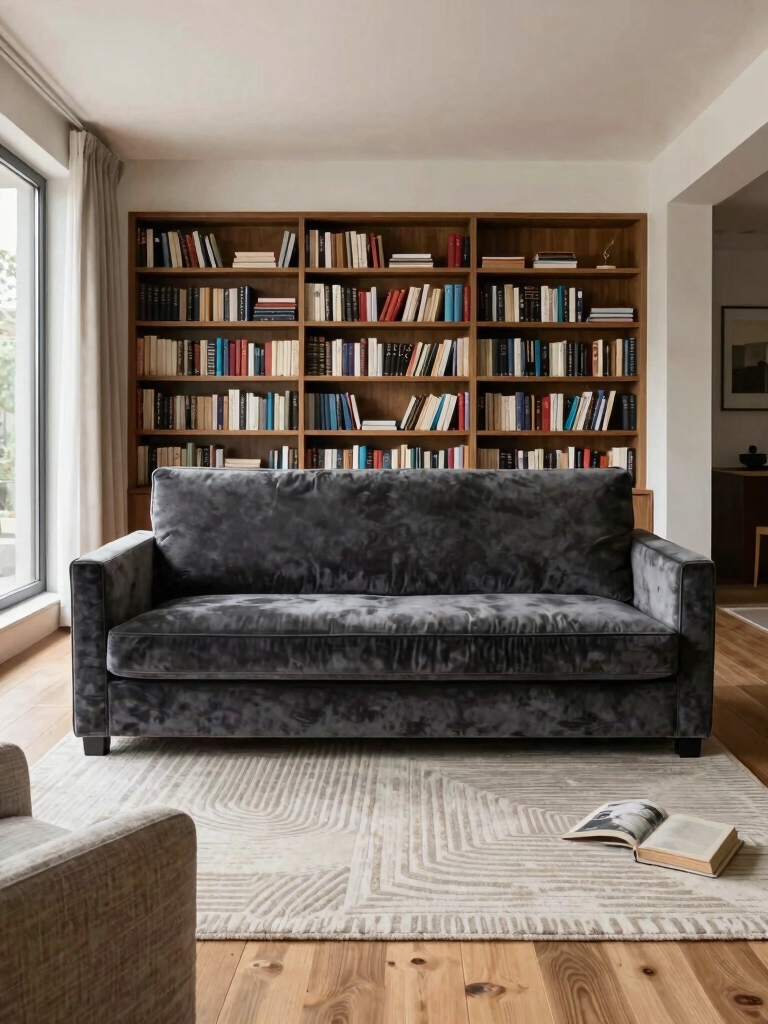
Since you’re likely working with an open floor plan, consider a backless sofa to create distinct zones without blocking light or sightlines.
I place mine to separate my living and dining areas. Its low profile defines the space while maintaining an airy feel.
I can access seating from both sides, which is perfect for conversation. It acts as a stylish room divider that doesn’t sacrifice the open concept’s benefits.
Adding multifunctional pieces like a backless sofa is one of the best small room decor ideas that make any space feel finished and well-designed.
Build In a Window Seat for Bonus Seating
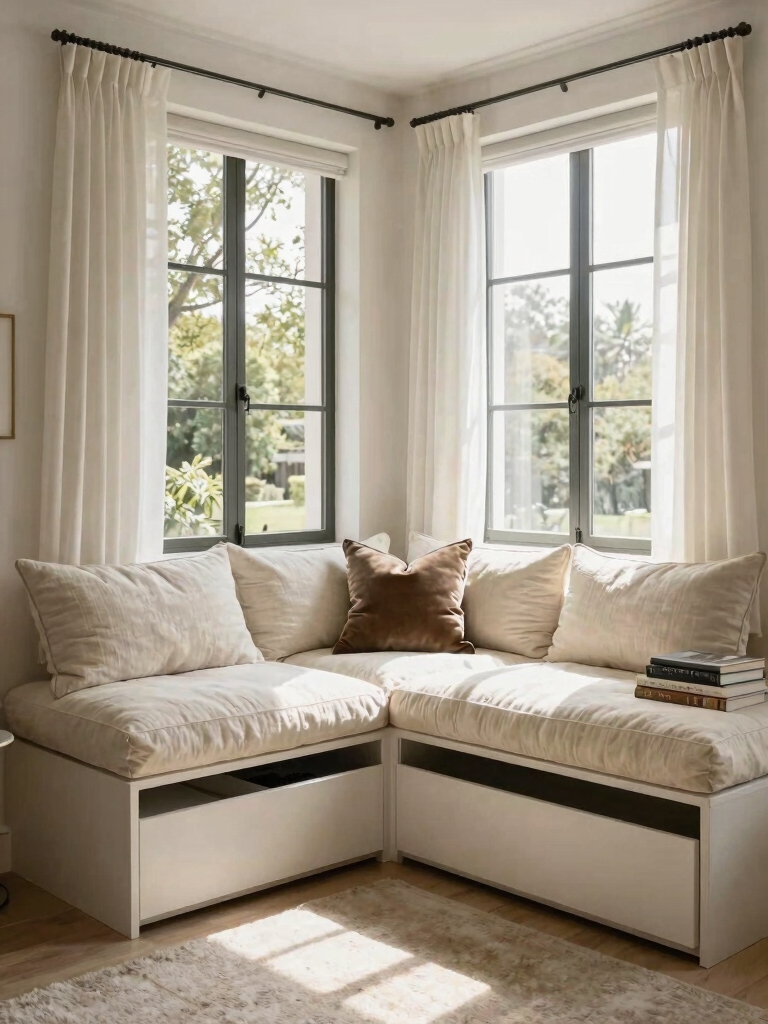
While a backless sofa works in the open plan, my built-in window seat adds dedicated, space-efficient seating by capitalizing on otherwise unused square footage.
I’ve framed it with simple cabinetry and topped it with a thick, upholstered cushion. It provides a cozy nook perfect for reading, and the deep drawers underneath cleverly hide extra blankets, adding valuable storage without consuming any additional floor space.
Incorporating cozy sitting room ideas like a window seat can create a warm, inviting atmosphere while optimizing your room’s layout for space-saving refresh.
Tuck a Loveseat Into an Unused Corner
Don’t limit your seating to walls or built-ins—sometimes the best spot is an overlooked corner.
I’ll tuck a slim loveseat there, angling it slightly to face the room. This instantly creates an intimate nook for two, making previously dead space functional.
I’ll add a small side table and a floor lamp behind it, which defines the area and provides perfect reading light without crowding the main seating area.
Utilizing small room ideas that double your space instantly helps transform your living area into a more spacious retreat.
Choose Double-Duty Furniture Like a Daybed
Although a daybed might seem like a specialty piece, I’ll often choose it for its remarkable versatility in a living room.
By day, it’s a spacious sofa with plush back cushions. By night, it easily converts into a guest bed.
I’ll style it against a wall with a few throw pillows, instantly creating a defined sitting area that serves two primary functions without needing extra floor space.
This approach is perfect for small sitting room ideas that feel anything but tiny, maximizing both comfort and functionality.
Use a Sofa Table Behind Your Couch
I tuck a sofa table behind my couch to define the living zone, keeping the seating area visually distinct from a dining space behind it.
Its slim surface holds lamps for reading light, while the shelf below maximizes storage for my media remotes and books.
This simple piece is multifunctional furniture, acting as a stylish barrier and a practical console all at once.
Adding stylish coffee table decor nearby can further enhance the aesthetic appeal of your living room while maintaining functionality.
Define Your Living Zones
An excellent first step is to clearly define your living zones, and I find a sofa table behind your couch is a fantastic tool for that job.
It physically separates your sitting area from a walkway or another zone. You instantly create a visual boundary that’s both stylish and functional.
This simple act tells the eye, “This space is for conversation and relaxation,” making your room feel larger and more intentionally organized.
Maximize Functional Storage
Having established that boundary, a sofa table turns the back of your couch into prime real estate.
I gain concealed storage for throws, plus a surface for lamps and decor that doesn’t clutter my main seating. It visually anchors the sofa, creating a layered look.
- A tray for remote controls and coasters.
- Stacked books or decorative boxes for quick tidying.
- A tall lamp to cast ambient light over the whole zone.
Choose Multifunctional Furniture
Since a sofa table often hides behind my couch, you might underestimate how much function it adds to the room.
I treat it as an extra surface for lamps, decor, or drinks without cluttering my coffee table. Its slim profile tucks neatly away, but it provides essential hidden storage in drawers or shelves.
It fundamentally gives me a second console, effectively doubling my usable space.
Create a Nook With Two Chairs and a Table
If you want to carve out a dedicated spot for quiet conversation or reading, consider setting up a simple nook with just two comfortable chairs and a small table.
I place them perpendicular in a corner, creating an instant, intimate zone.
Key elements are:
- Chairs with personality—like wingbacks for enveloping comfort.
- A slim side table for holding a lamp and a book.
- Close placement to foster easy talk without shouting.
Adding soft textures and warm lighting can enhance the cozy elegance of your sitting area.
Anchor Your Space With a Large Area Rug
To define your main seating area, start by laying down a large rug.
I choose one that’s big enough to fit under all my front furniture legs; that visually grounds the space and makes it feel cohesive. Its texture adds warmth, while its pattern or color becomes the foundation for my entire palette.
This single act pulls everything together, creating an instant, defined zone for conversation and relaxation. Creating a cozy sitting room is all about thoughtful design choices that make your space inviting and comfortable, as inspired by cosy sitting room ideas.
Pick Nesting Tables That Tuck Away
Moving from anchoring the room with a rug, I consider how to layer in flexible surfaces.
My favorite solution is a set of nesting tables. They provide instant, tiered surfaces for drinks and remotes but tuck completely under the largest one when not needed.
I look for:
- A slim profile for easy storage.
- Durable materials like sealed wood.
- A cohesive finish that blends with my seating.
Select a Storage Ottoman as a Coffee Table
Next, a storage ottoman works double duty to hold extra blankets and act as a versatile coffee table.
I opt for one with a firm, flat top that can support a tray. Its upholstered surface adds softness, while the hidden compartment stashes items I need nearby but out of sight.
I can easily move it, and its neutral fabric helps it blend with my other furnishings, maximizing both function and space.
Install Floating Shelves as Side Tables
While I wanted side tables but needed to save floor space, I installed floating shelves beside my sofa instead.
I measured carefully for a stable wall mount that sits at armrest height. Now my essentials are organized vertically:
- A slim ceramic lamp for reading light.
- A small woven tray for my remote and phone.
- A low succulent for a touch of greenery.
Conclusion
So you see, doubling your living room space isn’t magic—it’s a matter of smart, visual tricks. Float your furniture, build in storage, and define zones with purpose. These pragmatic choices layer together seamlessly, like a well-folded map, guiding you to a home that feels both expansive and intimately yours. Now, go claim your extra square footage.