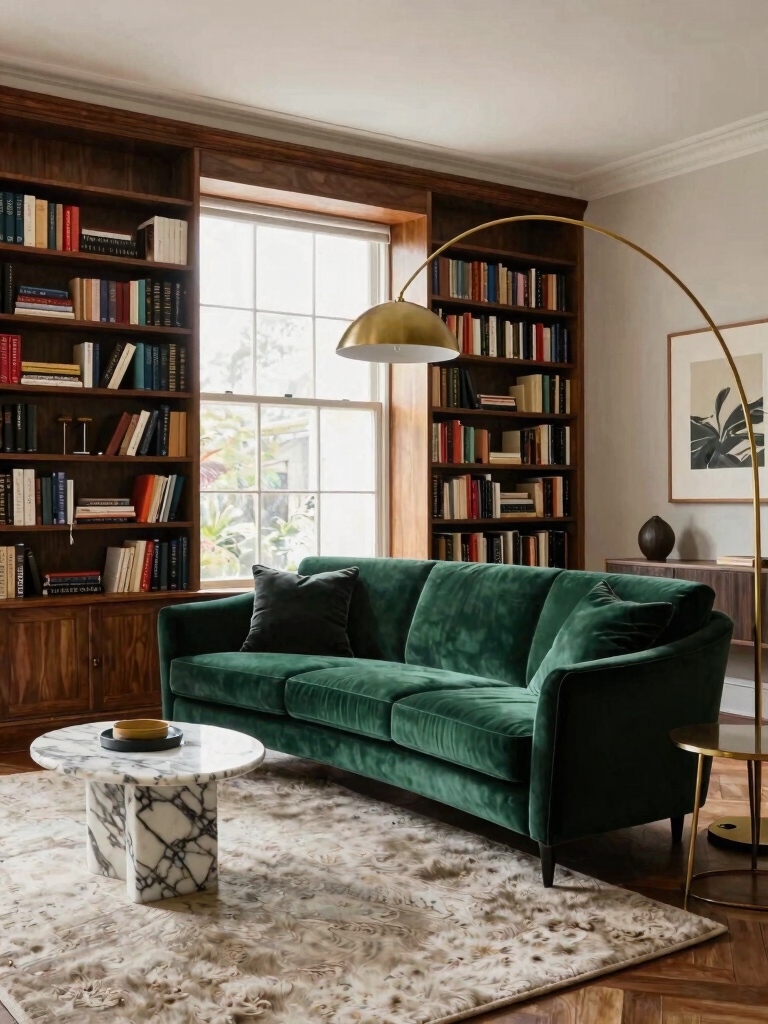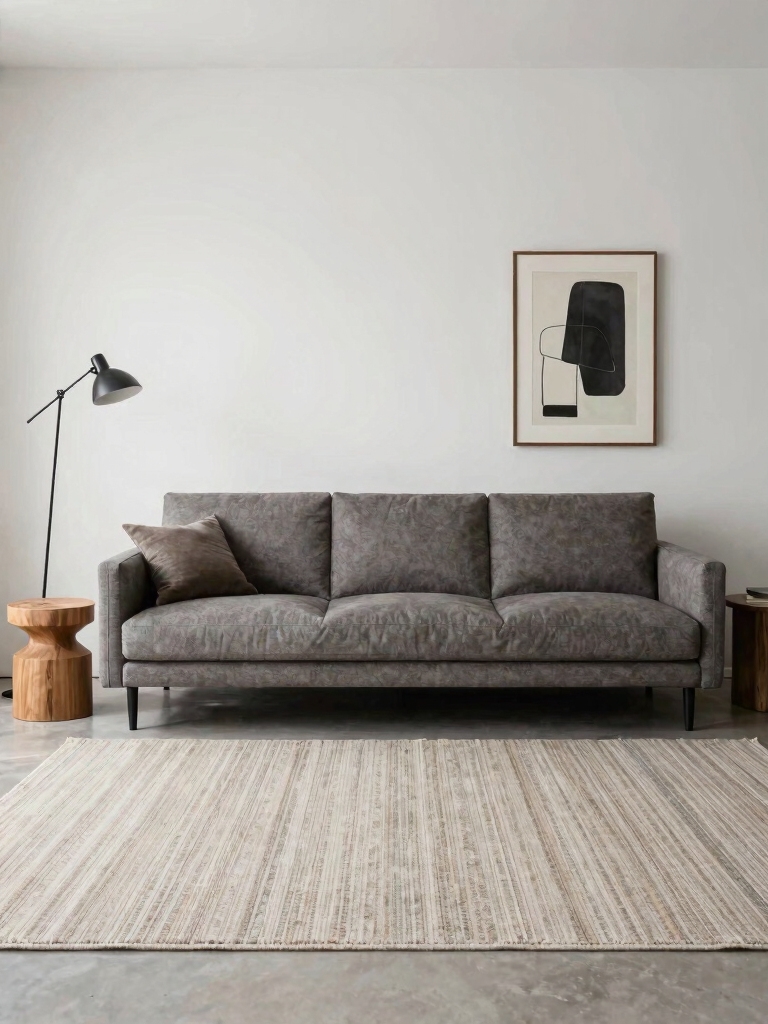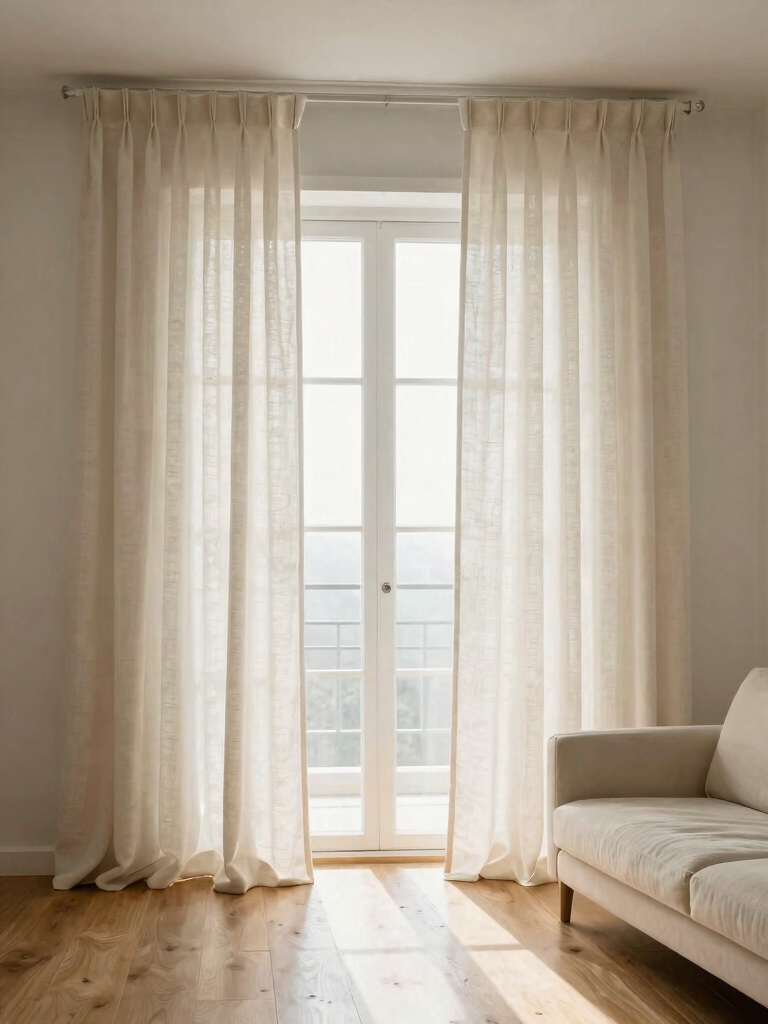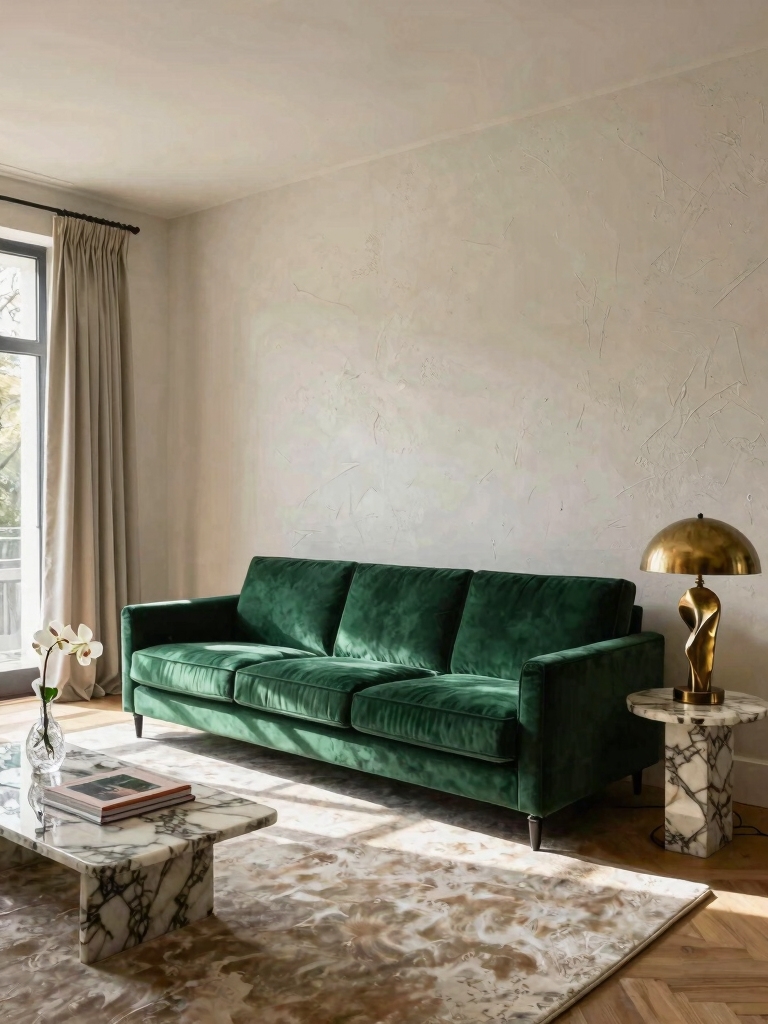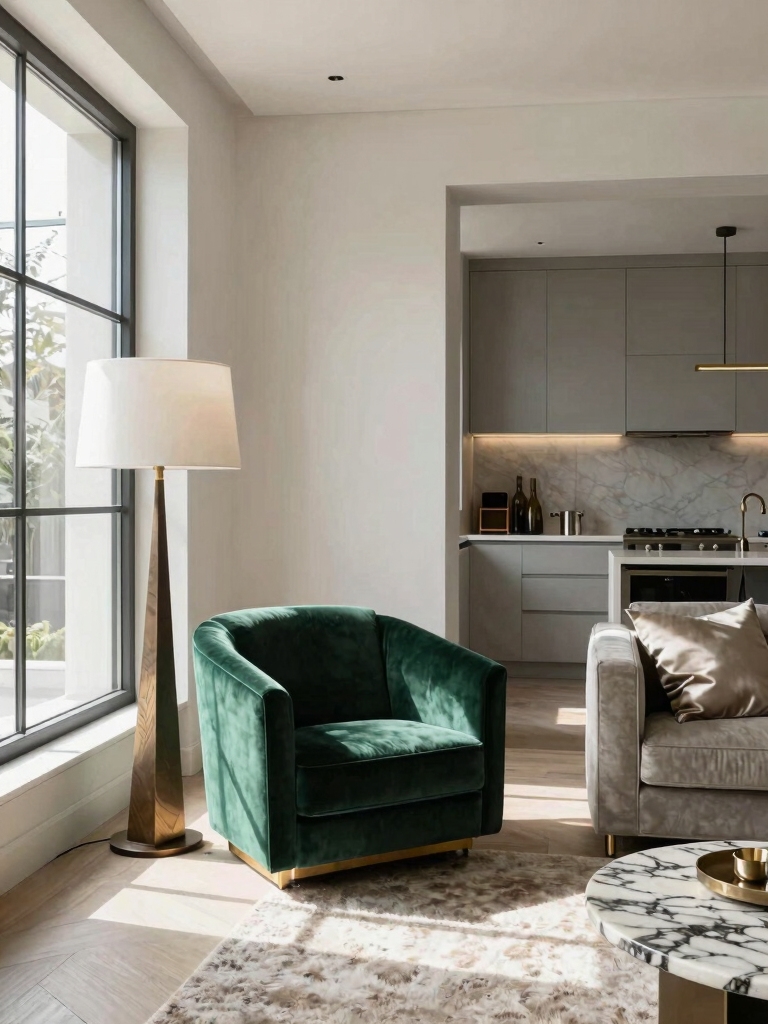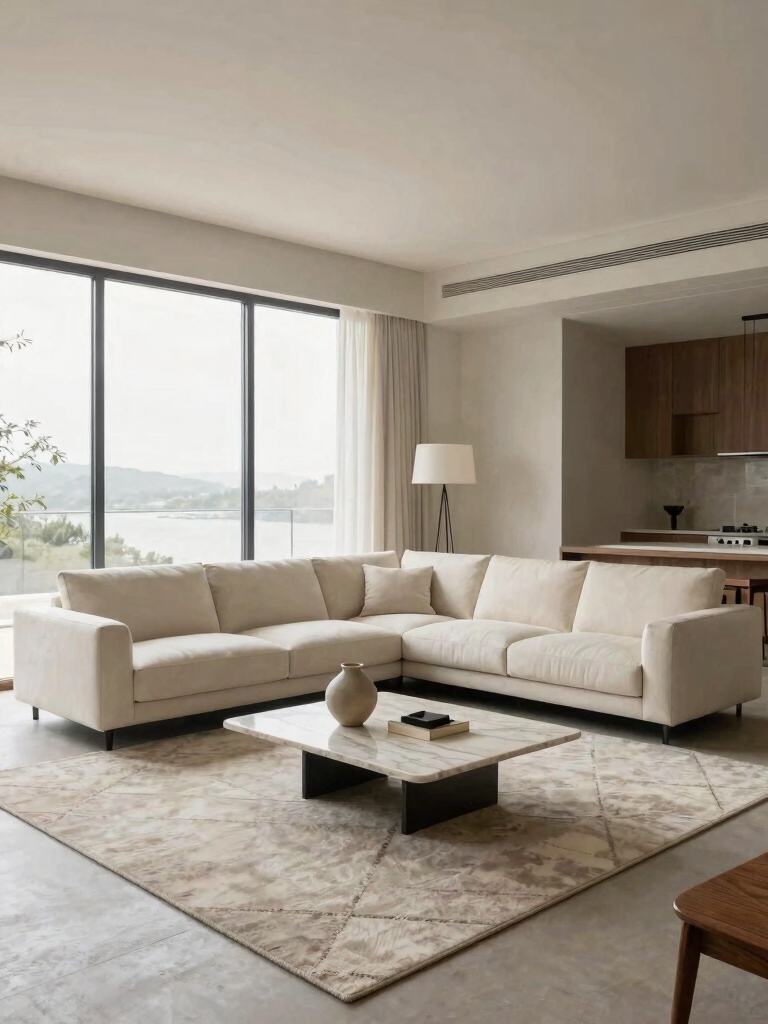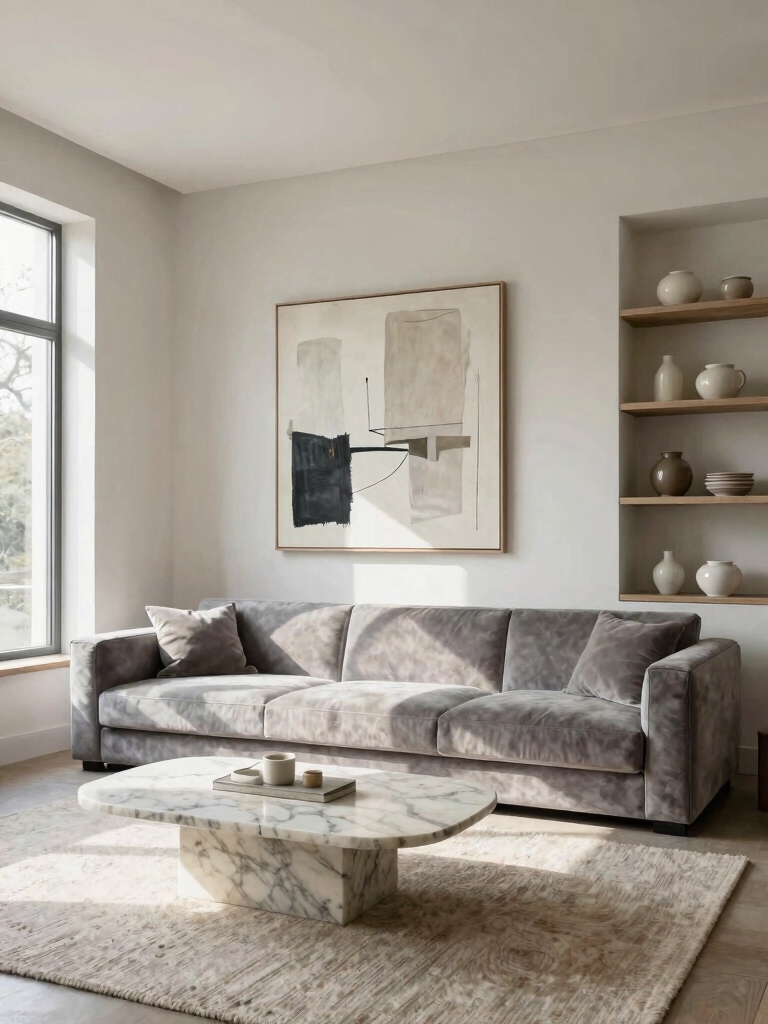
First, I plan a clear traffic path and choose a light, neutral palette to expand the space. I’ll pick a slender sofa, leggy furniture, and pieces that do double duty, like an ottoman with storage. A large rug defines the zone, wall-mounted storage keeps floors clear, and strategic mirrors amplify light. I ruthlessly declutter, making floor space my top asset. My next steps tackle your biggest layout hurdles directly.
Start by Defining Your Small Space Challenges
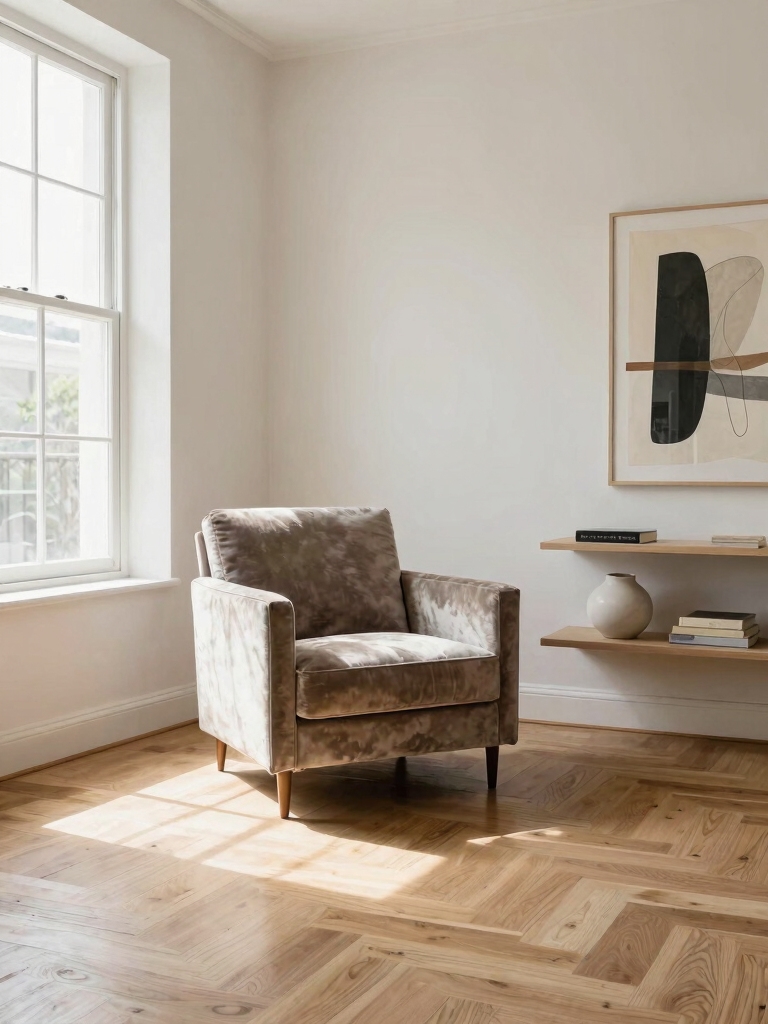
Before you can transform your small sitting room, you need to identify its specific hurdles, since what’s challenging in one space mightn’t be in another.
I grab my tape measure and note every dimension, corner, and architectural quirk.
Is there a lack of natural light? Awkward bulkheads? Limited wall space?
Defining these constraints first gives me a clear, honest blueprint to creatively solve them.
Incorporating stylish living room tips can further enhance the cozy feel of your compact space.
Choose a Light and Airy Color Palette
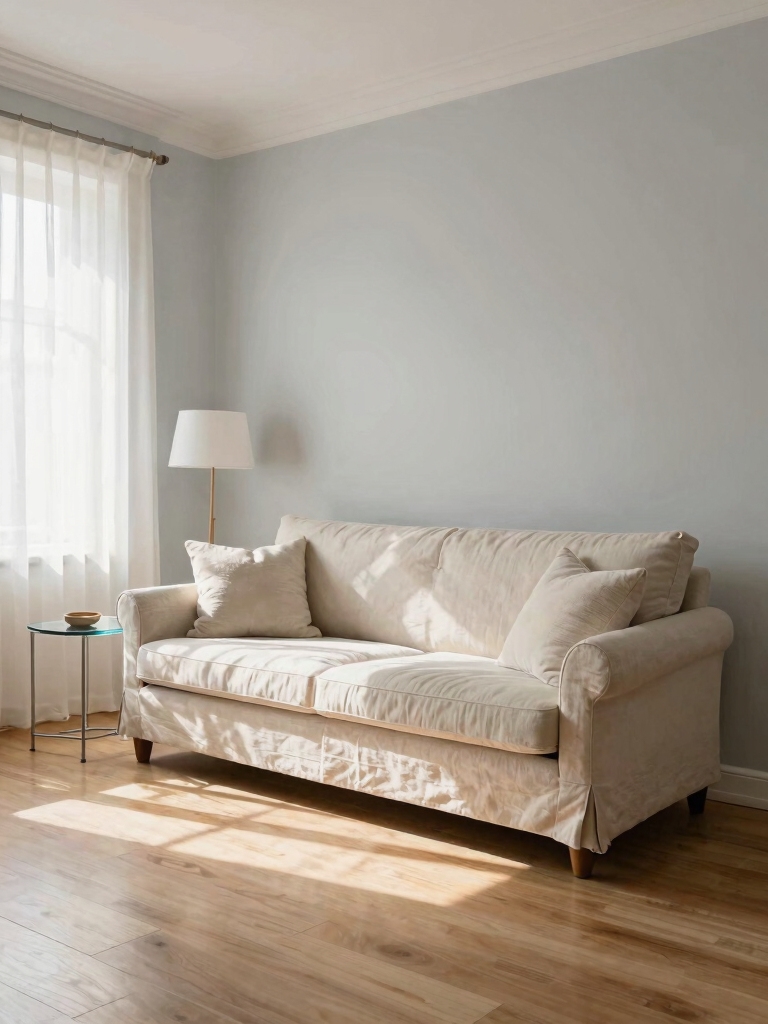
I’m painting my small sitting room’s walls in crisp white and creamy neutrals to make the space feel instantly larger and brighter.
I’ll weave in pops of color through my throw pillows and a single piece of art to create personality without visual clutter.
This strategic use of a light base with vibrant accents gives my room an airy feel while still reflecting my style.
Incorporating room ideas for small rooms that emphasize openness can further enhance the spaciousness of your sitting area.
Embrace White And Neutrals
While it might feel counterintuitive, painting your small sitting room in white or neutral tones is one of the most effective tricks I know to make it feel instantly larger and more serene.
These hues reflect light beautifully, blur boundaries, and create a seamless backdrop for your decor.
- Opt for a true “white-white” for maximum brightness.
- Use soft beige or grey for subtle warmth.
- Paint trim the same color as walls.
- Extend the palette onto furniture for cohesion.
Add Pops Of Color Wisely
Having established a light, neutral base, we can now think about introducing color.
I keep my palette light and airy for a spacious feel, using soft blues or pale greens.
I add pops of color through accessories like a single vibrant cushion or a small, colorful artwork.
This strategy injects personality without overwhelming the space.
It’s about strategic accents that energize the room while preserving its open, serene atmosphere.
Plan a Clear Traffic Path First
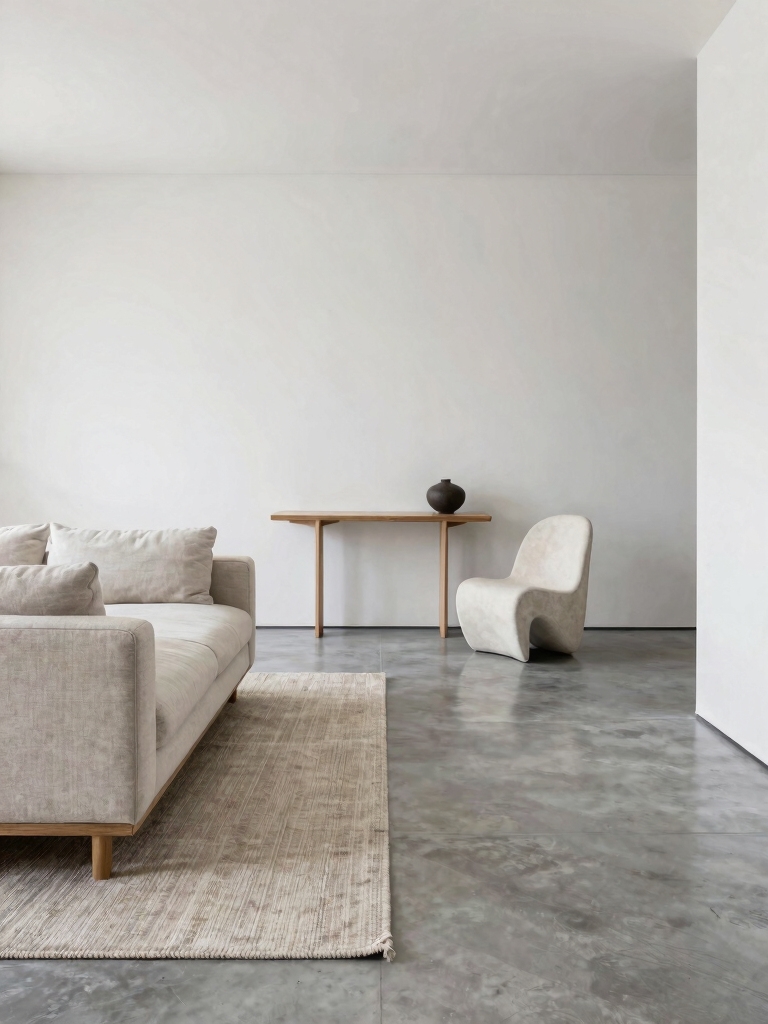
Before you place a single piece of furniture, I suggest you stand in the doorway and trace the natural routes you’ll walk daily. This simple act of observation is your most crucial planning step, as it defines the clear, unobstructed pathways that will make your compact room feel spacious and functional.
- Reserve a primary lane from the main entrance to another doorway.
- Protect the path to a window or balcony door.
- Safeguard access to key items like bookshelves or media consoles.
- Always leave at least 24 inches for comfortable walking clearance.
Incorporating charming decor tips can further enhance the sense of space and elevate the overall ambiance of your small living room.
Select Your Sofa for Style and Scale
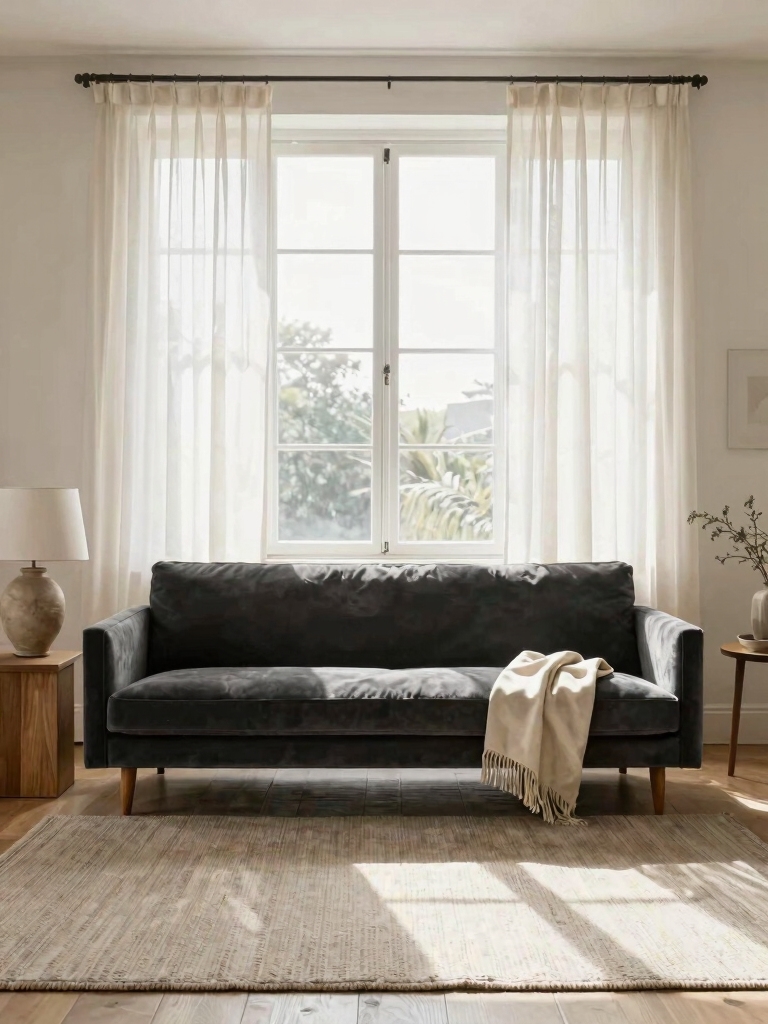
After planning your clear traffic lanes, you can now anchor the room with the right sofa.
I look for a streamlined profile and raised legs to create an airy feel. Measuring my wall space is non-negotiable—I leave ample walking room on all sides.
A classic, neutral fabric offers longevity, while a bold color or texture can become a brilliant focal point without overwhelming the space.
Incorporating elements from cosy sitting room ideas can enhance the comfort and appeal of your small space.
Invest in Furniture That Does Double Duty
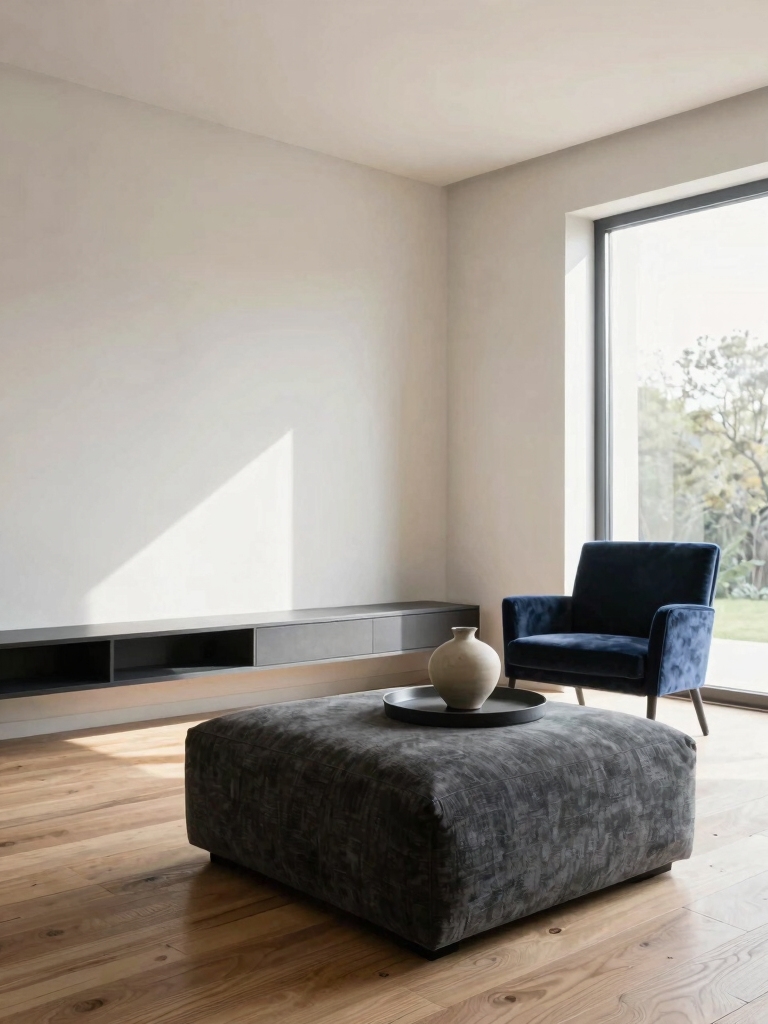
Since space is precious, I always look for furniture that serves more than one purpose. These smart pieces are game-changers.
My favorite finds include:
- An ottoman with a lift-top lid for hidden blanket storage.
- A sleek console table that folds down into a compact dining desk.
- A narrow bench by the door that doubles as shoe storage.
- A modular sofa where each section can function as a separate seat or chaise.
Incorporating these versatile items is a key strategy to make any space feel finished and stylish.
Tuck Storage Into Every Possible Nook
My next rule is simple: I treat every empty corner and overlooked gap as a potential storage hero.
I slide slim baskets under the sofa or tuck a small trunk beside an armchair. The dead space next to the fireplace becomes a perfect spot for a narrow, floor-to-ceiling cabinet.
You’d be amazed what fits behind a door—a sleek over-the-door organizer can stash remotes and magazines beautifully.
For even smarter organization, consider incorporating smart storage solutions designed specifically to maximize space efficiency.
Use Your Vertical Space for Storage and Display
Rule number three: look up. I treat my walls and the area above eye level as prime real estate for storage and personality.
You’ll free up precious floor space instantly.
- Install narrow, floor-to-ceiling shelving for books and decor.
- Hang a tall, slender cabinet to stow blankets and games.
- Use the space above doorways for displaying art or baskets.
- Add a multi-tiered hanging planter to bring life upward.
Maximizing vertical space is one of the best small room ideas that double your space instantly.
Mount Your TV and Use Floating Shelves
Looking beyond the walls themselves, there are specific fixtures that can keep your floor clear. I always mount my TV on the wall; it liberates precious surface space below.
Pair it with floating shelves mounted at varying heights. They hold books, decor, and media items without bulky frames. This creates a clean, anchored display that draws the eye upward, making the room feel instantly more spacious and organized. Incorporating these elements is one of the best ways to maximize your living room and make the most of limited square footage.
Pick Furniture With Exposed Legs
I always pick sofas and chairs with exposed legs because they let light flow underneath, creating an airy illusion in a tight room.
That visible floor space, even just a few inches, makes the whole area feel considerably larger.
It’s a simple design trick that visually lifts furniture off the ground to maximize the perceived square footage.
Incorporating smart decor tips can further enhance the openness and functionality of small living rooms.
Creates An Airy Illusion
One of the most effective tricks I use to make a small sitting room feel lighter and more spacious is choosing furniture with exposed legs. It lets light travel underneath, creating a lovely, floating illusion that expands the room.
- A leggy sofa or chair feels visually lighter than a solid block.
- See-through materials like glass or acrylic work wonders for side tables.
- Even a TV stand on tall legs contributes to the airy effect.
- This simple choice makes your space breathe.
Maximizes Perceived Floor Space
Since you’re working with a tight floor plan, picking furniture with exposed legs is a direct way to trick the eye into seeing more square footage.
I always choose sofas, chairs, and even media consoles that are lifted on slender legs. This creates a clear sightline under each piece, allowing light and view to travel freely across the floor, which instantly makes the entire room feel more expansive and uncluttered.
Layer Your Lighting to Add Depth
While maximizing every inch is essential, lighting is the secret weapon for making a small sitting room feel expansive and welcoming.
I never rely on just one overhead fixture. Instead, I build a luminous foundation and add focused sparkle.
- Install dimmable ceiling lights as your ambient base layer.
- Use a floor lamp in a dark corner for visual balance.
- Add a focused task light by your favorite reading chair.
- Finish with accent lighting, like a small picture light or LED strip.
Affordable lighting options can achieve a chic living room decor without breaking the bank.
Place Mirrors to Brighten and Enlarge
Mirrors are my go-to tool for transforming a compact sitting area, working alongside smart lighting to amplify both light and the sense of space.
I hang a large mirror opposite my window to bounce natural light deep into the room. Choosing a mirror with a slim frame maximizes its reflective surface, making the walls visually recede and instantly creating a brighter, more open feeling.
Define Zones With a Perfectly Sized Rug
I’ve found that a properly sized rug immediately defines the sitting area, carving out a clear purpose within a larger room.
It works best when I use it to anchor my key furniture, ensuring at least the front legs of the sofa and chairs sit on its surface.
Getting the scale right is vital—a rug that’s too small makes everything feel adrift, while the right proportions visually expand the floor and unify the space.
Rug Defines The Space
A perfectly sized rug works like magic to carve out a cozy sitting area from your open floor plan. It’s the foundation that visually defines my space, setting boundaries without walls.
I choose a rug large enough so my furniture can sit on it, creating an island of comfort and style. Here’s how I make it work:
- Anchor Everything: Make sure the front legs of sofas and chairs rest on the rug.
- Size Matters: A bigger rug makes the zone feel spacious, not cramped.
- Color and Pattern: These elements add depth and personality to the defined area.
- Texture for Comfort: A soft rug invites you into the space it creates.
Anchor Your Furniture Grouping
While I rely on a rug to outline my sitting area, anchoring the furniture on it is what truly grounds the group and completes the zone.
I make sure the front legs of my sofa and chairs firmly rest on it. This visual connection pulls everything together, creating a unified and inviting conversation spot.
It feels intentional, not accidental, making the small room appear more organized and spacious.
Scale And Proportion Matter
Just as anchoring the legs ties the seating together, the rug’s dimensions define the space itself. A rug that’s too small shrinks the room. My rule is to choose one where all key furniture sits on it, or at least the front legs. This creates a grounded, intentional zone.
- The “All-On” Method: For ample space, fit every furniture piece completely on the rug.
- The “Front-Legs” Rule: In tighter spots, place just the front legs of sofas and chairs on the rug.
- Maintain Balance: Leave an even floor border of 12-18 inches around the rug’s edges.
- Define the Area: Let the rug outline the main conversation zone, making the room feel larger.
Scale Your Wall Art for Maximum Impact
In tight quarters, a single large statement piece often creates more visual interest than a cluster of smaller frames.
I anchor my seating area with one bold canvas that fills the wall space above my sofa. This simplifies the look and draws the eye, making the room feel intentional and more expansive.
Choose art with depth or a light palette to enhance the feeling of airiness.
Keep Window Treatments Simple and Streamlined
How can we make a small sitting room feel taller and brighter? I start by simplifying my window treatments. Heavy drapes block light and space, so I choose streamlined options that open up the view.
- Mount curtains above the frame to draw the eye upward.
- Choose lightweight fabrics like linen or cotton.
- Stick with neutral colors to blend seamlessly.
- Use simple rods or recessed tracks for a clean line.
Edit Ruthlessly and Embrace a Minimalist Mindset
First, I clear every surface and remove items that aren’t essential for relaxation or daily use.
Then, I choose furniture with dual purposes, like an ottoman with storage or a slim sofa that doesn’t overwhelm the room.
This focused editing truly opens up the space and makes it feel both calm and functional.
Declutter Your Surroundings
While a cluttered space can feel chaotic, you can reclaim your sitting room by ruthlessly editing your belongings.
I start by asking a simple question: does this item bring me joy or serve a daily purpose?
- Clear all surfaces completely, then reintroduce only essentials.
- Sort items into keep, donate, and discard piles.
- Limit decorative objects to a few meaningful pieces.
- Implement “one in, one out” to maintain your progress.
Invest in Strategic Furniture
Clearing the clutter reveals your actual floor plan, so now I invest in a few versatile furniture pieces that truly fit my space.
I choose a slim-arm sofa with hidden storage, a small-scale nesting coffee table I can separate when needed, and a sleek floor lamp that frees up surface area.
Each piece must earn its place through multi-functionality and perfect proportion.
Conclusion
Start by seeing your space not as a limitation, but as a curated opportunity. Focus on a light palette to expand your walls, choose furniture that serves two purposes, and define areas with a perfect rug. Edit belongings with a minimalist heart. You’ll create a room that feels both open and intentional, proving a small space can be your most stylish and soul-nourishing retreat.