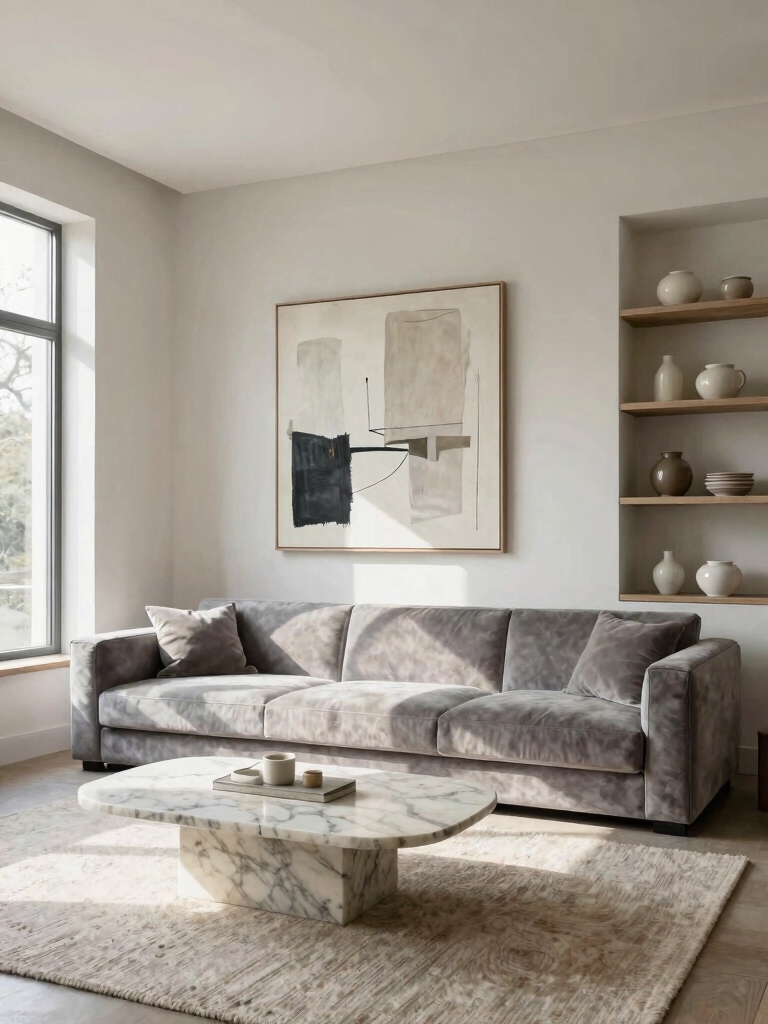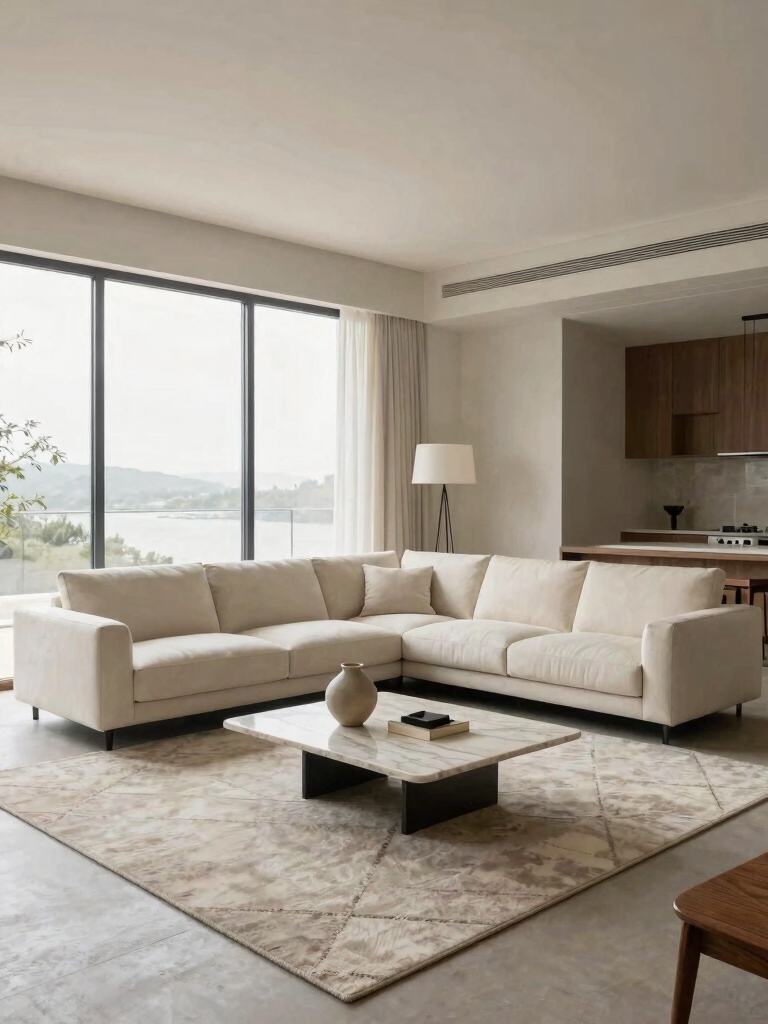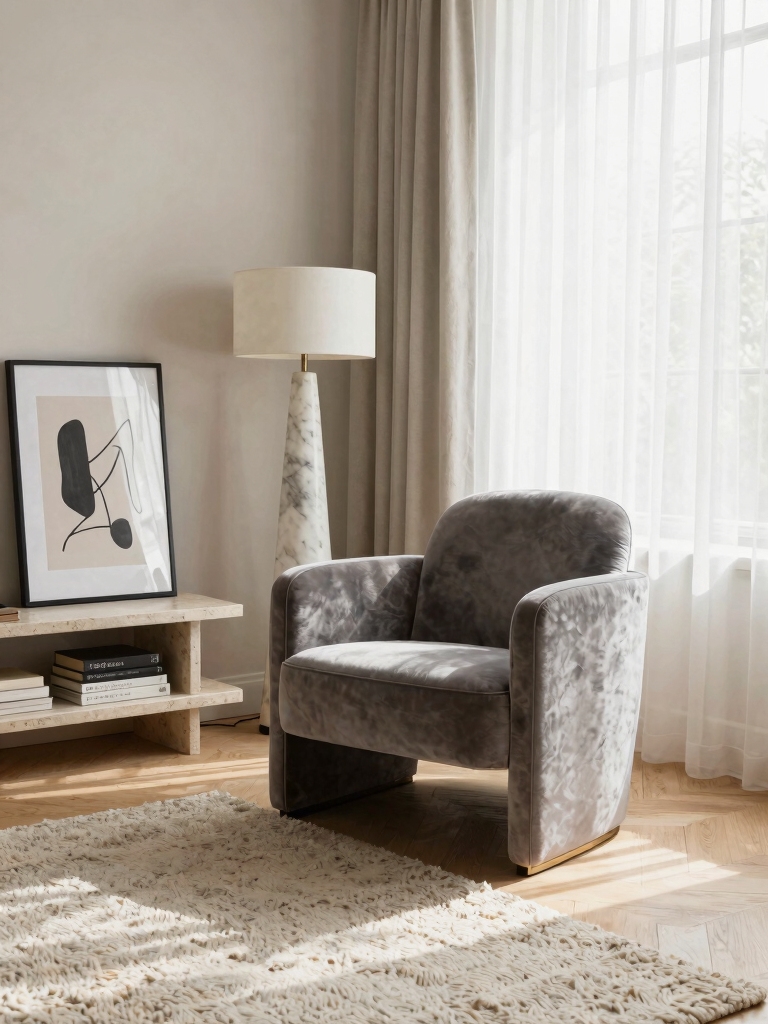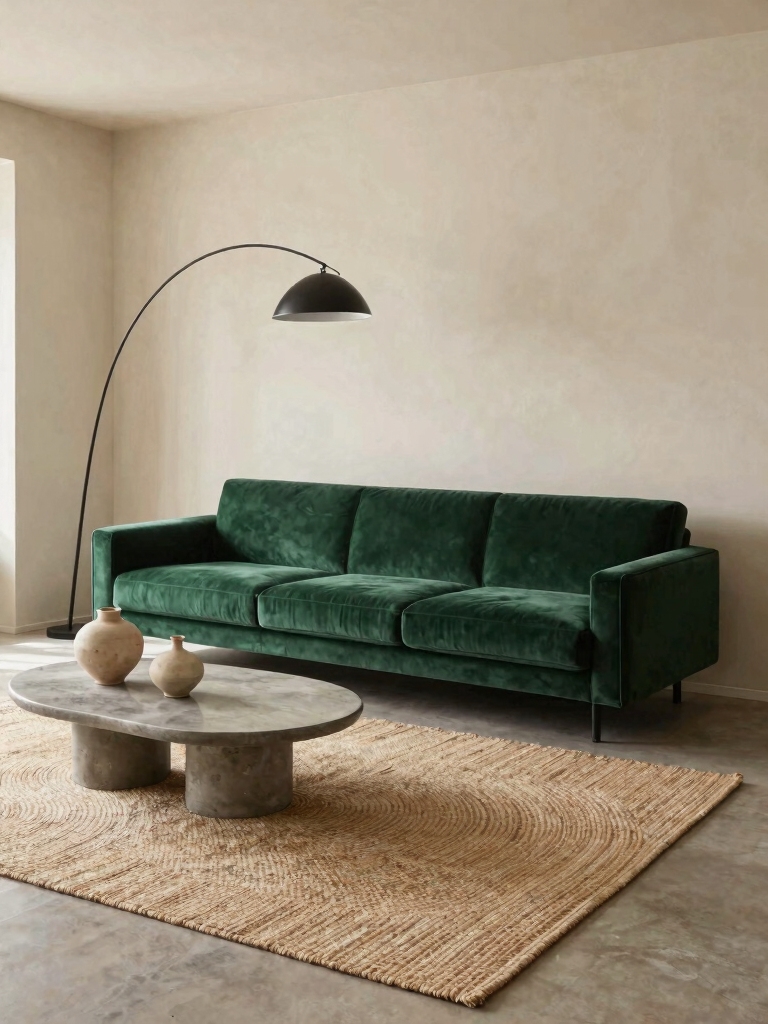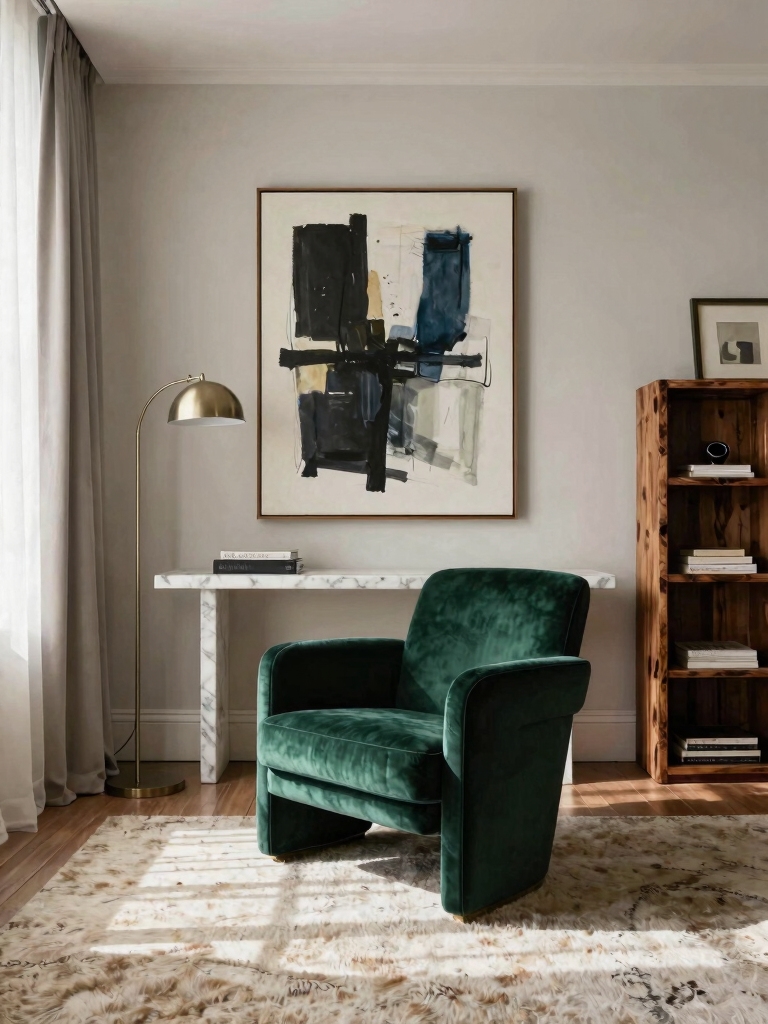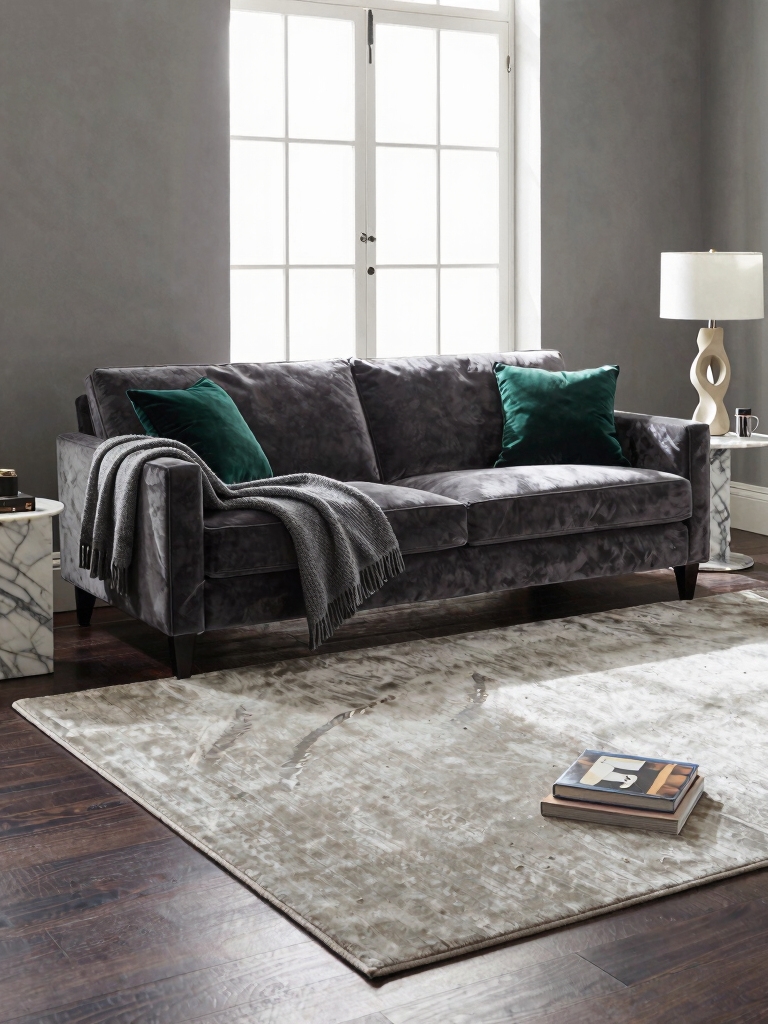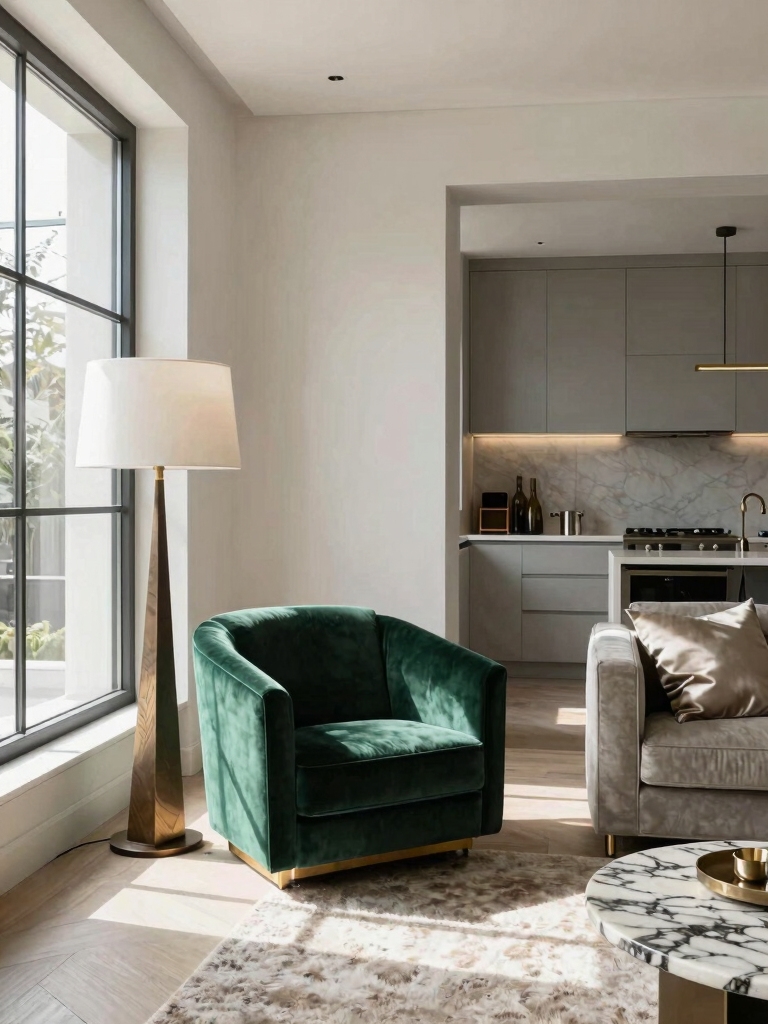
First, I open up sightlines and match my flooring to make my sitting room feel like a natural extension of the kitchen. I stick to one cohesive color story, repeating cabinet woods or metal finishes for harmony. I choose low-profile, multifunctional furniture and use coordinated pendant lights to tie it all together. It’s amazing how these thoughtful connections create a beautiful, flowing space. Let me show you how to make every detail work.
Establish Visual Flow Between Rooms First
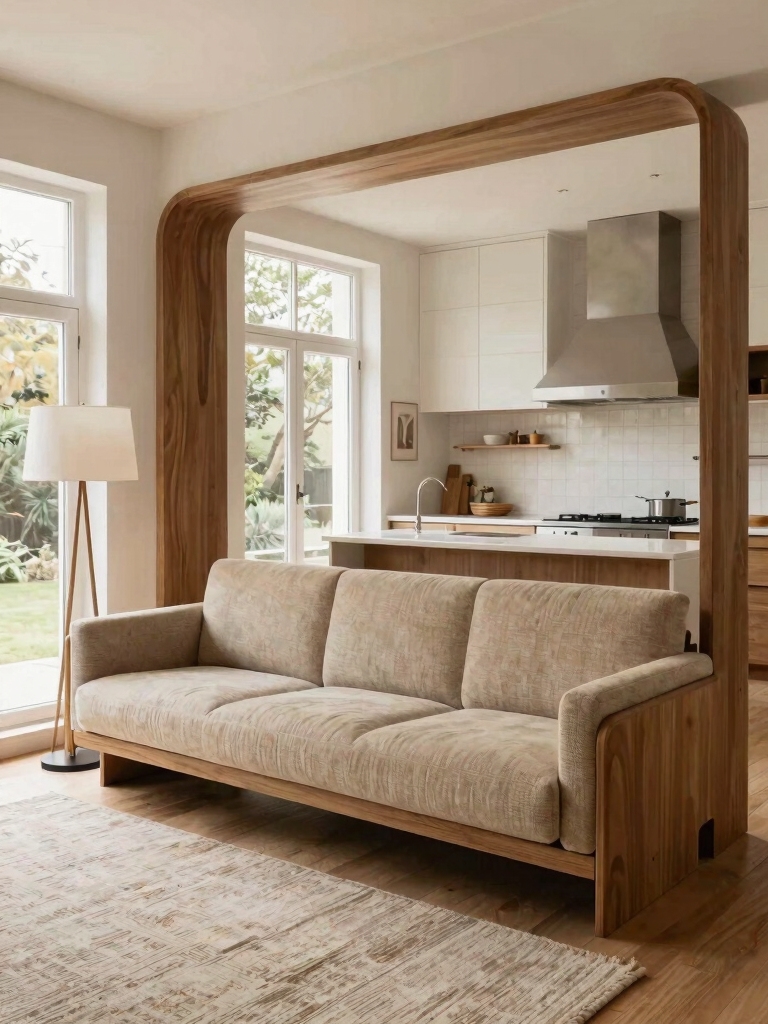
Before you even pick up a paintbrush, let’s make sure this space feels connected to the kitchen, because that visual flow is your foundation.
I always consider how I’ll physically move between these rooms. I’ll keep doorways open or widen them. I’ll match flooring materials and heights for a seamless step from cooking to relaxing.
That connection makes a small sitting room feel like a deliberate, welcoming extension. Incorporating small space living room ideas can enhance the cozy and stylish feel of this compact area.
Start With a Cohesive Color Palette for Instant Harmony
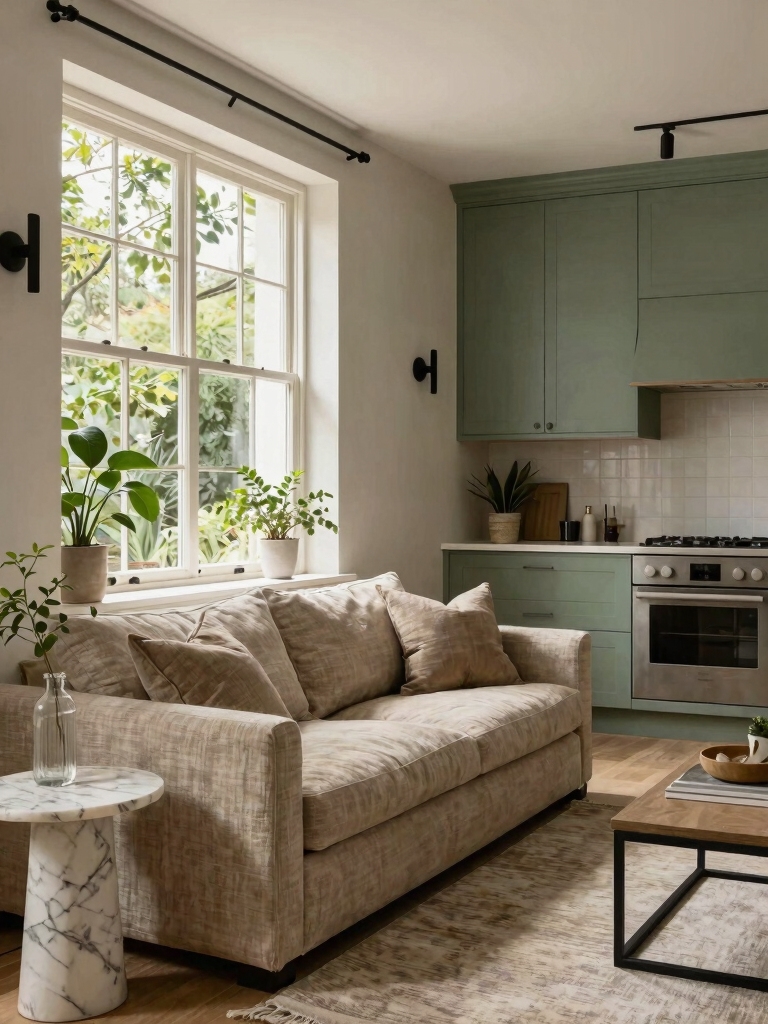
Since we’ve established a smooth visual flow, I’ll tackle color next because it’s the fastest way to unify these adjoining spaces.
I choose one main hue and pull it through both rooms. In my kitchen’s sage cabinets, I find that perfect green and echo it in the sitting room’s throw pillows and a single painted wall.
This simple repetition creates an instant, harmonious link I absolutely love. Adding fresh elements like new textiles or accessories can further revitalize your space and keep the decor feeling updated.
Use Consistent Flooring to Visually Connect the Spaces
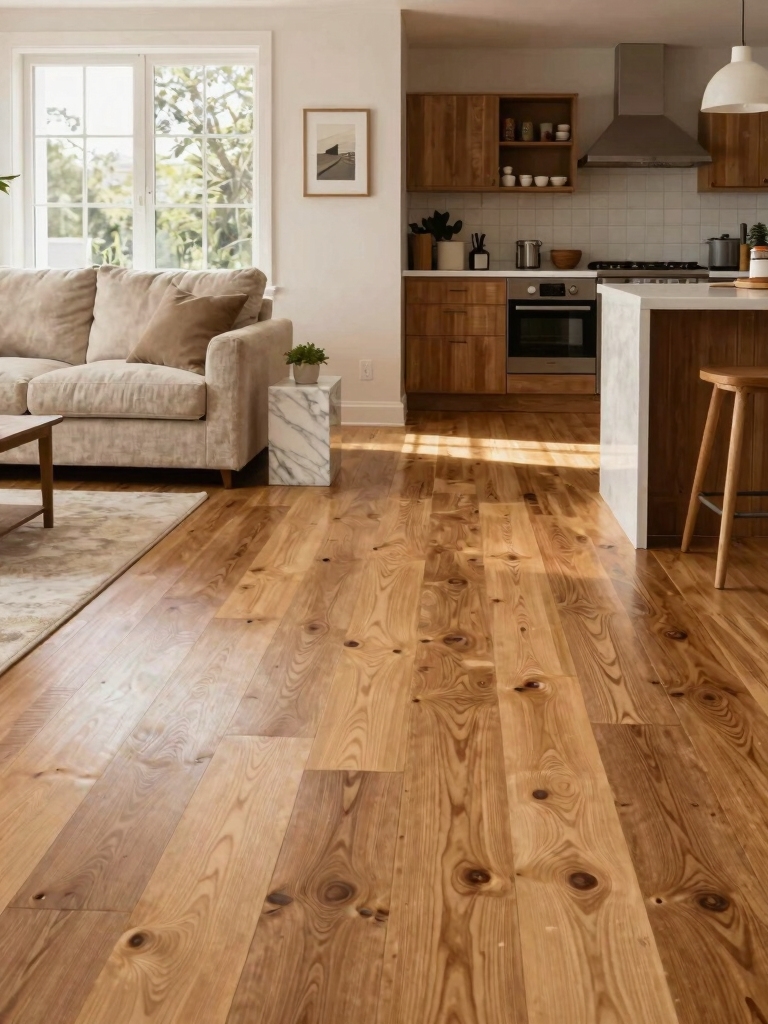
While that cohesive color palette I just set up is doing its work, I’m turning my attention downward to really lock in the connection—because nothing ties two rooms together like uninterrupted, consistent flooring.
If I’m installing it myself, I plan my layout so the floorboards or tiles run seamlessly from the kitchen into the sitting area, which instantly makes the space feel larger and more intentional.
Incorporating smart design elements can help your small space work harder and feel more functional, just like smart laundry room solutions optimize compact areas efficiently.
Connect the Spaces With Coordinated Lighting Styles
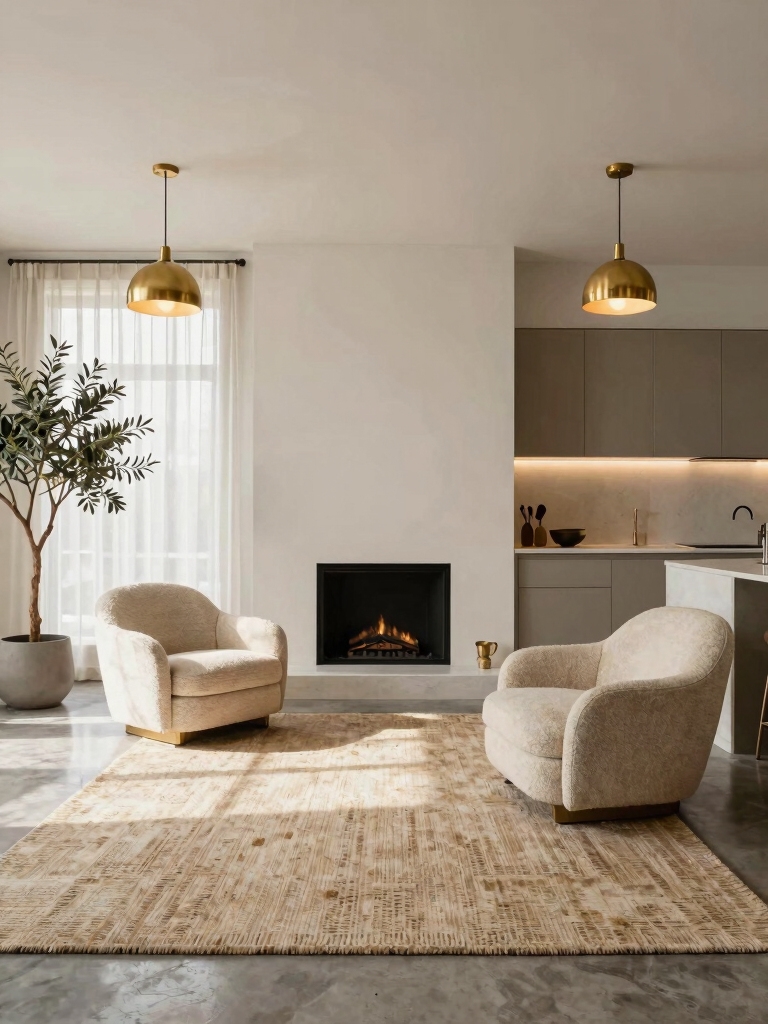
Once I’ve set the foundation with seamless flooring, I focus my attention upward, because tying these spaces together demands a cohesive lighting plan that guides the eye.
I’ll choose matching pendant styles over the kitchen island and the sitting area’s console table.
Using dimmable LEDs in all fixtures lets me shift the mood from bright kitchen task lighting to a warm, relaxed glow for the lounge.
Incorporating soft textiles and warm colors complements the lighting to create a truly cozy sitting room that you’ll love to relax in.
Install a Kitchen Peninsula as a Natural Divider
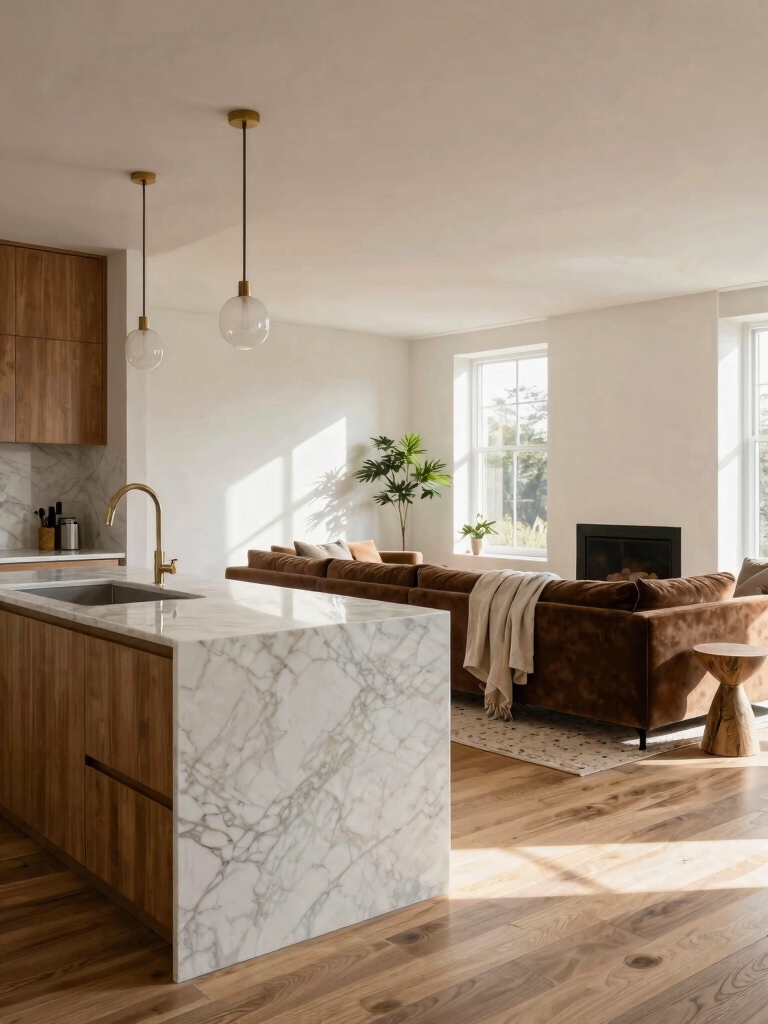
Now, I look at the literal floor plan to establish a gentle boundary. I’m building a kitchen peninsula to anchor the space.
It’s a functional divider that creates separate zones without closing them off. I’ll use matching countertops and cabinetry for cohesion.
This gives me extra prep space and casual seating. It’s a smart, built-in solution that physically defines each area while keeping the conversation flowing.
Incorporating creative decor ideas helps to transform and personalize the space, making it both stylish and inviting with living room decor.
Use a Transparent Partition for Light and Separation
My next strategy for keeping the small sitting room bright yet distinct is to install a transparent partition.
I love a glass panel or a sleek, framed divider—it stops kitchen clutter from visually intruding without blocking a single sunbeam.
It’s a project I can tackle myself, measuring carefully to fit the space.
This clear boundary makes the lounge feel like its own intentional, serene retreat.
Using a transparent partition is an effective way to transform small spaces into airy retreats while maintaining a sense of openness.
Define Zones Without Walls Using an Area Rug
I’ve found the size of my rug creates a distinct “room” within the kitchen area, instantly defining my sitting space.
I make sure to place it so the front legs of my sofa and chairs rest on it, anchoring my seating arrangement.
This simple trick visually zones the area without needing any walls.
Using smart decor tips like this can transform even the smallest spaces into functional and stylish areas with ease, making the most of your small living room.
Rug Size Defines Space
One of your most effective tools for defining a sitting area off the kitchen is choosing the correct area rug size.
Think of it as sketching a floor plan with fabric! I select a rug large enough for all my seating’s front legs to rest on it.
This visually pulls the furniture together, creating a distinct “room” that feels grounded and intentional without a single new wall.
Rug Placement Anchors Seating
Since your rug size defines the boundary, its placement is what truly locks your furniture into a cohesive group, visually anchoring your seating to create that separate, conversational zone.
I’ll show you how with three key moves.
- Front legs on: Place the front legs of all chairs and sofa squarely on the rug.
- Even reveal: Leave a uniform strip of flooring visible around the perimeter.
- Center it: Align the rug perfectly within the room’s architecture.
Float Your Furniture Away From the Walls
I’m pulling my sofa and chairs away from the walls to create an intimate conversation zone right on my area rug.
This simple shift defines a central axis for the room, making the seating feel purposeful and connected.
I’m focusing all the furniture around that rug, which instantly makes the space feel larger and more inviting.
By arranging the furniture thoughtfully, you can create a cozy living room retreat that enhances relaxation and comfort.
Create Conversation Zones
Because our cozy sitting room is more about intimate chats than just filling space, let’s pull your furniture away from the walls and into the room.
I arrange my seating to face each other directly, crafting perfect little hubs for conversation.
- Angle two armchairs toward the sofa’s center for easy dialogue.
- Add a small side table within everyone’s reach for drinks.
- Keep pathways clear around the grouping so the flow feels natural.
Focus On The Rug
Once you’ve established those cozy conversation zones, anchor them together and define the space with a well-placed rug.
I love pulling my sofa and chairs onto it, floating them away from the walls. This instantly centers the room.
Make certain your rug is large enough; the front legs of all seating should sit on it. That visual connection creates a unified, intentional look that feels both generous and intimate.
Define A Central Axis
To truly give this sitting area its own distinct identity within the open plan, I’ll show you how defining a central axis can work wonders.
Ditch the wall-hugging routine! I float my furniture toward the room’s center, which instantly crafts a cozy, intentional island.
My method focuses on three key steps:
- Place your rug as the foundational anchor.
- Position your main sofa opposite a key focal point.
- Angle armchairs to complete the conversation circle.
Opt for a Low-Profile Sofa to Maintain Sightlines
When you want that kitchen-adjacent nook to feel open and connected, I choose a sofa with a clean, low-profile silhouette to keep my sightlines across both spaces unobstructed.
I measure its back height to guarantee it doesn’t block light or conversation. Sleeker, modern frames work best, giving me a comfortable spot without creating a visual wall between my cooking and lounging zones.
Incorporating expert decor tips ensures your small sitting room remains cozy yet functional, enhancing the overall flow between kitchen and sitting area with decor strategies.
Anchor the Space With a Compact Sectional
While maintaining the open feel, I often anchor my small sitting room with a compact sectional that defines the zone without overwhelming it.
I love how its L-shape creates an instant, cozy layout.
My DIY-focused tips for success are:
- Measure meticulously, leaving generous walking paths to the kitchen.
- Select a low-back, armless design to preserve sightlines.
- Use a large, patterned rug underneath to visually ground the entire arrangement.
For apartment renters, choosing furnishings that maximize space without sacrificing style is essential, as small living room ideas for apartment dwellers often focus on charm and functionality.
Choose Dual-Purpose Furniture for Maximum Function
I’m making my sitting room work harder by picking pieces that serve multiple roles.
I’m planning a stylish sofa bed for guests, nesting side tables I can tuck away, and a plush ottoman with a secret compartment inside.
Each choice is a practical DIY victory that adds function without sacrificing an inch of my cozy style.
Sofa Beds For Overnight Guests
Maximize your small sitting room’s overnight potential by choosing a sofa bed that works as hard as you do.
I’ve found three key details transform a basic frame into a beloved guest suite.
- Select a low-profile mechanism I can operate myself without clearing the entire floor.
- Add a high-quality, thin mattress topper for real sleeping comfort.
- Build a simple, stylish side panel to hide the bed frame and store linens.
Nesting Tables To Save Space
Because space is a premium in my small sitting room off the kitchen, I’m choosing nesting tables as my ultimate dual-purpose furniture hack.
They stack neatly together, saving precious floor space until guests arrive. Then, I effortlessly pull them apart to provide multiple surfaces for drinks, snacks, or remote controls.
This simple, elegant solution means I don’t sacrifice function for form; I gain extra tables without adding permanent clutter.
Ottomans With Hidden Storage
- Upholster a plywood cube with batting and a bold, washable fabric for durable, personalized storage.
- Add sturdy casters to glide it easily from kitchen to sitting area.
- Top it with a custom-cut tray to instantly create a stable side table.
Build in a Banquette for Cozy, Space-Saving Seating
If you’re ready to add a charming dining spot to your kitchen sitting area, building a banquette is my favorite DIY solution for creating cozy, space-efficient seating.
I build a simple, sturdy L-shaped frame against the wall, add a cushioned plywood top, and upholster it with durable fabric.
I then tuck a small table in front. It instantly creates an intimate breakfast nook that feels custom-built.
Incorporate Portable Seating for Flexible Entertaining
My number-two tip for this space is to use lightweight, portable seating to make entertaining effortless.
I pull pieces into a circle for game night, then tuck them away.
- Nesting Stools: Stack these for storage, then separate them for extra perches.
- Foldable Chairs: Look for stylish sling-backs that lean against the wall.
- Ottomans on Casters: Add a tray for a coffee table that you can easily roll aside.
Create a Focal Point With a Statement Chair
I love defining a functional space by positioning a statement chair opposite my kitchen entry.
I’ll choose a bold color, like emerald velvet, that makes the room pop without crowding it.
Adding texture with a patterned throw pillow completes my cozy, personalized retreat.
Define a Functional Space
One essential way to define a functional sitting room off your kitchen is by creating a focal point with a statement chair.
I anchor the whole layout around it. This instantly organizes the zone for conversation or quiet reading.
- I position it to face the main conversational area.
- I pair it with a side table for a drink or book.
- I add a textured throw to invite immediate use.
Choose Bold Colors
Because a statement chair can anchor a small sitting room, choosing it in a bold color is a powerful DIY move to instantly define your focal point.
I’d select a vibrant emerald green or deep sapphire armchair.
Position it opposite the kitchen entry to draw the eye.
This single, saturated piece creates visual weight, organizes the layout around itself, and makes the whole space feel intentionally designed by you.
Add Texture and Patterns
After anchoring your sitting room with that bold chair, amplify its impact by layering complementary textures and patterns.
I start with tactile elements that invite touch, then weave in visual interest through patterned fabrics.
- Introduce a nubby wool throw over the chair’s arm for instant cozy texture.
- Layer a geometric rug underfoot to define the space and echo chair colors.
- Add patterned pillow covers in a smaller-scale print to prevent visual overwhelm.
Prioritize Leggy Furniture to Create an Airy Feel
To make our small sitting room feel more spacious, let’s start by choosing furniture that stands on slender, exposed legs.
I’m swapping a heavy sofa for a leggy loveseat and picking a glass-top coffee table.
You’ll see how the visible floor space expands instantly, light flows underneath, and the whole area breathes.
It’s a simple swap that tricks the eye and lifts the room’s entire spirit.
Arrange Furniture to Complement Kitchen Work Zones
Now that our leggy furniture is letting light and space flow, consider how your seating arrangement can support your kitchen routines.
Position your pieces to create a harmonious, functional connection.
- Angle a chaise lounge to face the prep island for casual conversation.
- Tuck a slim console behind the sofa to act as a quick-serving buffet.
- Float two armchairs opposite the sink, creating a perfect coffee nook.
Extend Kitchen Cabinetry for a Built-In Look
I’ll show you how extending your kitchen’s cabinetry creates a seamless, built-in look.
First, I carefully match the paint color and door style to tie both rooms together visually.
Then, I love using leftover countertop material to craft a matching window ledge or shelving unit for that polished finish.
Color Match and Material
Because achieving a seamless built-in look is key, I’ll show you how to extend your kitchen cabinetry by focusing on two critical factors: an exact color match and consistent material.
- Secure a Paint Sample: Take a cabinet door to your paint store for a perfect color scan and formula.
- Match the Wood Species: Use the same oak or maple to guarantee grain patterns align.
- Duplicate Finish Details: Replicate the exact sheen, like satin or gloss, for a unified appearance.
Repeat Countertop Material
To truly master that seamless built-in feel, I’d extend the kitchen’s countertop material into the sitting room’s cabinetry or shelving.
This simple repetition visually anchors both spaces. I might use the same quartz slab for a desk surface or smaller wood butcher block for shelving ledges.
Even a remnant piece works! It creates powerful continuity, making the small room feel like a deliberate, crafted extension of the kitchen.
Use Open Shelving as a Visual Bridge
Open shelving cleverly connects our kitchen to the cozy sitting area, letting light and sightlines flow freely between the two spaces.
I installed a simple, wall-mounted unit myself to bridge the gap. It’s perfect for showcasing:
- My favorite glassware collection for visual lightness.
- Potted herbs I can grab while cooking.
- A few treasured books that hint at the sitting room’s purpose.
Echo Your Backsplash Material in the Sitting Room
Carrying the kitchen’s backsplash tile into the sitting room creates a subtle, intentional link that makes the whole area feel designed.
I love using leftover tile for a small, framed hearth or as cladding on a simple console’s base.
You can also create a cohesive accent by installing a single, beautiful tile as a trivet on a side table.
It’s a clever, affordable detail that ties everything together.
Repeat Key Materials Like Wood and Metal in Both Rooms
Since I already have wood and metal in my kitchen’s design, I find repeating them just a few feet away in the sitting room instantly makes both spaces feel thoughtfully connected.
I’ll mirror my kitchen’s oak flooring with a wooden side table, then add matching metal finishes.
My go-to DIY tips for this material echo are:
- Stain a simple pine table to match your kitchen cabinets.
- Swap basic lamp bases for brushed nickel ones.
- Add metal curtain rods or cabinet hardware as subtle accents.
Conclusion
So begin, as I did, not with walls but with whispers. Let a color echo, let a floorboard run unbroken, let light from the kitchen pendant spill like honey into your waiting nook. One material, repeated, becomes a silent guide. Your rooms will breathe together. You’ll feel the moment the last detail clicks—and your home opens its arms.