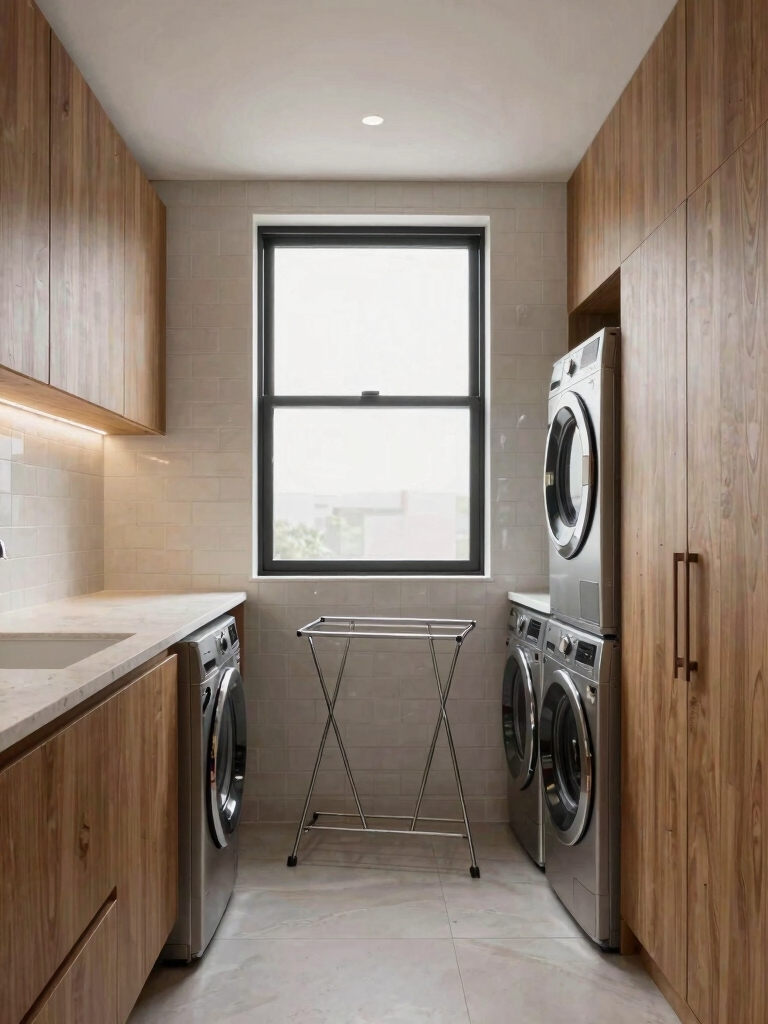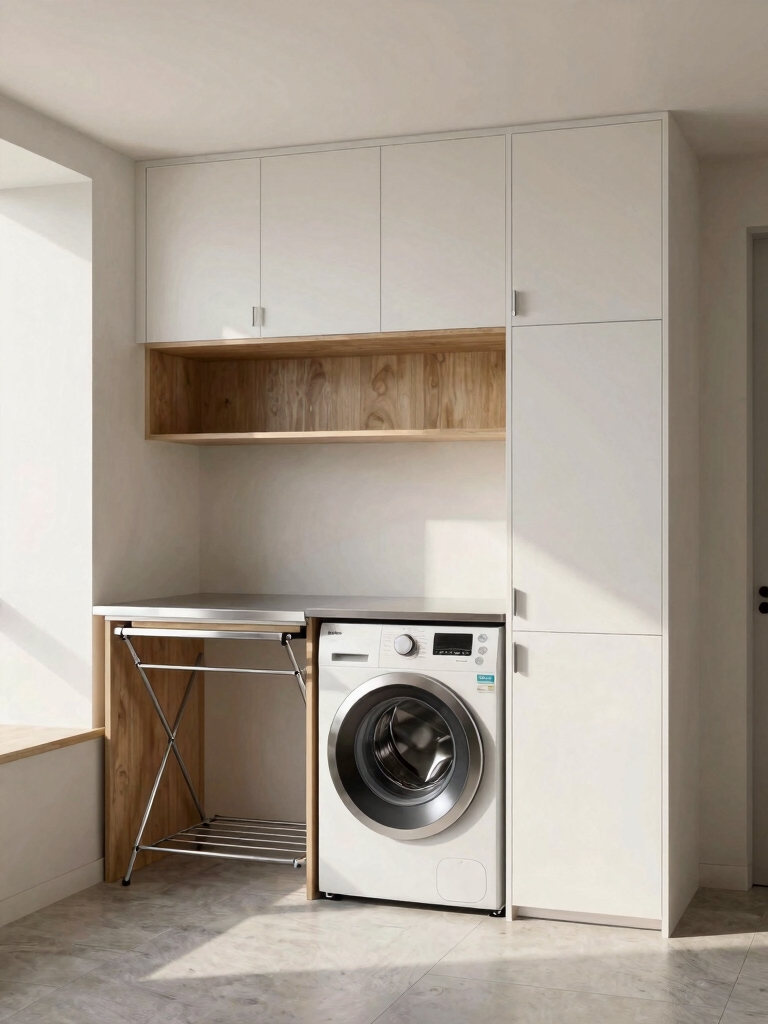
I design tiny laundry spaces to work harder, so I start by identifying constraints like access, workflow, and utilities, then optimize vertical storage to free floor space. I stack and nest machines, use pocket or sliding doors, and keep slim full-performance models at the ready. I add hidden charging spots, flexible counters, and color blocks to visually expand the room. If you keep exploring, you’ll uncover more practical tweaks and setups to try.
Identify Your Constraints: Key Small-Laundry Layout Problems to Solve
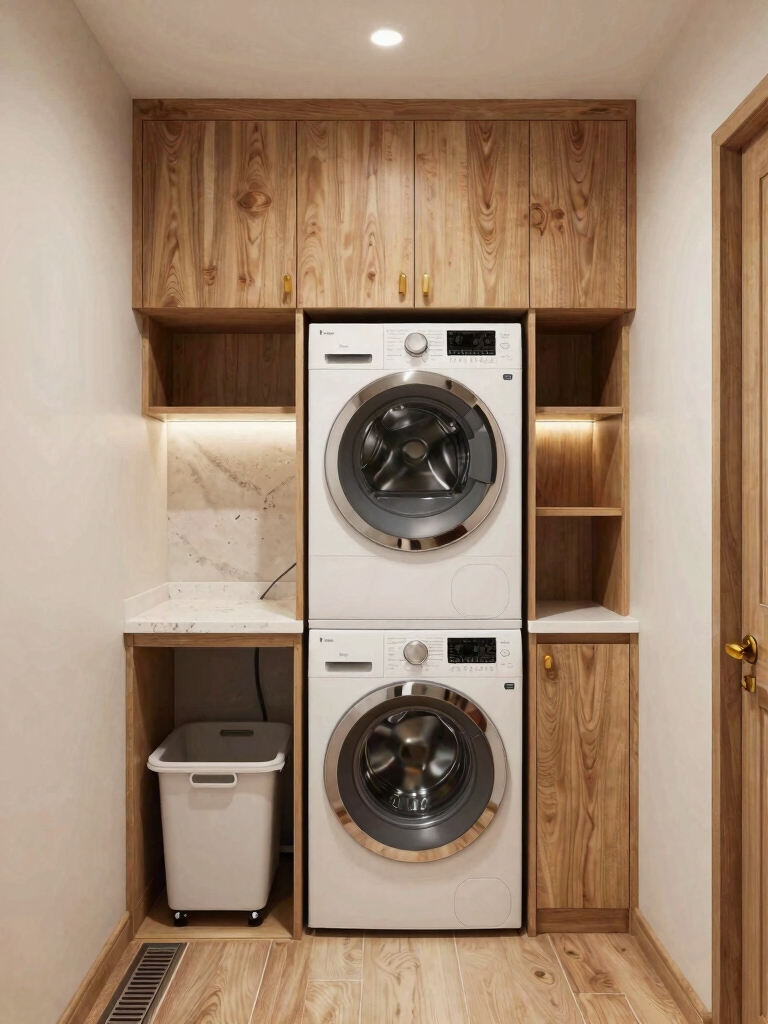
When you’re designing a compact laundry setup, the biggest constraints aren’t just square footage—they’re access, workflow, and utilities.
I map each pinhole in the plan: door swing, machine sizes, plumbing, and electrical needs. I prioritize reach, clear paths, drying space, and future tweaks.
I document bottlenecks, test fits, and adjust sequences to keep everyday tasks smooth and predictable. Incorporating smart solutions can maximize functionality and efficiency in even the smallest laundry spaces.
Use Vertical Storage to Free Floor Space
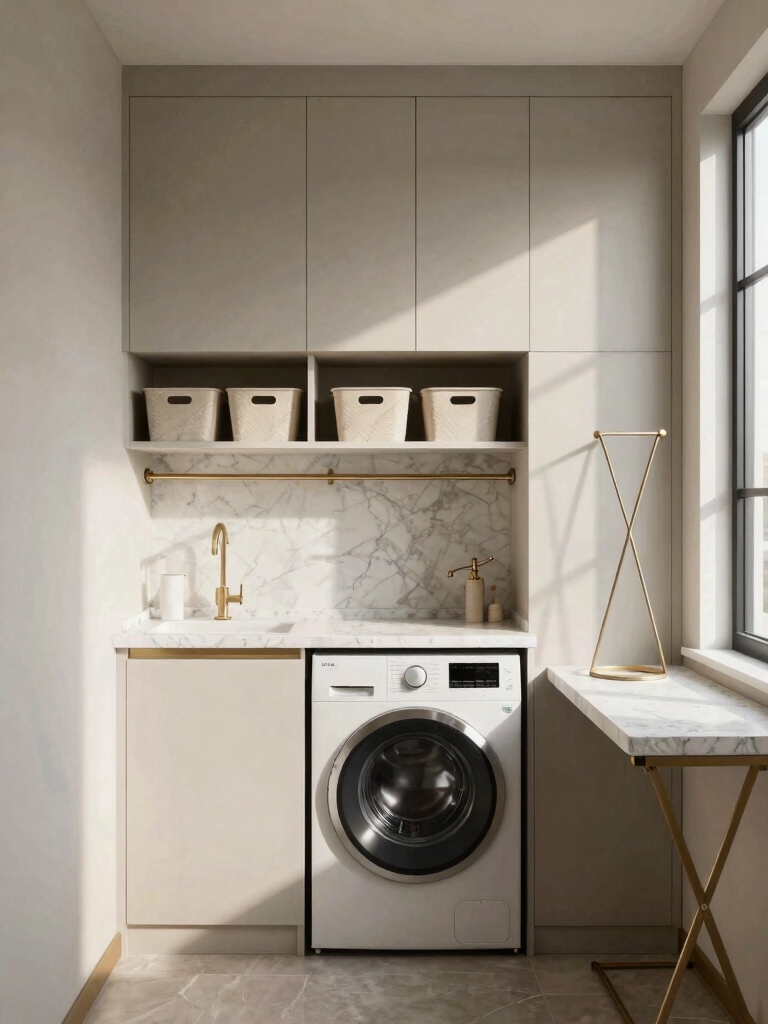
I’m all about freeing floor space by going vertical, starting with sturdy vertical shelves that fit tight corners and reach eye level.
I’ll also consider tall cabinets and place them where they won’t block the door, so detergents and linens stay organized at a glance.
Finally, I’ll explore stackable laundry rods to create a compact hanging zone without crowding the floor.
Incorporating clever storage solutions can maximize every inch of your mini laundry room while keeping it functional and tidy.
Use Vertical Shelves
Vertical shelves are a game changer in tight laundry rooms: they let you stack storage up the walls, freeing precious floor space for a hamper, a folding area, or a compact cart.
I organize by depth, using uniform bins and labeled baskets.
Install brackets at adjustable heights, and measure door swings to avoid obstruction while loading detergent, towels, and odds-and-ends.
Hang Tall Cabinets
Tall cabinets are the quickest way to reclaim floor space in a small laundry room; I measure twice, mount once, and position them where door swings won’t hit.
I—you—store detergents, cleaners, and kits vertically, freeing the floor.
- maximize ceiling height
- choose shallow depths
- adjustable shelves
- labeled bins
- hidden hardware for clean lines
Stackable Laundry Rods
I install two rods above each other, with a slim hanger rail for delicates, and a lower rod for shirts. You’ll gain room for baskets, and airflow dries faster.
I keep brackets snug, avoid clutter, and label sections clearly.
Stack and Nest: Efficient Vertical Arrangements
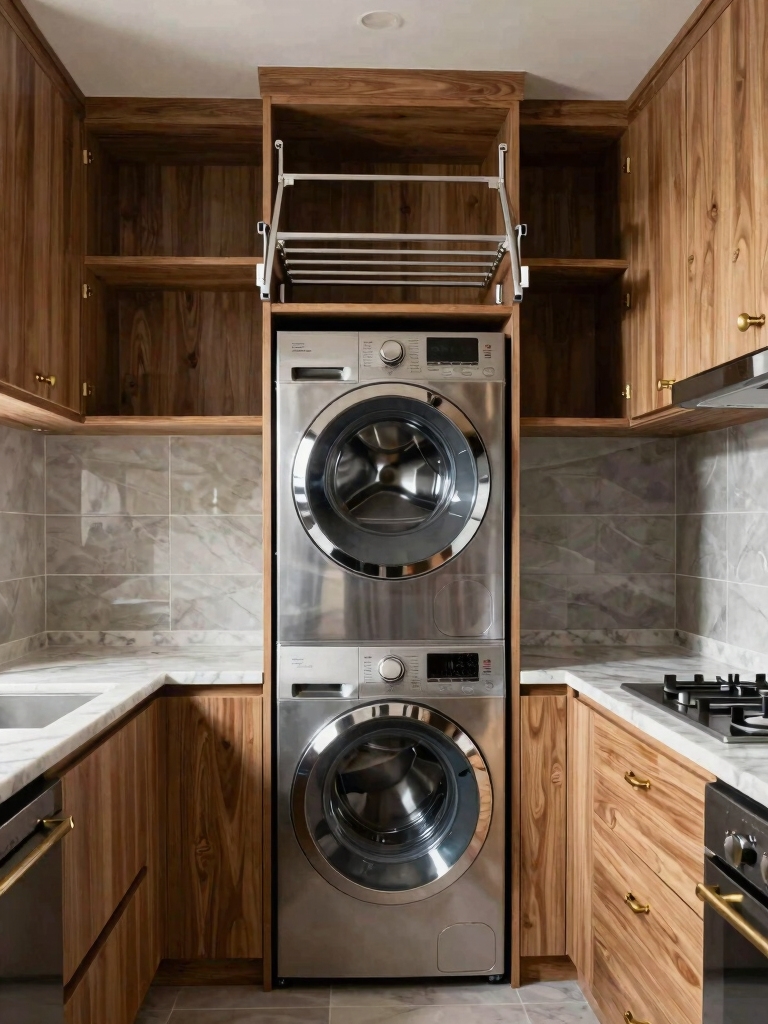
I like to start by stacking items vertically when possible, using sturdy platforms and clear labeling to keep everything reachable.
I’ll show you how to nest smaller units within larger ones and place them strategically for easy access without crowding walls.
We’ll also level up with space-saving wall racks that hold essentials in sight and within arm’s reach.
Consider incorporating stackable solutions that look custom to maximize every inch of your small laundry room.
Vertical Storage Stacking
- Pick stackable bins with uniform bases
- Label each category for quick grab
- Use slim baskets for lids and cords
- Nest nonessential items when idle
- Leave breathing room for airflow
Nesting Units Strategically
Nesting units shine when you stack and nest them to fit every nook, so I’ll show you how to plan vertical layouts that keep essentials reachable and tidy.
I start by grouping items by frequency, then place daily-use supplies at arm height. Use lockers or bins that slide, and reserve lower tiers for bulk or less-frequent tasks.
Tight spacing, smooth edges, and labeled fronts simplify maintenance.
Space-Saving Wall Racks
I’m choosing stack-and-nest designs that maximize vertical use, minimize clutter, and keep detergents accessible.
Here are key ideas:
- Adjustable hooks and rails
- Floating shelves for detergents
- Slim, wall-mounted racks
- Drying racks integrated
- Quick-release baskets
Pocket Doors and Sliding Entries for Tight Spaces
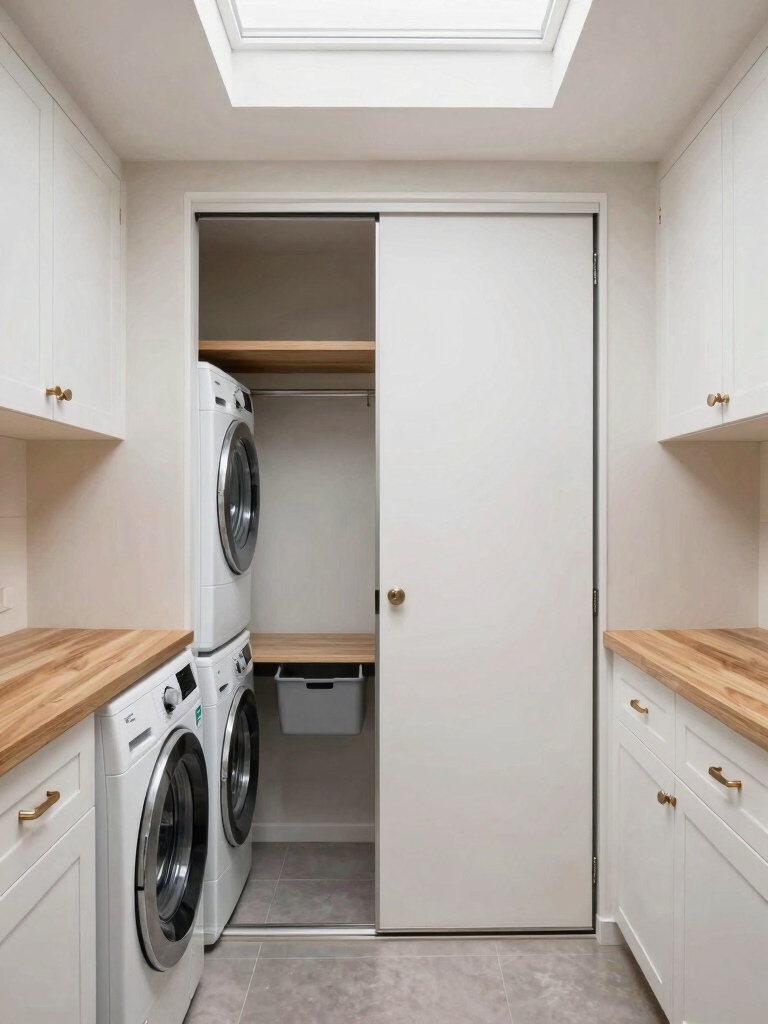
Pocket doors and sliding entries can dramatically improve a small laundry room by reclaiming floor space and reducing door swing.
I choose pocket doors over standard swinging ones, then guarantee tracks are mounted flush with walls to avoid bumping elbows.
For tight flips, sliding panels on magnetic stops keep laundry zones organized, while recessed handles prevent snagging on towels or hampers.
Incorporating smart storage solutions alongside these doors maximizes organization and efficiency in compact laundry rooms.
Slim Machines That Actually Deliver Full-Size Performance
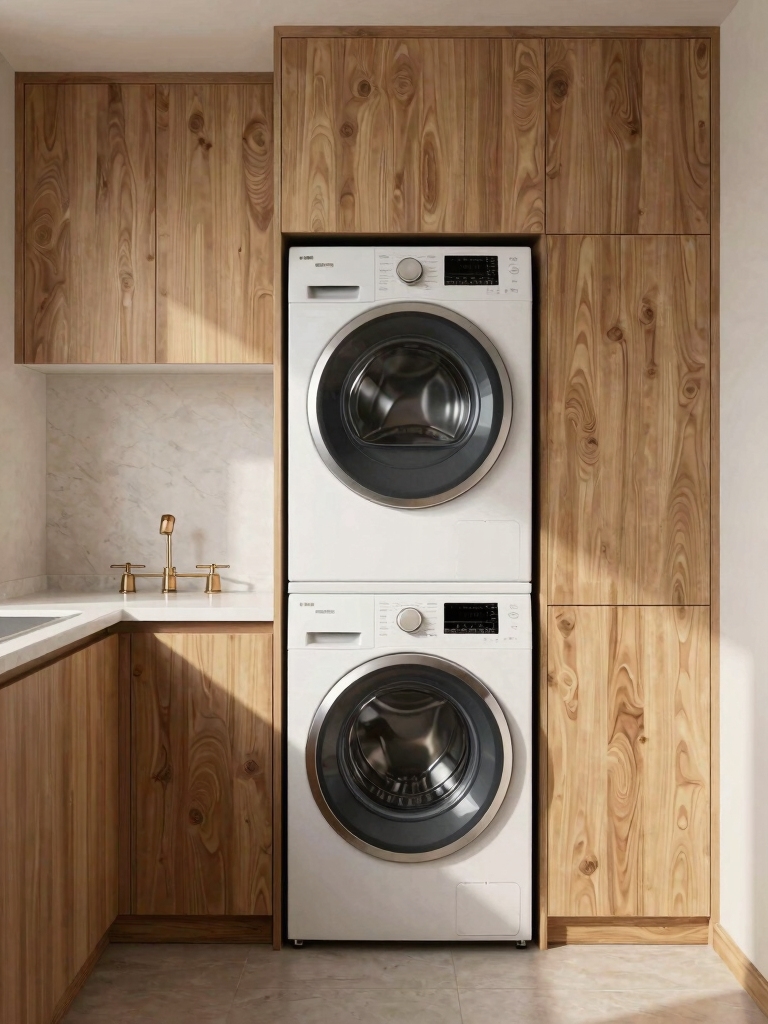
If you think slim machines can’t handle full-size washloads, think again: compact washers and dryers today deliver the capacity and performance you expect, without monopolizing the laundry nook.
- True machine capacity vs. footprint
- Quick cycles that save time
- Advanced moisture sensing for efficiency
- Stacked or side-by-side layout options
- Quiet operation for open-plan spaces
Corner Cabinets That Pull Double Duty
Corner cabinets can be real workhorses in small laundry nooks, because they make the most of every inch without crowding the room.
I design mine to double as hidden hampers, pull-out organizers, and vertical file-like storage for detergents and lint brushes. Deep shelves hold baskets; soft-close doors reduce noise.
I prioritize accessible heights and predictable layouts for smooth, daily use. Incorporating smart and stylish laundry room solutions ensures these cabinets not only save space but also enhance the overall functionality and aesthetic of the laundry area.
Fold-Out Surfaces for Folding and Sorting
I love how fold-out surfaces give me extra folding room right where I need it, without crowding the floor.
I’ll show you options like a foldable work surface you can pull out for large loads, a sorting surface on wheels for quick transfers, and a wall-mounted folding board that tucks away when you’re done.
Together, we’ll weigh durability, ease of use, and how each setup fits a tight laundry loop.
Incorporating smart storage solutions can transform your laundry room into a more efficient and organized space.
Foldable Work Surface
A foldable work surface can be a game changer in a tight laundry room, giving you a dedicated, waist‑high area for folding and sorting without permanently sacrificing floor space.
I love compact, sturdy designs that lock flat when not in use, easy to install, and maintenance‑free.
- Lightweight, durable materials
- Easy fold mechanism
- Flush mount for stability
- Adjustable height option
- Hidden velcro or magnets to secure folded items
Sorting Surface On Wheels
Small-space laundry rooms benefit from a sorting surface on wheels that folds out when you need it and tucks away when you don’t.
I design around compact wheels so the surface glides smoothly, locks, and stays level.
Use a slim, sturdy top for sorting by color or fabric type, then roll it back before chores.
Durable, easy-clean edges matter most.
Wall-Mounted Folding Board
A wall-mounted folding board gives you a built-in folding and sorting surface without stealing floor space. I love how it drops down when needed and tucks away afterward, keeping the room tidy.
It supports precise folds, reduces clutter, and speeds laundry day.
- sturdy hinge mechanism
- clear measuring guides
- smooth, snag-free surface
- easy mounting
- stays clean with wipe-down care
Built-In Hampers and Hidden Sorting Stations
I design compact, pullout bins with labeled sections, so you drop garments without hesitation. A slim, front-access caddy holds delicates, while a lid-less bin prevents matting.
I avoid clutter, optimize airflow, and simplify post-wash organization. These small laundry room ideas create a clutter-free haven that transforms your space into an efficient, organized area.
Shared Plumbing and Venting: Maximize Efficiency
Today I’ll walk you through how shared plumbing layouts and coordinated venting can trim your setup time and reduce headaches, especially in tight spaces.
We’ll look at planning water lines that serve multiple machines efficiently, keeping runs short and accessible for future fixes.
I’ll also map out venting strategies that prevent backflow and keep your laundry room quiet and code-compliant.
In addition, incorporating smart design tips can help you maximize the functionality of your small laundry space while maintaining efficiency.
Shared Plumbing Layouts
- Centralize a single stack
- Plan vertical runs first
- Stack washers and dryers efficiently
- Use short trap distances
- Consolidate shutoffs and cleanouts
Coordinated Venting Strategies
Coordinated venting matters just as much as coordinating plumbing layouts in tight laundry rooms.
I optimize shared vents by aligning washer/dryer exhaust paths, reducing bends, and keeping vertical stacks direct.
I consider comfort and noise, favoring insulated ducts and short runs.
I document fixings, clearances, and future access, ensuring code compliance while limiting condensation and stale-air backflow.
Practical, precise planning helps efficiency.
Water Line Planning
If we’re tight on space, I start by mapping hot and cold lines to run in parallel with the washer’s supply and drain, minimizing crossovers and unnecessary bends.
- Use angled fittings to reduce elbow count
- Keep supply lines close to vented drains
- Insulate hot lines to prevent heat loss
- Group shutoffs for quick service
- Label each line for future maintenance
Laundry Closets That Look Built-In
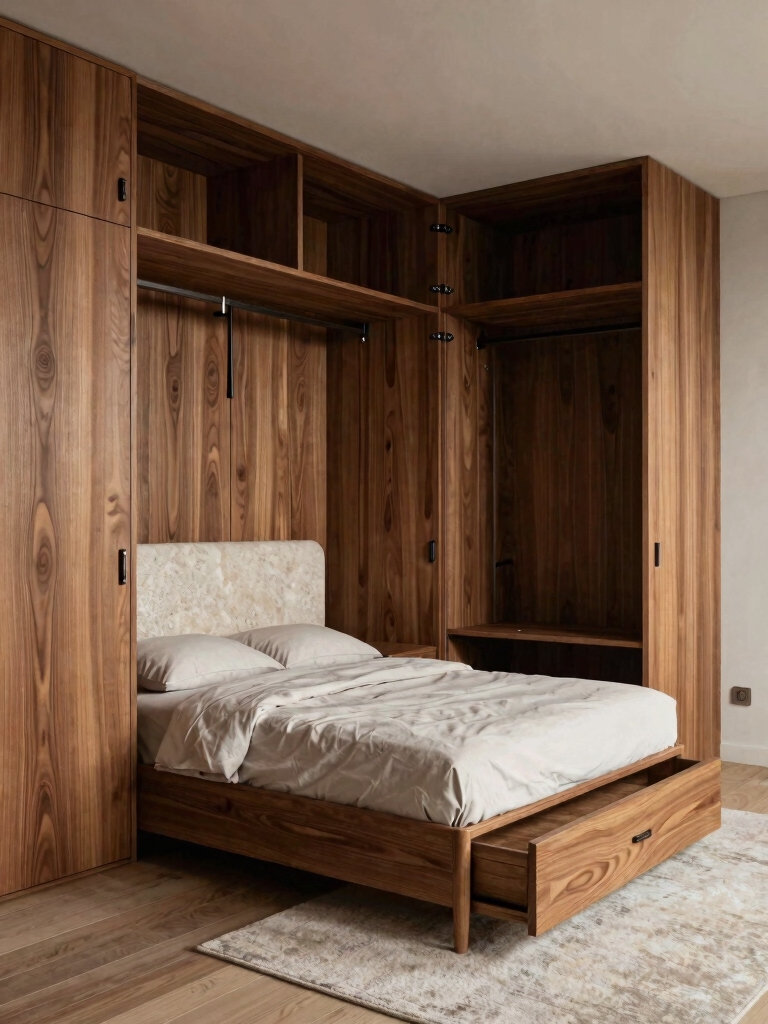
To make a laundry closet look built-in, I start by planning a consistent cabinet and shelf system that fits snugly into the space.
Then, I choose finishes that blend with the surrounding room. I favor shallow depth, hidden hardware, and toe-kick space for a seamless line.
Integrated lighting, uniform doors, and tight gaps keep the closet clean and cohesive.
Incorporating clever storage solutions is key to maximizing every inch in a small laundry room.
Multi-Purpose Laundry Zones: Ironing, Folding, Care
A practical laundry zone isn’t just for washing clothes; it’s where ironing, folding, and fabric care come together in one efficient workflow.
I design this space to flow—from spotless ironing to neat folding, with quick garment checks and fabric tips woven in.
- Dedicated ironing board with height adjust
- Drawer for folded accessories
- Hanging rack for air-dry items
- Folding mat at reach
- Labeled bins for care steps
Incorporating smart organization tips can transform your laundry room into a highly functional and enjoyable space.
Lighting and Color Tricks to Make It Feel Bigger
Bright, bright lighting and a light color palette can transform a cramped laundry nook into a space that feels open and calm.
I favor daylight bulbs, cool whites, and glossy surfaces to bounce light. Use open shelving, mirror accents, and same-width cabinets to reduce visual clutter.
Keep color minimal—one or two shades—so it reads larger and feels orderly and inviting.
Hidden Charging and Utility Stations for Gadgets
Hidden charging stations and tidy utility hubs keep a small laundry area from turning chaotic.
I tailor compact setups with reachable outlets, labeled cords, and a slim power strip inside a cabinet.
You’ll benefit from discreet USB docks, a magnetic cord keeper, and a small charging station atop a shelf.
- Concealed power strip inside cabinet
- Labeled cords for quick cleanup
- USB dock for devices
- Magnetic cord guides
- Compact, portable charging hub
Flexible Countertop Heights for Everyone
Flexible countertop heights make a small laundry setup usable for everyone, whether you’re tall, short, or crouching to reach flats on a shelf.
I design adjustable features with simple levers or removable panels, so you can set a primary work zone and a secondary, lower surface.
I prioritize stable support, smooth edges, and easy cleaning to keep workflows efficient.
Color Blocks and Materials to Visually Enlarge
Color blocks and materials are my go-to tools for visually enlarging a tight laundry space; I use them intentionally to push the walls back and create airiness.
- Use light neutrals on walls and cabinetry
- Pair matte surfaces with glossy accents to reflect light
- Introduce vertical stripes to draw the eye upward
- Choose uniform cabinet panels for seamless sightlines
- Add glass or acrylic organizers to reduce bulk
Maintenance Checklist for a Smooth Small Laundry
To keep a small laundry space running smoothly, I stick to a simple maintenance routine you can follow too.
I wipe lint traps weekly, inspect hoses for cracks, and tighten connections to prevent leaks.
I run a monthly empty load with a washing machine cleaner, level the machines if needed, and organize cords and detergents for quick access.
Simple, effective, consistent.
Conclusion
If you’re squeezing a laundry corner into a tight footprint, you can make it work without sacrificing function. My go-to stat: compact laundry rooms can cut laundry time by up to 20% when you optimize layout and storage. By using vertical storage, stackable units, and sliding doors, you’ll free floor space and reduce clutter. Aim for flexible counters and hidden charging zones, and maintain a simple maintenance checklist. Small tweaks, big returns. You’ve got this.