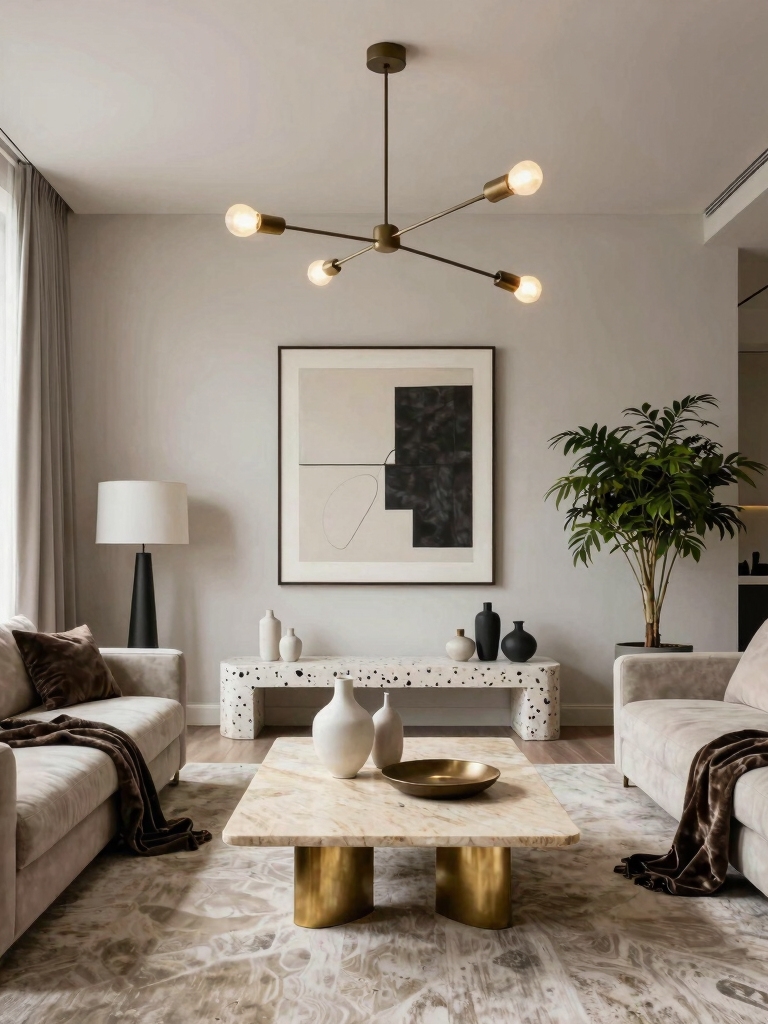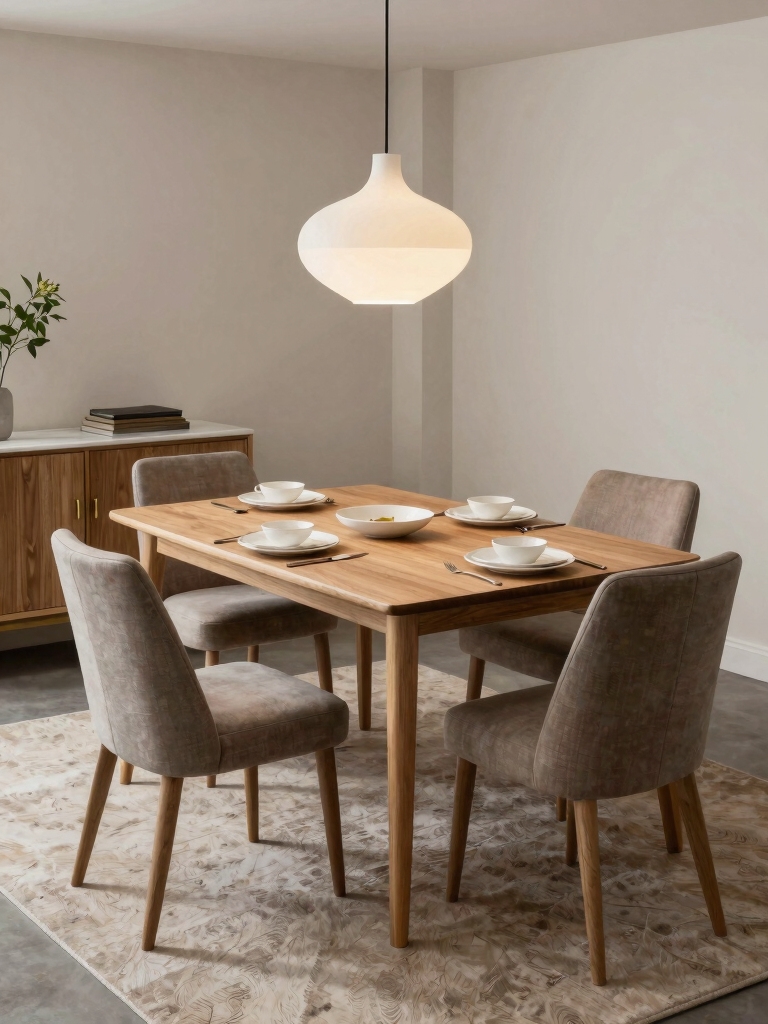
I’ve gathered 14 smart, space-friendly ideas that prove a small dining room can feel stylish, open, and instantly practical. Start by visualizing with precise, scaled measurements, then carve the space into dining, prep, and display zones to cut clutter. Choose size-reflective, compact furniture with hidden storage, and extend the ceiling visually with light colors. Layer lighting, use slim wall accents, and pick practical accessories that boost function without crowding. Curious about more tips you can try next? You’ll find them ahead.
Visualize the Space First: Take Precise Measurements for a Scaled Plan
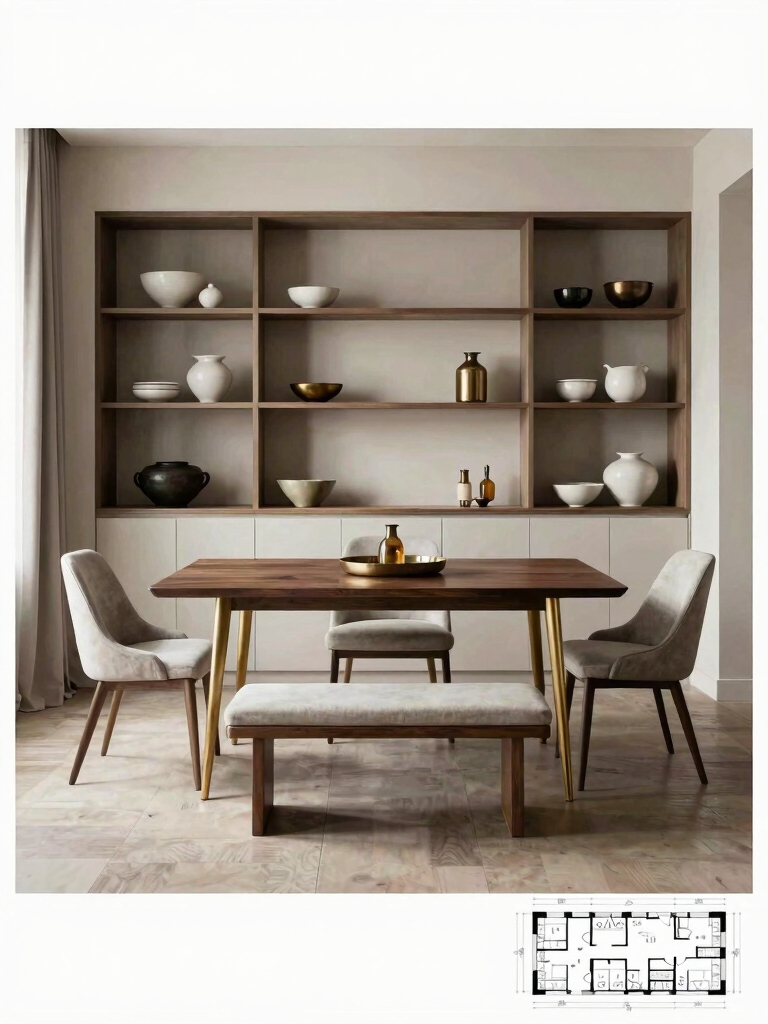
Before you pick a thing, map the space. I measure every wall, door swing, and window with care, then translate them into a scaled plan you can trust.
I sketch angles, note clearance, and mark traffic paths so furniture fits without forcing paths. This precise map guides choices, saving time and avoiding guesswork later.
Practical clarity fuels smarter, smaller-room decisions. Incorporating small dining room ideas that seat more guests can help you maximize your space for entertaining without overcrowding.
Clear the Clutter With Dining, Prep, and Display Zones
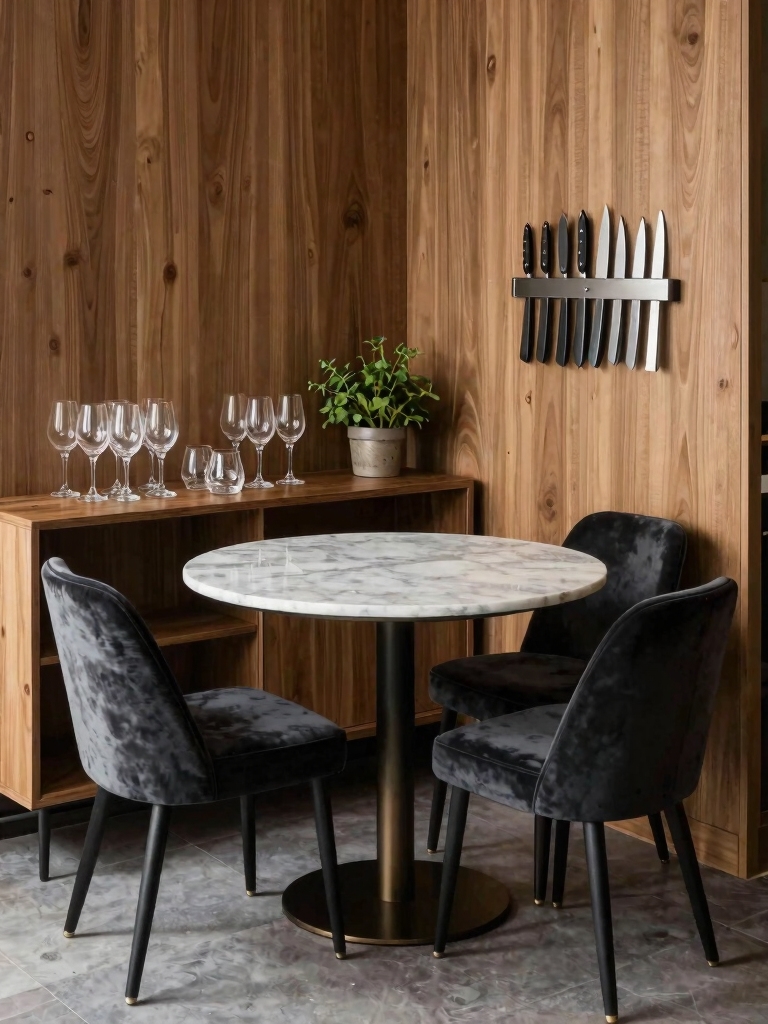
Clear the clutter by carving the space into three crisp zones: dining, prep, and display. I’ll guide you to carve out purpose, so each zone earns its keep, stays tidy, and feels intentional.
- designate a dedicated dining nook with minimal decor
- reserve a compact prep area for essentials
- curate display items that spark joy, not mess
- implement daily reset routines for effortless order
Creating these distinct areas is key to transforming your dining room and elevating every meal with style and function.
Size-Reflective Furniture: Small-Scale Pieces That Maximize Comfort
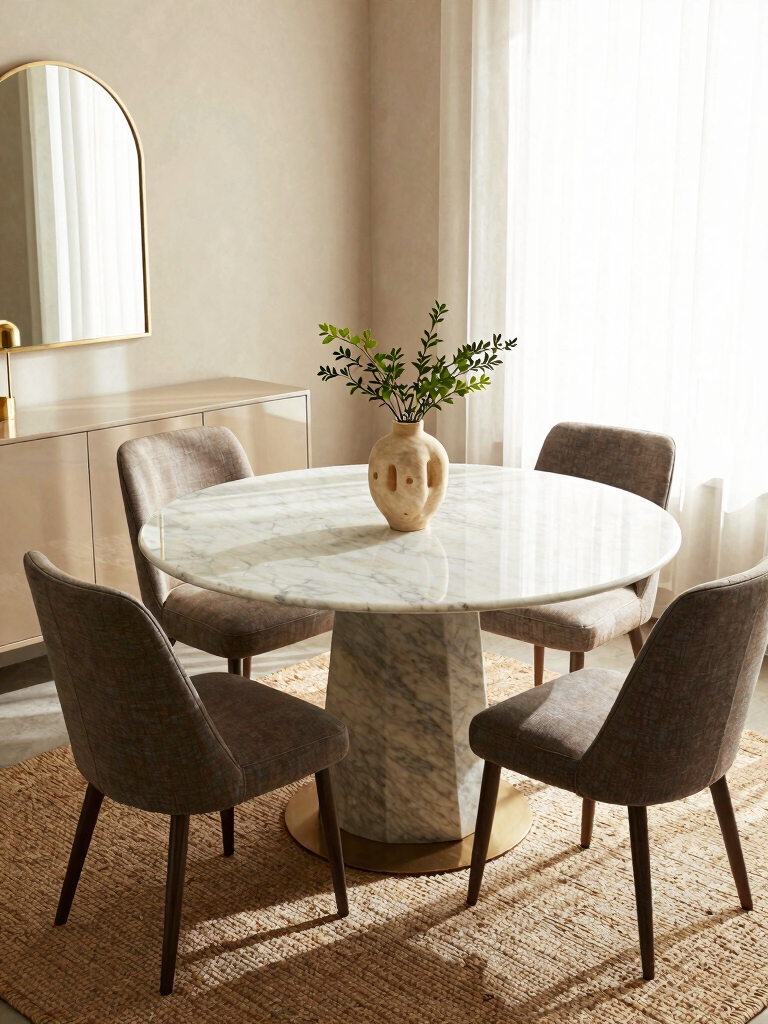
When space is tight, size-reflective furniture becomes your best ally: small-scale pieces can feel surprisingly expansive when chosen intentionally.
I pick compact chairs with slim legs and rounded edges, so movement stays easy and chairs recede visually. A narrow pedestal table doubles surface without crowding.
I mix multipurpose forms—hidden storage, foldaway leaves—so comfort rises without clutter. Incorporating small room ideas that double your space instantly can transform your dining area into a stylish yet spacious retreat.
Extend the Ceiling With Light and Soft Color
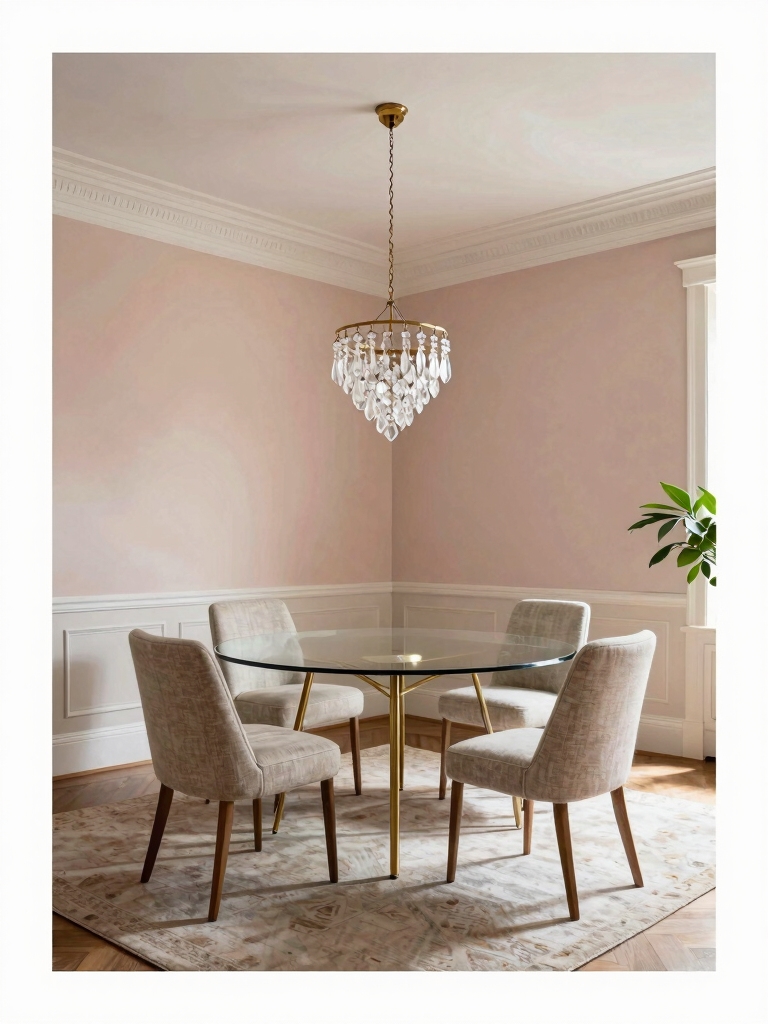
Let’s lift the room’s mood by drawing the eye upward with light and soft color on the ceiling.
I’ll keep ceilings airy, not loud, so walls still shine. A pale tint, satin finish, and gentle gloss help reflect dining light without shouting.
Subtle height cues pair with clean lines and smart, compact lighting choices.
- Use a crisp, pale paint
- Choose low-contrast trim
- Add a delicate sheen
- Keep ceiling decorations minimal
Incorporating these elements can transform your dining area into an Instagram worthy space that feels both stylish and spacious.
Layered Lighting That Keeps Sightlines Clear
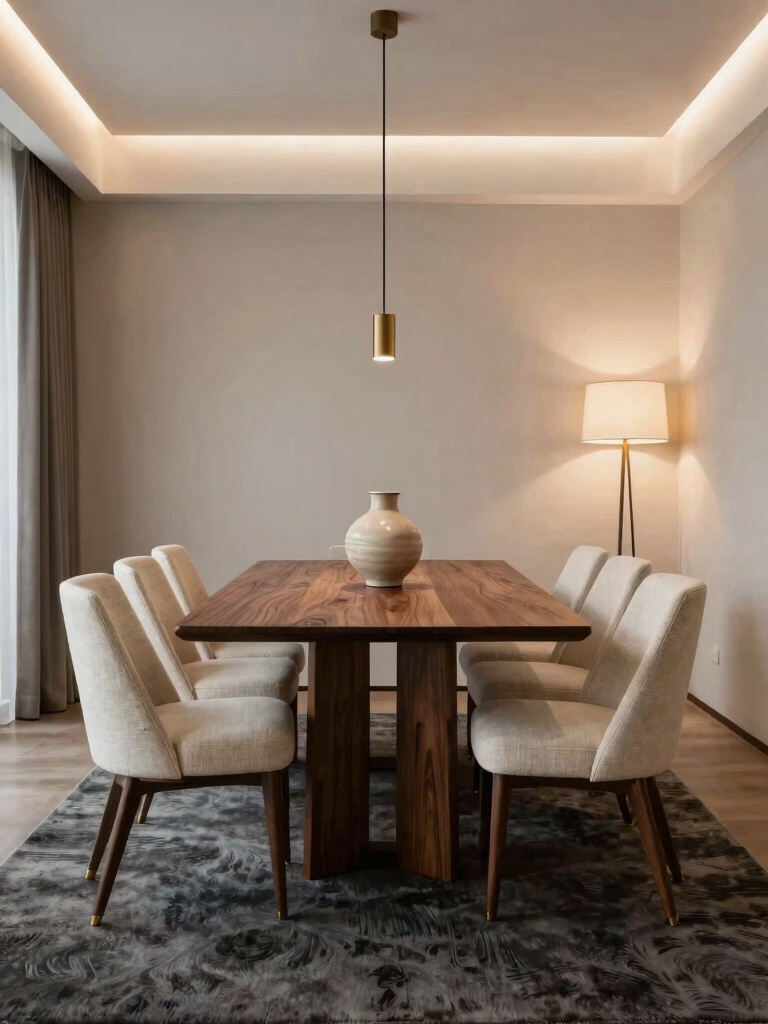
I keep sightlines clean by layering lighting: think task, ambient, and accent in harmony, not in competition.
I aim for minimal fixtures that punch up ambience without clutter, so you still see the room and your friends clearly.
Let’s explore how to balance these elements for a dining nook that feels bright, intimate, and effortlessly functional.
Refreshing your space with room decor ideas can inspire new ways to enhance lighting and style this weekend.
Clear Sightlines, Layered Lighting
Clear sightlines are nonnegotiable in a small dining room, and layered lighting helps you keep them that way.
I guide you to balance brightness, avoid clutter, and spotlight meals without glare. Here’s how:
- Use a slim pendant centered over the table
- Layer ambient, task, and accent lighting
- Choose dimmable, warm LEDs
- Conceal cords and bulky fixtures
Minimal Fixtures, Maximum Ambience
Minimal fixtures can still deliver maximum ambience if you keep the scale in check and the lighting layered.
I’m showing you: a slim pendant, recessed downlights, and a hidden under-cabinet glow.
The trick is balance—bright enough for tasks, soft enough for mood.
I’ll guide sightlines clear, zones defined, and rooms feeling spacious, not crowded, with intelligently staged warmth.
Use Mirrors to Double the Visual Space
I love how a well-placed mirror can double the sense of space without adding square footage, and I’ll show you the practical placements that work.
Think about reflecting wall art, light, or even a row of glassware to brighten the room and create continuity, using Reflective Wall Tricks to keep things feeling open.
We’ll balance Mirror Placement Ideas with Light-Enhancing Glassware to spark ideas you can try tonight.
Adding stunning wall decor ideas can transform your dining room and make dinner feel special without crowding the space.
Mirror Placement Ideas
Looking to make a small dining room feel bigger? I place mirrors strategically to double perceived space.
Here’s how:
- Hang a tall mirror opposite a window for natural light bounce.
- Use a gallery of small mirrors to create depth without crowding.
- Lean a large framed mirror to visually extend walls.
- Mount mirrors at eye level to reflect activity and banish corners.
Reflective Wall Tricks
I’m showing you mirrors, not mess, to cheat perspective. Place a slim mirror opposite a window to bounce daylight, or flank a dining nook with vertical panels to lengthen walls.
Avoid busy frames; choose simple, cohesive reflections that amplify openness and calm.
Light-Enhancing Glassware
Small changes in what you reach for can have a big impact, and light-enhancing glassware is a perfect example.
I suggest mirrors in glassware silhouettes, stacked tall and slim, reflecting candlelight. The effect doubles depth without crowding.
Try these:
- Pick clear, simple shapes
- Use mirrored trays
- Alternate heights
- Clean, streak-free surfaces
Color Schemes for Small Dining Rooms: Light, Neutral, and Gentle Contrast
When you’re decorating a small dining room, light, neutral tones with a gentle contrast keep the space feeling open and inviting.
I lean on soft whites, warm beiges, and pale grays to reflect natural light without shouting.
Add subtle contrast with textures or a single dark accent—chairs, art, or a rug—to keep depth without crowding.
Practical, friendly, and clear.
Incorporating stunning decor ideas can truly elevate the ambiance and make every meal feel special.
Glass and Slim Profiles: Airy Surfaces That Read as Larger
Glass surfaces feel nearly invisible, but they’ll visually expand a room by letting light旅行 through and bounce around.
I’ll show you how slim profiles—think tabletop edges and leg lines—read as open space instead of blocking it.
With airy glass and slender details, your dining area can feel bigger without sacrificing function.
Airy Glass Surfaces
Layering airy glass surfaces with slim profiles instantly widens a dining room, because light travels freely through them and the eye reads space rather than clutter.
I share practical tips you can try tonight, without fuss, to keep things breathable yet stylish.
- Choose clear, low-iron glass for maximum translucence
- Opt for frameless or ultra-thin frames to minimize visual weight
- Use glass shelving to reflect light without crowding
- Pair with pale, matte finishes to amplify openness
Slim Profile Impact
A slim profile matters more than you’d think: a near-invisible edge, minimal hardware, and glass that keeps visual weight light can make a dining room feel instantly larger.
I design with that edge in mind: less bulk, more openness. You’ll notice smoother traffic, brighter reflections, and smarter scale.
Practical tips: choose tempered glass, hid mounts, and a shallow frame.
Create Flex With Multi-Function Storage That Plays Two Roles
Ready to maximize tiny dining spaces? I’m showing you how multi-function storage can flex two roles at once.
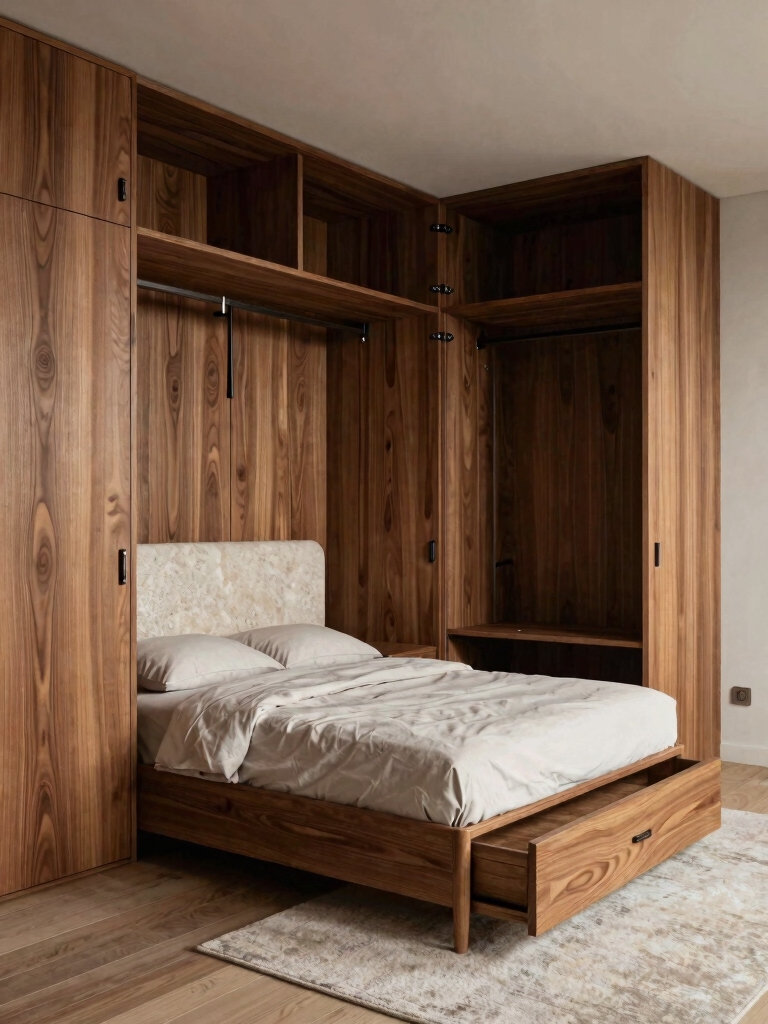
Think a console that hides a fold-out writing desk, benches with built-in bins, a sideboard that doubles as a minibar, and wall shelves that become a mini bar plus display.
- Dual-purpose furniture
- Secret compartments
- Convertible surfaces
- Streamlined silhouettes
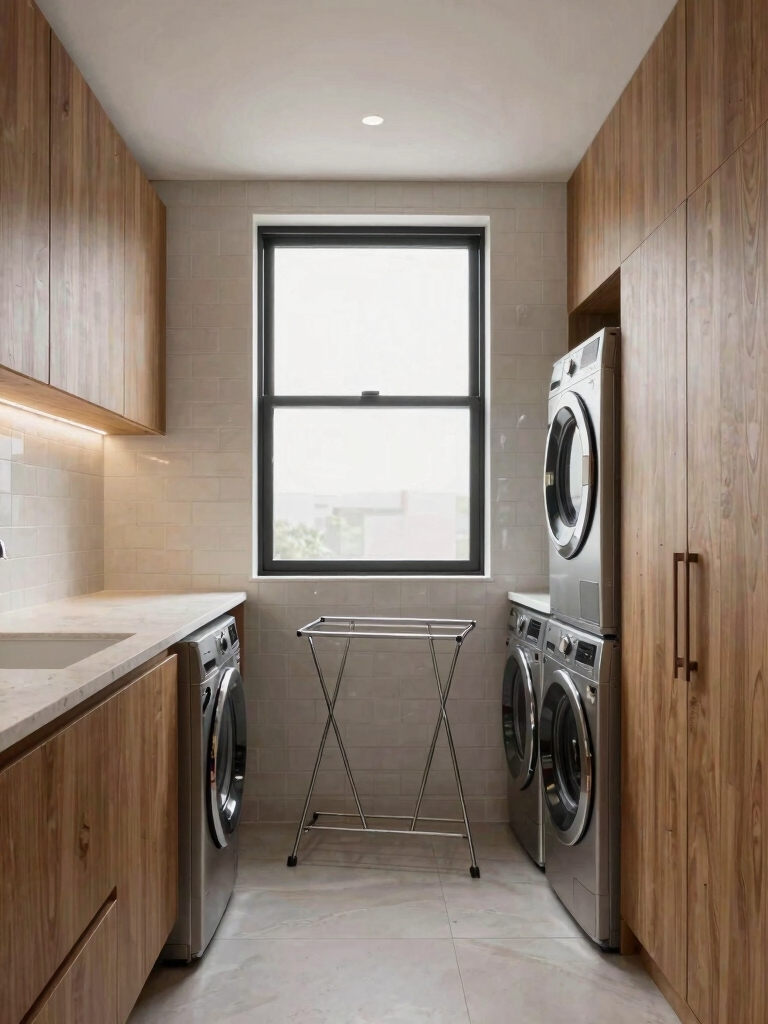
Incorporating smart design tips from small laundry rooms can help you fit more into less space without crowding.
Seating Solutions That Save Space Without Sacrificing Comfort
I’ll show you compact seating options that fit tight spaces without pinching comfort.
Think slim-profile furniture that still invites lounging and easy socialization.
Let’s explore how these lightweight silhouettes and smart arrangements can punch up seating without crowding the room.
Incorporating cozy sitting room ideas can transform your dining area into a warm, inviting space while maximizing every inch with space-saving refresh techniques.
Compact Seating Options
If you’re tight on space but refuse to sacrifice comfort, start with compact seating that pairs form with function.
I’ll show you options that tuck, fold, or stack without shouting for attention. Then you’ll mix and match for a balanced look.
- Banquette seating with hidden storage
- Nesting stools that bonus as side tables
- Folding chairs that disengage mid-meal
- Slim-line chairs with narrow profiles
Slim Profile Furniture
I’m all about seating that tucks in, not tugs at walls. Think slim legs, curved backs, and stackable or foldable options that stay welcoming.
I’ll mix in slim benches, compact chairs, and modular pieces so you can reconfigure without crowding.
Practical, approachable, stylish—space-saving never felt this comfortable.
Narrow but Bold: Wall-Driven Dining Accessories and Accents
Wall space can punch above its weight in a dining room, especially when you lean into wall-driven accents that stay bold without crowding the table.
I suggest compact drama: slim shelves, magnetic spice frames, a single oversized clock, and a bold mirror.
- Slim shelves with minimal brackets
- Magnetic spice frames
- One oversized clock
- Bold wall mirror
Transforming your room corners into stunning decor spaces can further enhance the dining area without taking up extra floor space.
Texture Without Overwhelm: Subtle Patterns and Fabrics
Texture in a small dining room doesn’t mean patterns have to shout. I favor subtle weaves, soft solids, and fabrics that hug the light rather than fight it.
Think tonal palettes, micro-prints, and matte finishes. I mix textures strategically—richer chairs with a lean table, a whisper-soft napkin, a lightly textured rug—to add depth without crowding the space.
Practical Layouts for Everyday Dinners: 3 Case-Studies You Can Replicate
Three practical layouts for everyday dinners you can actually replicate: compact, flexible, and inviting, each built around real-life rhythms from quick weeknight meals to lingering Sunday suppers.
I test three setups you can copy now, tweaking table size, chairs, and flow to suit your space.
- Compact corner: corner table, clear path, hidden storage
- Flexible: extendable leaves, movable chairs
- Inviting: soft lighting, focal wall, open seating
- Quick cleanup: tray system, nearby wash area
Small Details, Big Impact: Accessories With Purpose
Small details can swing a dining room from nice to notable, and accessories are where that happens without overhauling the layout.
I choose pieces with purpose: a single sculptural vase, a patterned runner, and a strategic mirror to expand light.
I mix textures, keep scale right, and swap seasonal accents.
Practical, not precious, I curate to complement, not clutter, the core dining moment.
Conclusion
I like to think of your dining space as a small stage where everyday meals become a quiet performance. By measuring precisely, clearing clutter, and choosing compact, clever pieces, you’ll widen the room’s voice without crowding it. Think of soft colors pointing upward, layered lighting guiding the eye, and textures that whisper rather than shout. It’s not about bigger; it’s about smarter. Like a careful lighthouse, your table will glow, guiding conversations without stealing the view.