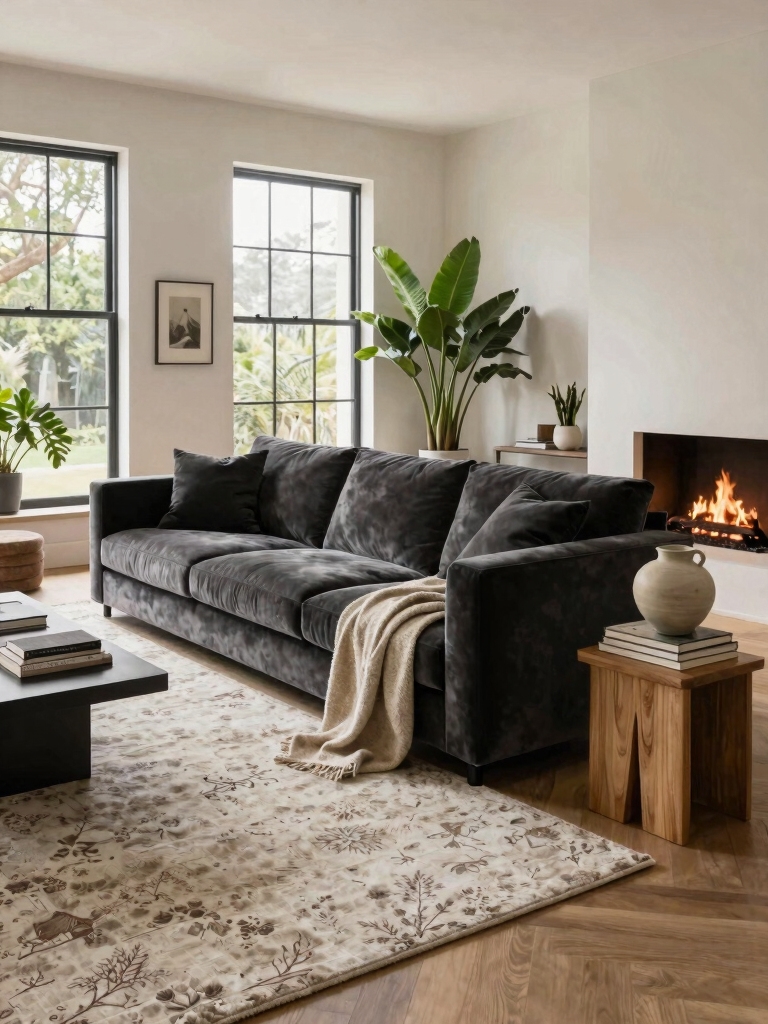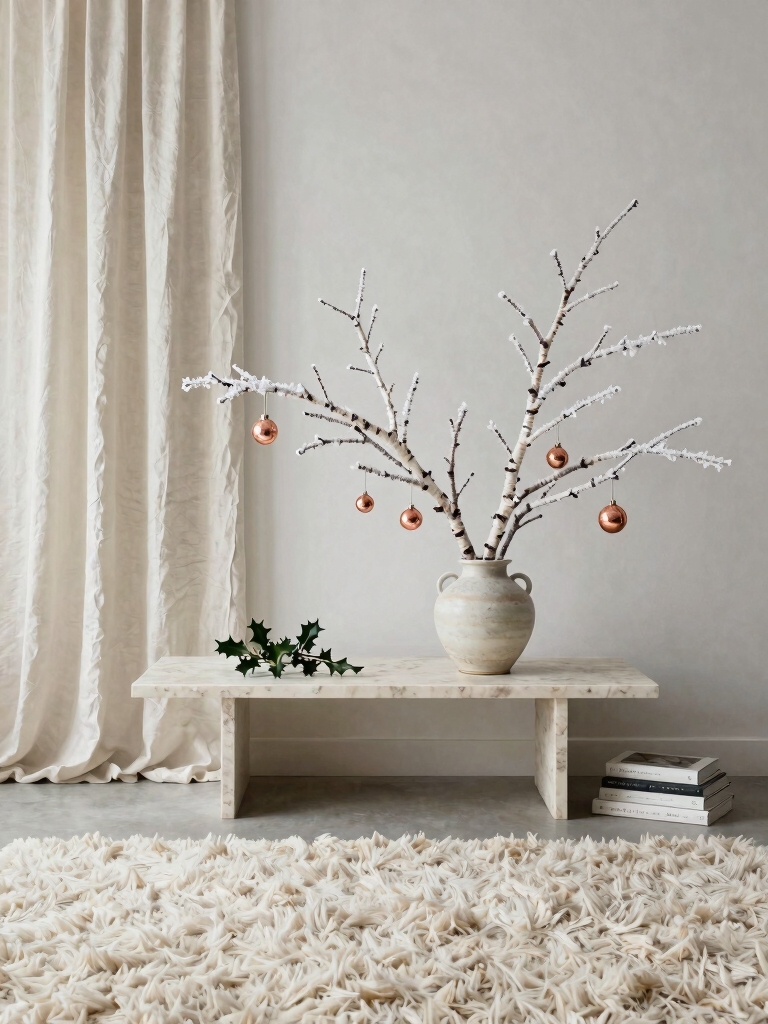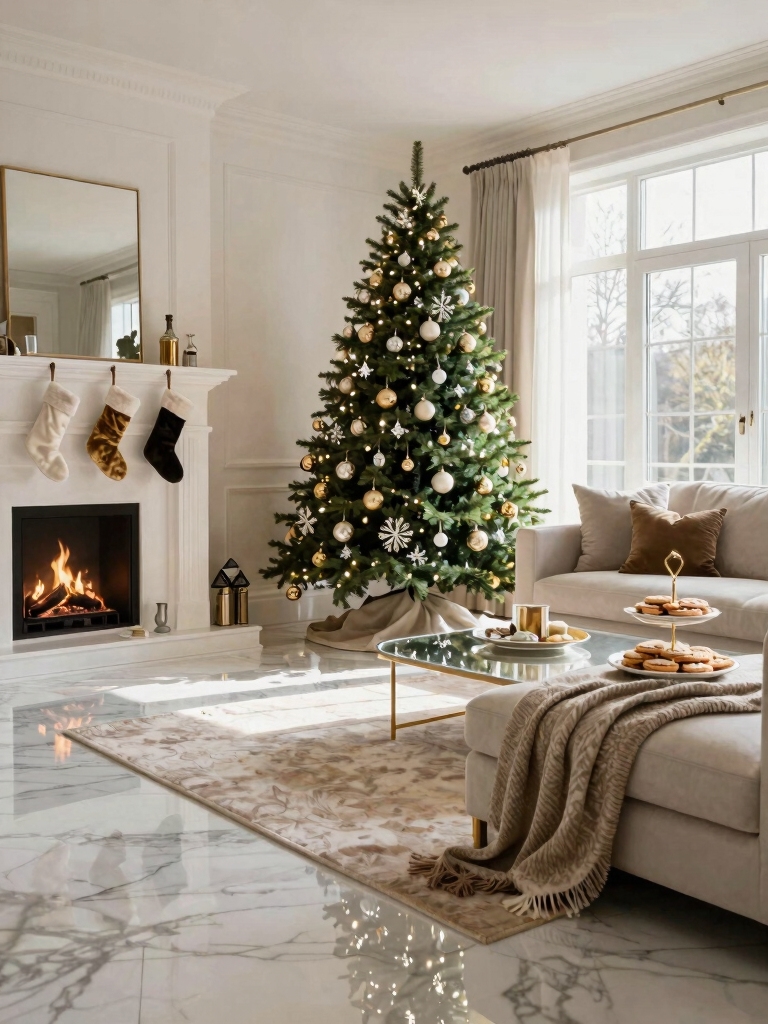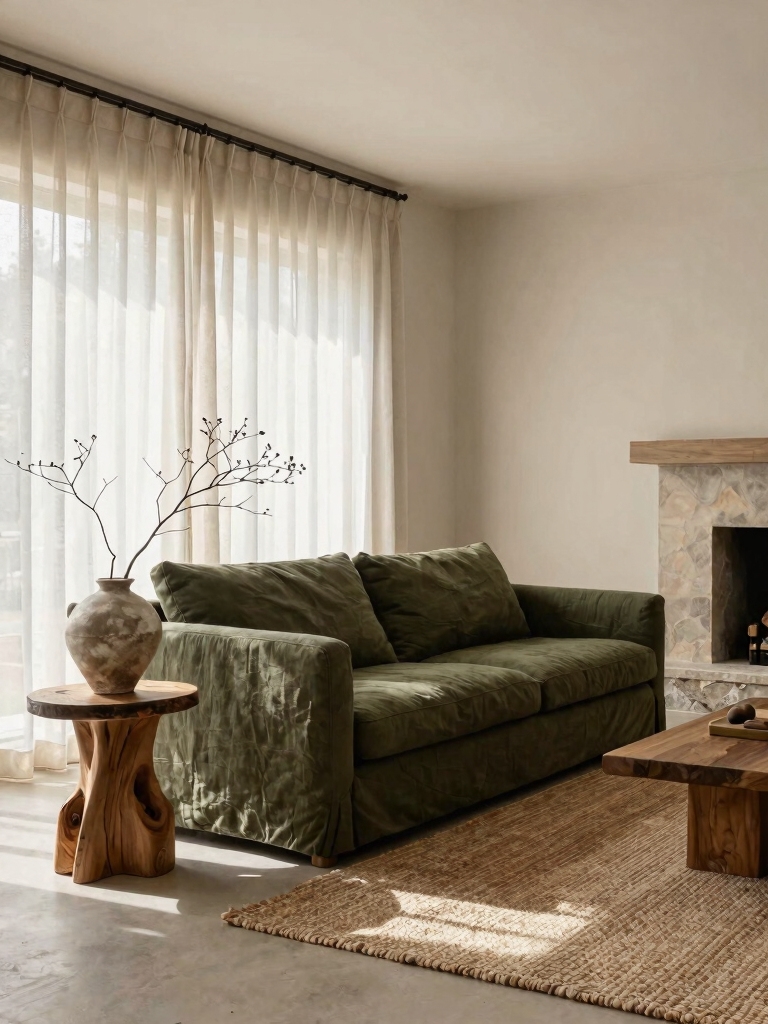
I’ll start by rearranging my furniture to open pathways and create conversation circles. I define my scheme with a cohesive color palette, then layer lighting with multiple sources. A statement rug anchors the room, while creative storage keeps surfaces clear. I transform a corner into a cozy nook and update a wall with removable wallpaper. Styling my shelves and choosing a focal coffee table completes the look. There’s more to explore just ahead.
Start By Rearranging Your Furniture Layout
Before we even consider buying anything, let’s rethink the space we already have. I’m suggesting you move things first.
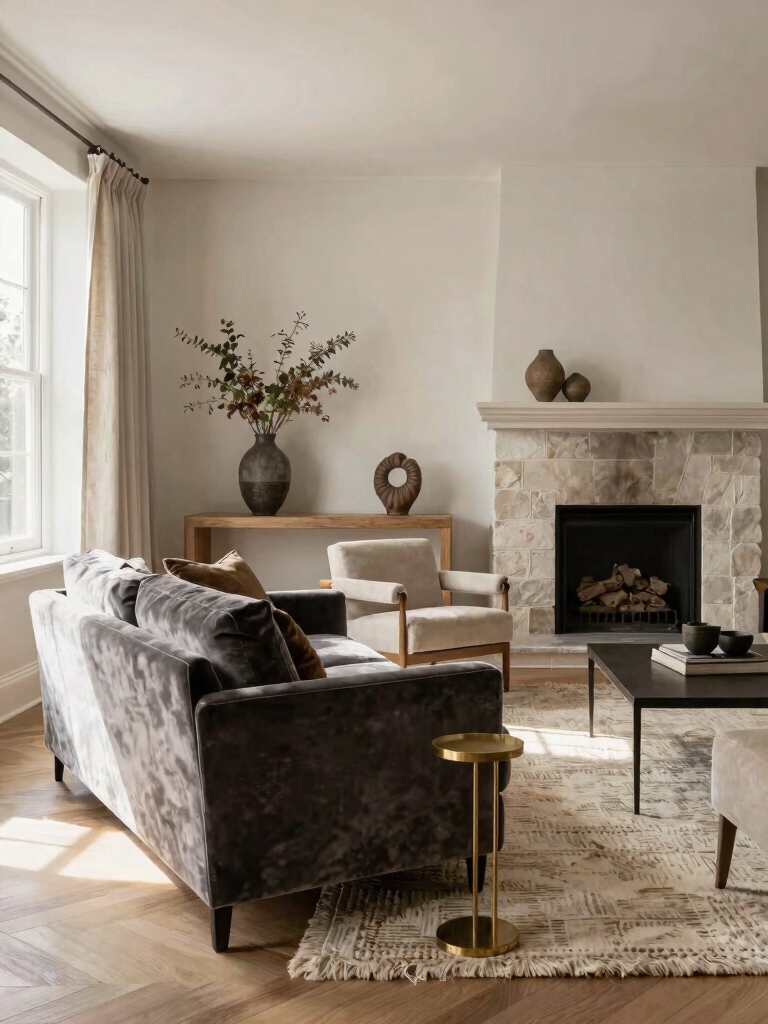
Clear the room and look at its bones. Try placing your largest sofa against a different wall. Pull chairs into a conversation circle. Open up pathways.
You’ll often find a better layout hiding in your existing furniture. It costs nothing, and it can completely change how the room feels. For apartment renters, incorporating small living room ideas can maximize comfort and style without overcrowding the space.
Define Your Scheme With a Cohesive Color Palette
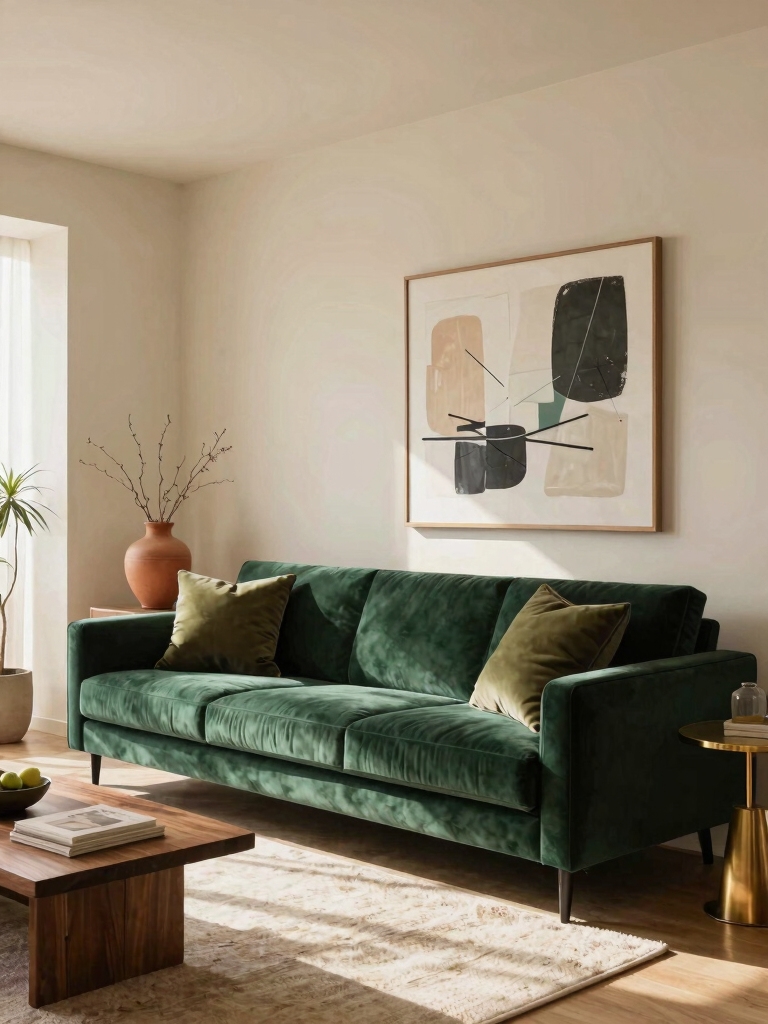
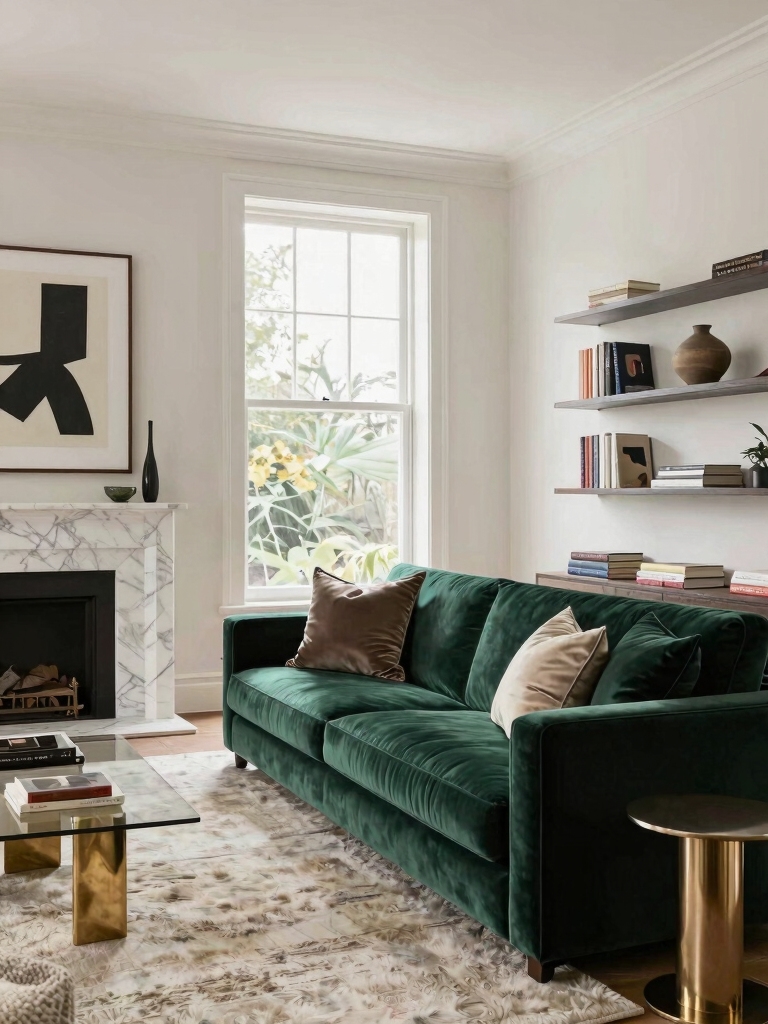
I start with a single dominant hue to anchor the room.
Then, I introduce secondary colors for richness and texture.
Finally, I weave in neutral tones to balance the whole composition.
Incorporating budget-friendly accents ensures a chic look without overspending on living room decor.
Choosing a Dominant Hue
While the walls may form the foundation, it’s the dominant hue you choose that truly sets the emotional tone of your space.
I don’t pick randomly. I consider the feeling I want—a calming blue, an energizing yellow, a grounding green. This main color becomes my anchor.
It’ll flow through my largest elements, like the sofa or rug, creating an immediate and cohesive atmosphere before I layer anything else.
Building With Secondary Colors
Once you’ve anchored your room with a dominant hue, it’s time to introduce a secondary color.
I see this as the supporting character. It can be a complementary contrast or a tonal cousin. I use it for key furniture, art, or textiles.
This choice defines your scheme’s personality. A cohesive palette feels intentional, not accidental.
It creates rhythm and guides the eye, building a richer visual story.
Incorporating Neutral Balancing Tones
Now, introduce your neutrals. I treat tones like cream, taupe, or gray as my foundation.
They’re a quiet breath between bolder moments. I layer them through a large rug, a sofa, or wall color.
This creates a calm base that lets my secondary accents truly sing without competing. Think of it as visual harmony; your neutrals hold the space, allowing your curated colors to feel intentional, not chaotic.
Maximize Space With Creative Storage Solutions
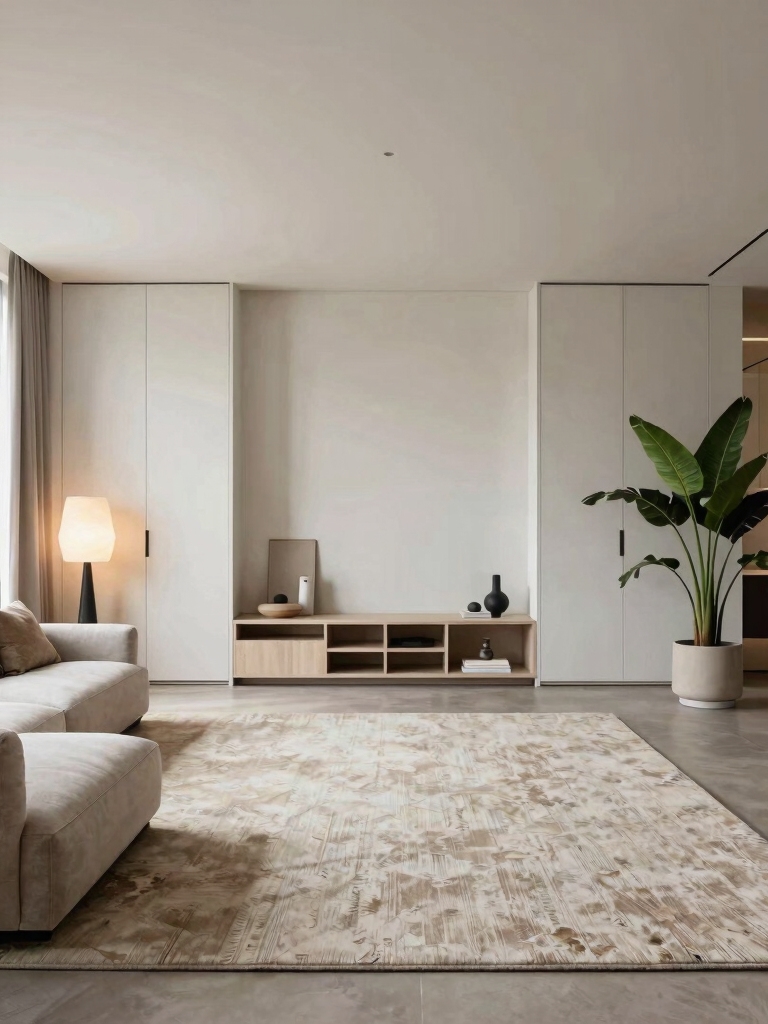
I’m always hunting for furniture that serves two purposes.
Look for pieces with hidden compartments—they’re lifesavers.
It’s how I keep my space feeling open and uncluttered.
Transform your space by incorporating clutter-free setup techniques to enhance organization and flow.
Multifunctional Furniture Pieces
Let’s kick things off with multifunctional furniture, your best ally for a clutter-free living room.
I believe every piece should earn its keep. My favorites seamlessly merge form with function.
- An ottoman with interior storage.
- A sofa that converts into a guest bed.
- Nesting tables that separate for parties.
- A sleek media console with concealed shelving.
Hidden Storage Opportunities
While multifunctional furniture tackles the obvious, it’s the unseen storage that truly reveals a minimalist space.
I seek opportunities within the architecture. I add drawers under a window seat, shelves above a door, and use hollow ottomans.
This approach hides daily clutter, maintaining serene surfaces. I think of every unused inch as a secret compartment, freeing my living room from visual noise.
Layer Your Lighting With Multiple Light Sources
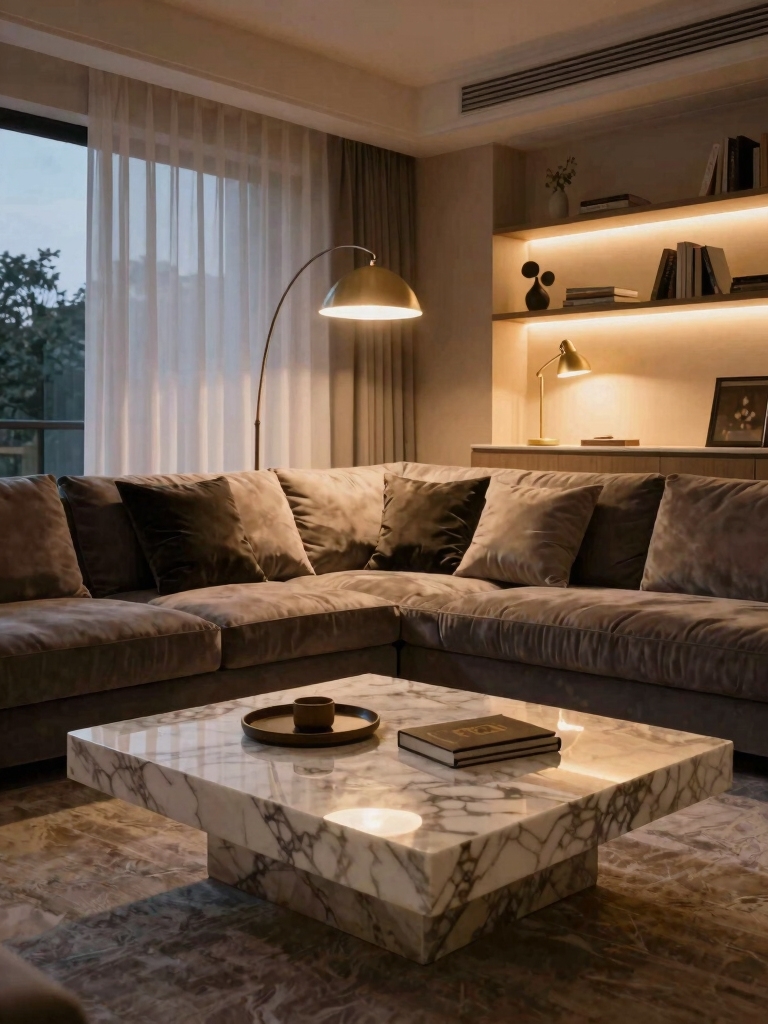
Three light sources are your starting point for a layered room.
I combine ambient, task, and accent lighting to build mood and function from the ground up.
- A central ceiling fixture for overall glow.
- Targeted floor or table lamps for reading.
- Wall sconces or artwork lights for drama.
- Decorative string lights or candles for texture.
This creates depth and lets me sculpt the atmosphere. Creative ways to enhance your living room walls can also complement your lighting choices, adding visual interest and personality to your space through living room wall decor ideas.
Anchor the Room With a Statement Area Rug
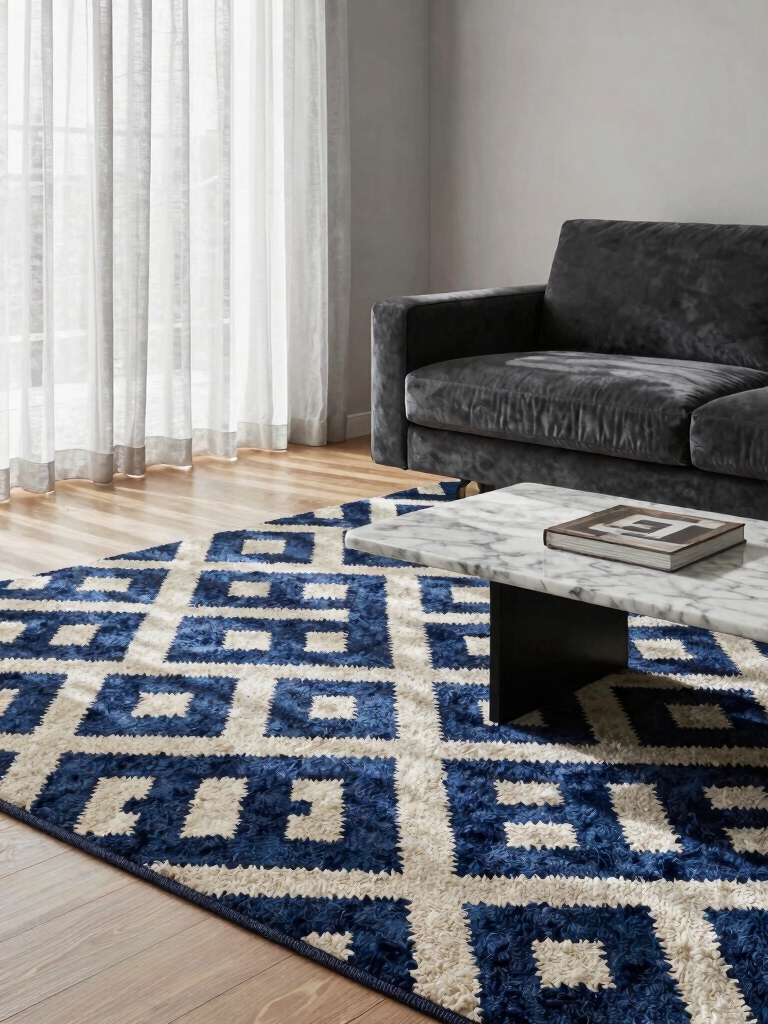
A statement rug is my non-negotiable foundation, literally grounding the entire space.
I choose one with strong color or a graphic pattern; it defines the furniture layout instantly.
For me, its scale is essential—the front legs of all key pieces should rest upon it.
This single layer adds immense texture and warmth, making the room feel cohesive and intentional before I add another thing.
To enhance the look, consider adding stylish coffee table decor that complements the rug and ties the room together seamlessly.
Add Height and Drama With New Curtains
Once the rug anchors the layout, I look up to address the walls, installing floor-to-ceiling curtains to instantly amplify the room’s scale.
I favor lightweight linen for its soft diffusion, but the hardware matters just as much.
My formula relies on a few key details:
- Hanging the rod close to the ceiling.
- Extending it well past the frame.
- Letting fabric pool slightly on the floor.
- Choosing a subtle, textural weave.
Top designers emphasize how these elements contribute to creating stylish wall decor that enhances any living room space.
Refresh Your Seating With New Throw Pillows
I’m swapping my old pillows for new ones to completely transform my sofa.
I play with fabric and texture mixes, like pairing velvet with linen. Bold statement colors and patterns give my seating its fresh, curated look.
For beginners, choosing simple yet stylish pillow combinations is one of the easiest decor ideas to update your living room instantly.
Fabric And Texture Mix
Mix fabrics and textures to refresh your seating—it’s my favorite quick-change trick.
I focus on contrast to build depth. Think of it as layering a personal uniform for your sofa.
- Introduce nubby linen or chunky wool.
- Pair with smooth velvet or crisp cotton.
- Add a subtle, woven bouclé.
- Anchor it all with a sleek, leather-look pillow.
It instantly feels curated, not cluttered.
Statement Colors And Patterns
While playing with texture builds depth, color and pattern create the focal point.
I see throw pillows as my easiest edit. I’ll introduce one bold, graphic print first. Then, I layer in a solid hue pulled from its palette. This contrast feels intentional, not chaotic.
It’s a personal stamp that instantly refreshes the room’s energy. Don’t be afraid; a vibrant pillow is a commitment you can always change.
Upgrade Your Sofa With Stylish Slipcovers
Although your sofa may feel like it’s seen better days, you can give it a fresh identity with a stylish slipcover. I find them transformative.
Consider these four elements to guide your choice:
- Fabric Weight: Linen offers texture; heavy cotton provides durability.
- Tailored Fit: A crisp, structured shape elevates the entire room.
- Neutral Base: Start with a versatile hue like oatmeal or slate.
- Seasonal Layers: Add a chunky knit or velvet pillow to shift the mood.
Slipcovers are one of the easiest budget-friendly living room decor ideas that look high-end and can instantly upgrade your space without breaking the bank.
Swap Out Your Artwork for an Instant Boost
I often swap my framed prints for personal family photos—it adds a layer of warmth no generic art can match.
For a more unexpected feel, I’ll display a few unconventional objects I’ve found, like a piece of driftwood or an antique map.
This simple switch instantly refreshes the entire room’s character.
Choosing the right wall art size can also dramatically enhance the impact of your living room decor.
Consider Framed Family Photos
Framed family photos give your art a personal touch. I swap impersonal prints for these cherished moments.
It’s an instant, soulful boost. Curate your gallery with intention.
- Coordinate Frames: Use matching finishes for cohesion.
- Play with Scale: Mix large statement pieces with smaller clusters.
- Consider Layout: Arrange in a grid or asymmetrical grouping.
- Choose Meaningful Images: Select photos that spark genuine joy.
Display Unconventional Found Objects
Since personal photographs offer one path, consider another by displaying unconventional found objects for an immediate refresh.
I swap my artwork for nature’s discards: a feather, a smooth stone. A flea-market textile becomes my focal point.
It’s personal curation, not decoration. You’ll tell a story that’s uniquely yours. The effect is instant, transforming a space with soul.
Just find what speaks to you and give it a place of honor.
Build a Gallery Wall That Shows Off Your Style
How do you transform a blank wall into a canvas that feels authentically yours? I’ll build a gallery wall. I collect pieces that resonate with me, letting their interplay tell my story.
- Mix original art with personal photographs
- Layer in sculptural objects for depth
- Use varied framing for texture
- Play with asymmetry for dynamic balance
It’s a curated snapshot of your world. Incorporating living room wall decor ideas above couch can inspire creative ways to elevate your space.
Incorporate Mirrors to Brighten and Enlarge
While a gallery wall tells a story, a strategically placed mirror can define the entire narrative of your space.
I hang mine opposite a window, instantly doubling the light and view. A large, leaning mirror makes a room feel expansive and airy.
I choose simple frames that don’t compete. It’s not just décor; it’s a tool that manipulates perception, making my living room brighter and far larger than its dimensions.
Mix and Match Textures for a Rich Feel
Just as mirrors play with light, textures create a tangible depth.
I think of my space as a tactile gallery. It’s not about matching, but feeling. I layer sensations.
- Velvet for quiet luxury.
- Rough linen for grounding contrast.
- Polished wood for organic warmth.
- Matte stone for cool weight.
This quiet conversation between surfaces is what makes a room feel complete and considered.
Introduce a Statement Plant or Tree
After building texture with fabric and finish, I consider what lives in the room—and a statement plant is the ultimate living layer.
I choose a specimen with architectural form, like a fiddle-leaf fig or sculptural cactus. It instantly draws the eye and softens the space.
Don’t hide it; let it command a quiet corner. This living element breathes energy into my decor, becoming a focal point that thrives.
Transform a Corner Into a Cozy Reading Nook
To build on that living layer, I now focus on carving out space for myself—specifically, a corner I can transform into a cozy reading nook.
It’s my personal retreat. I achieve this with a few curated essentials:
- A deep-seated armchair or floor cushion
- A soft, textural throw blanket
- A focused reading lamp
- A small side table for my book and tea
It’s a capsule of calm.
Update a Wall With Removable Wallpaper
Now I’m turning to a wall that needs more character. Removable wallpaper‘s my perfect, commitment-free tool.
I pick a bold pattern I love, prep the surface, and align my first panel. I smooth it down carefully, avoiding bubbles.
Suddenly, a bland wall becomes a vibrant focal point. The whole mood of the room shifts.
If my taste changes tomorrow, I can just peel it off and start anew.
Style Your Shelves and Surfaces
Because the walls now have their voice, my focus turns to the shelves and surfaces waiting to be styled.
I curate these displays thoughtfully, creating vignettes that feel collected. My approach is layered but spare, achieving a sophisticated calm.
- Textured ceramics or stone objects
- A small stack of artful books
- A singular piece of vintage brass
- A trailing, sculptural plant
Choose a Focal Point Coffee Table
A coffee table’s presence anchors my living room, so I choose one that acts as a sculptural focal point. I’m drawn to unique materials or a bold silhouette.
It shouldn’t just hold a tray; it must command attention and spark conversation. I keep its surface intentionally sparse, letting its form shine.
This single, considered piece defines the entire room’s aesthetic and grounds the seating area perfectly.
Conclusion
So, I realize a living room is more than a space. It’s a canvas, and every rug, every lamp, every shelf is a brushstroke. With these ideas as your palette, your room will become a story you get to live inside. Think of it not as decorating, but as building a nest—one cozy, well-lit corner of the world that is wholly, beautifully yours.