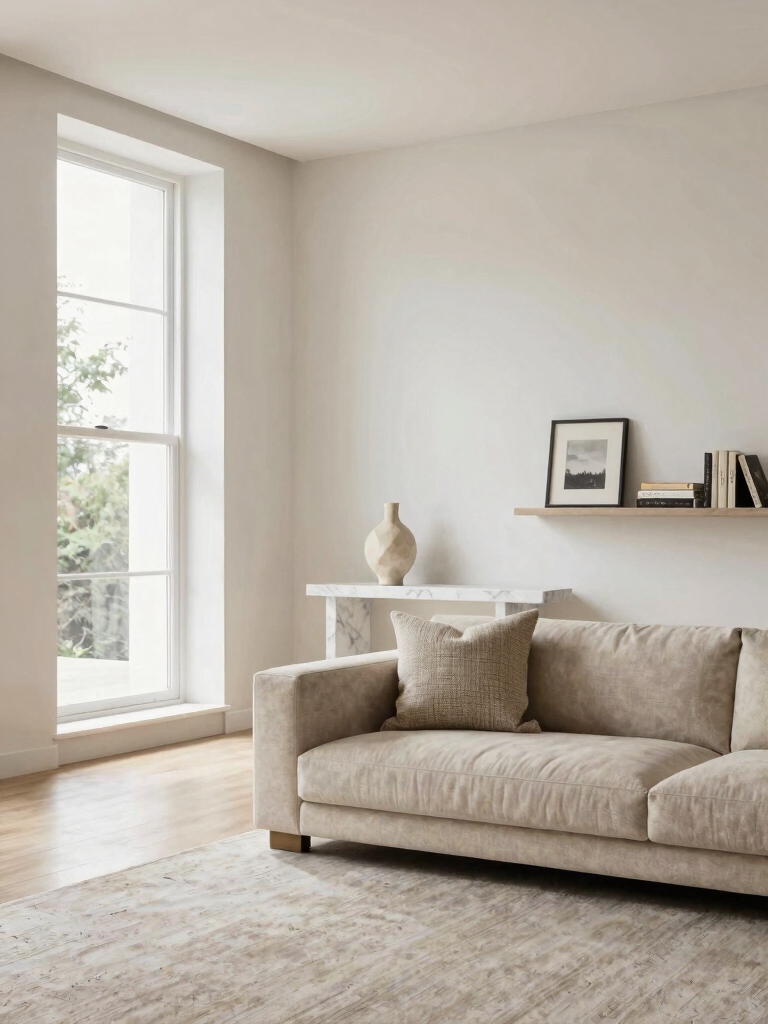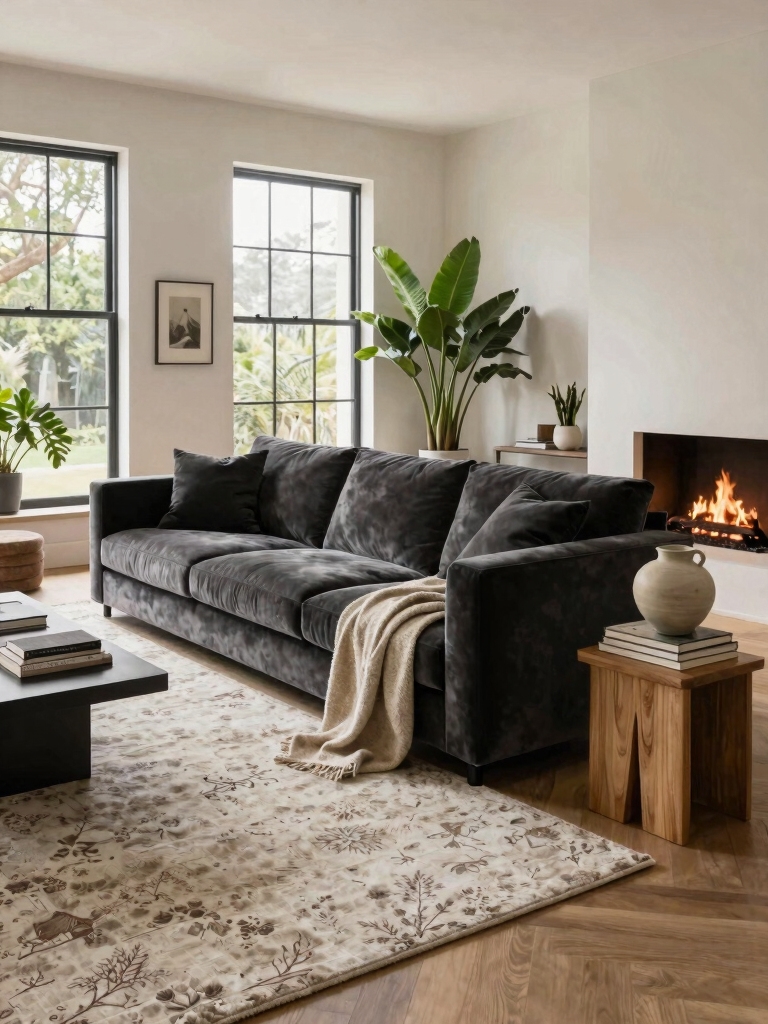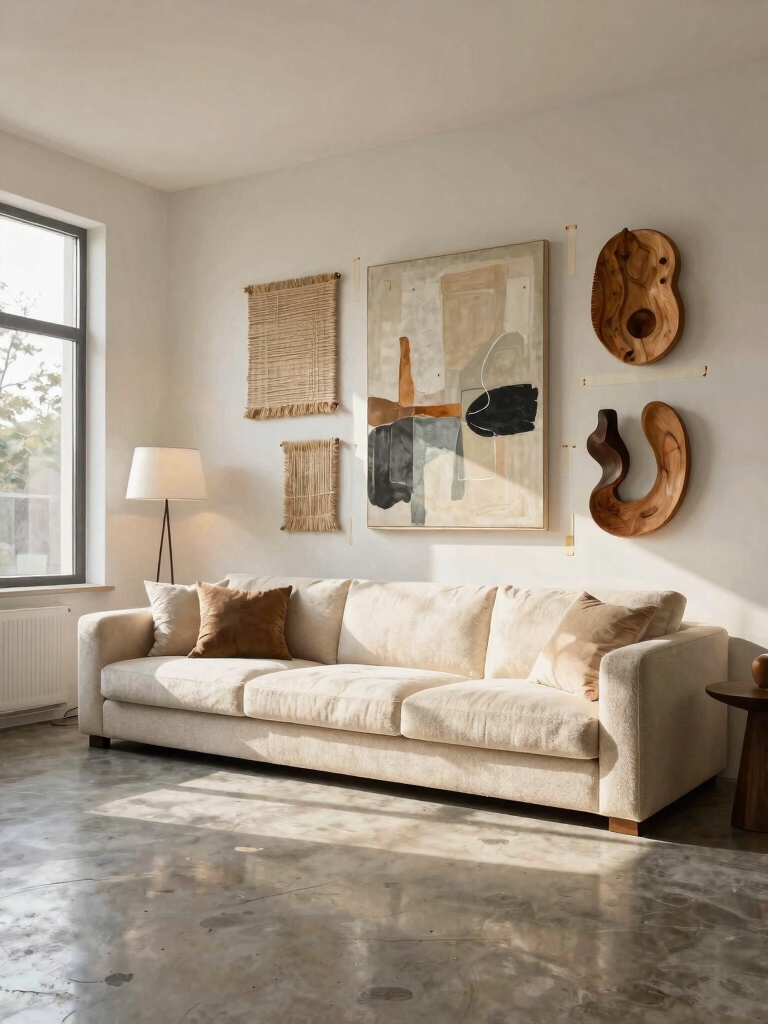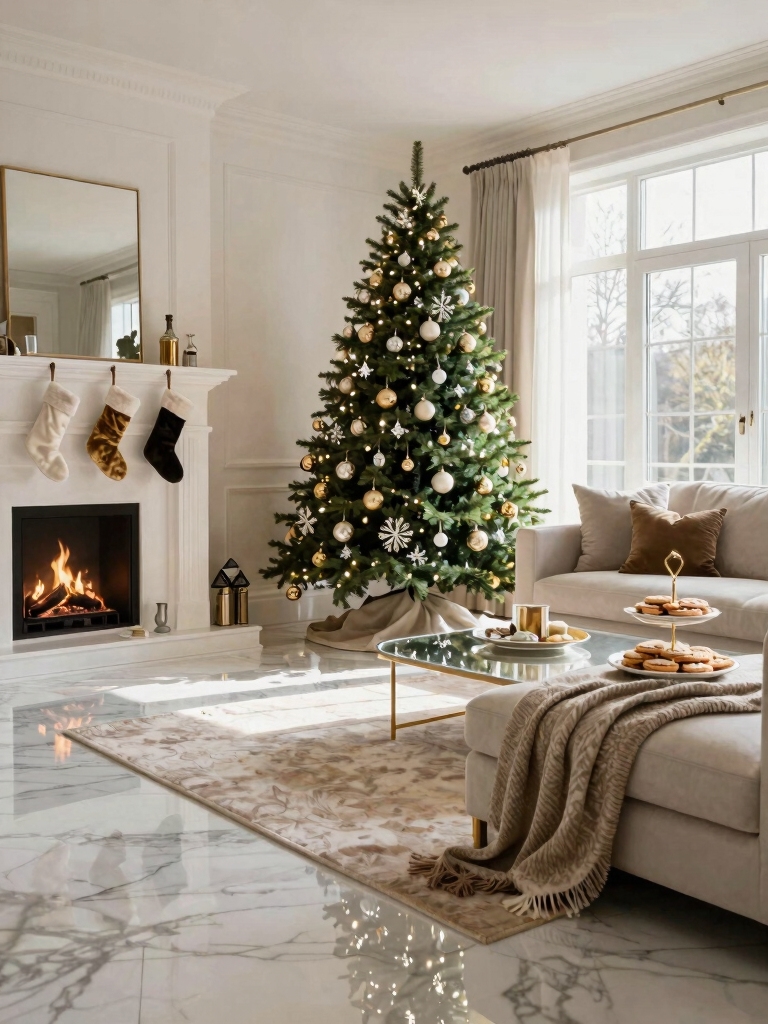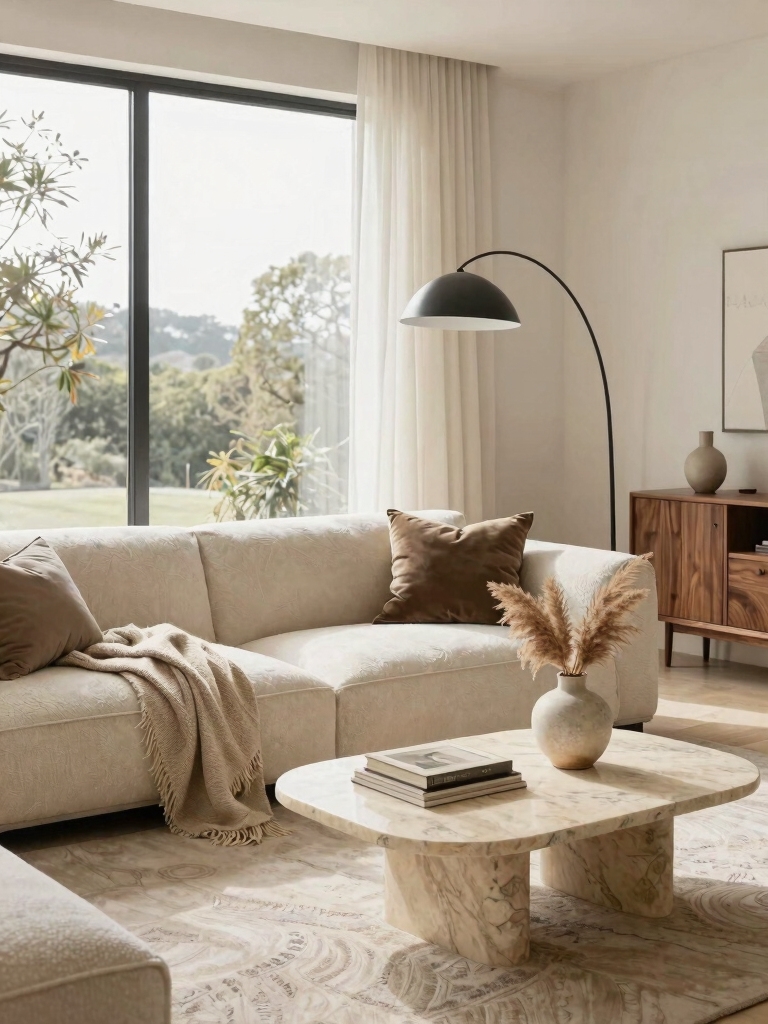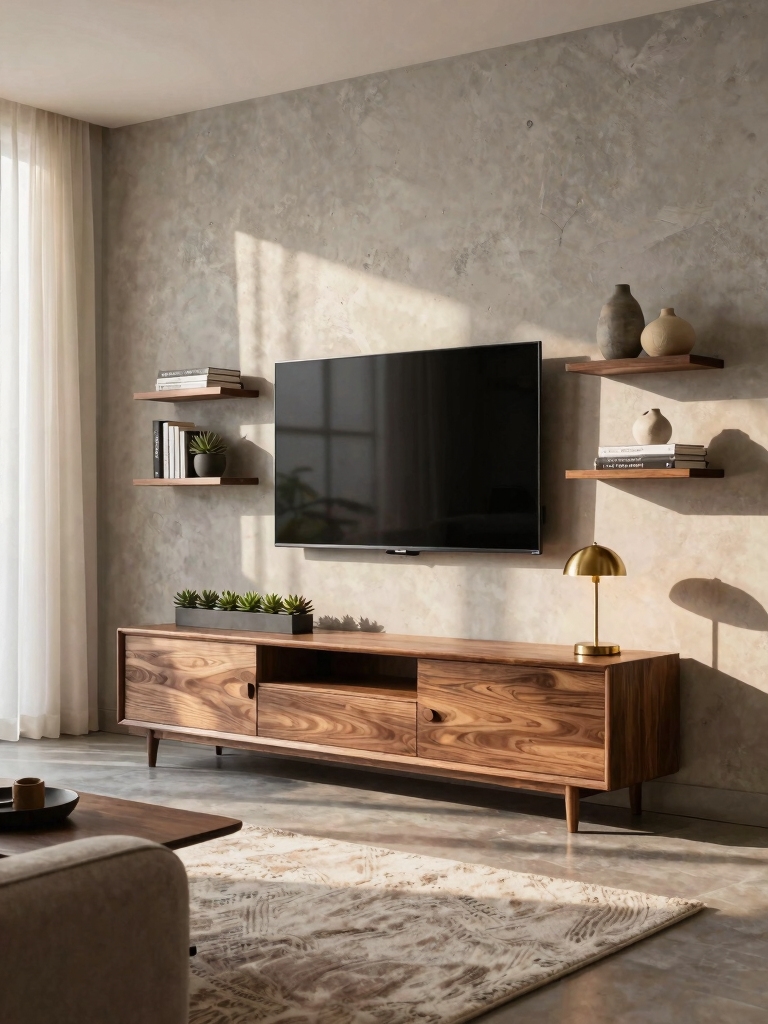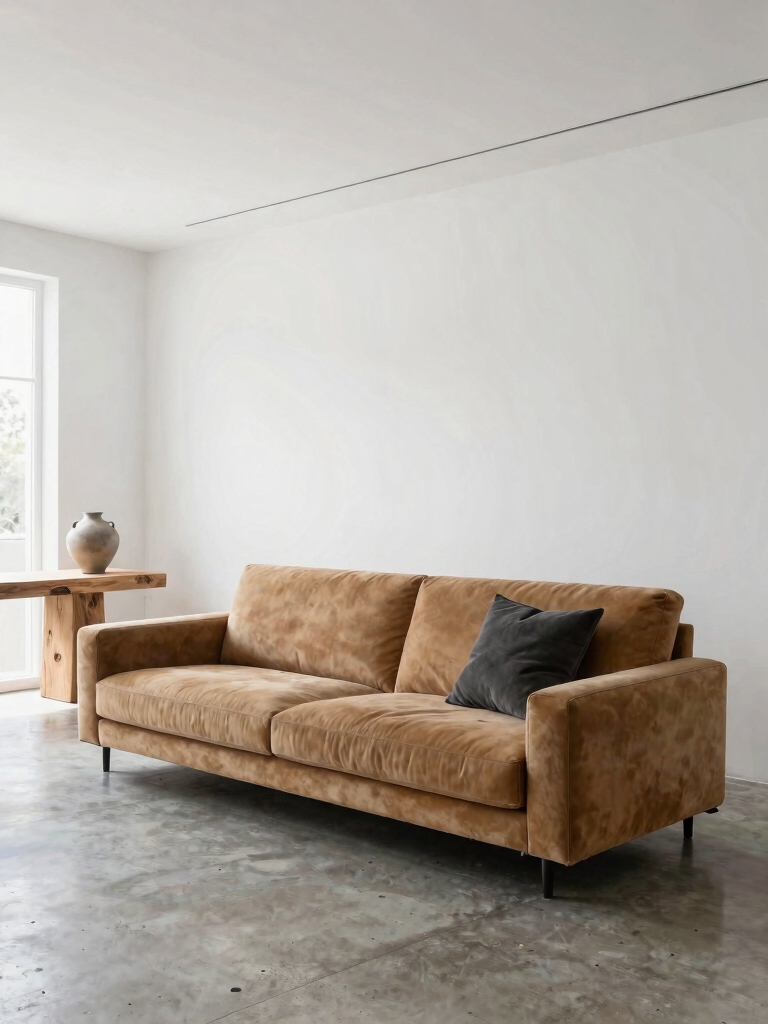
I start by picking a 3-5 color palette from a key piece, like my rug. I plan my furniture layout to face seating together and choose a statement sofa as my anchor. Creating a focal point, like framed art, and layering ambient, task, and accent lighting comes next. I define spaces with multi-functional pieces, add plants for life, and use textured throws for comfort. Stick with me to discover all the essentials for your own transformed space.
Pick a Cohesive Living Room Color Palette
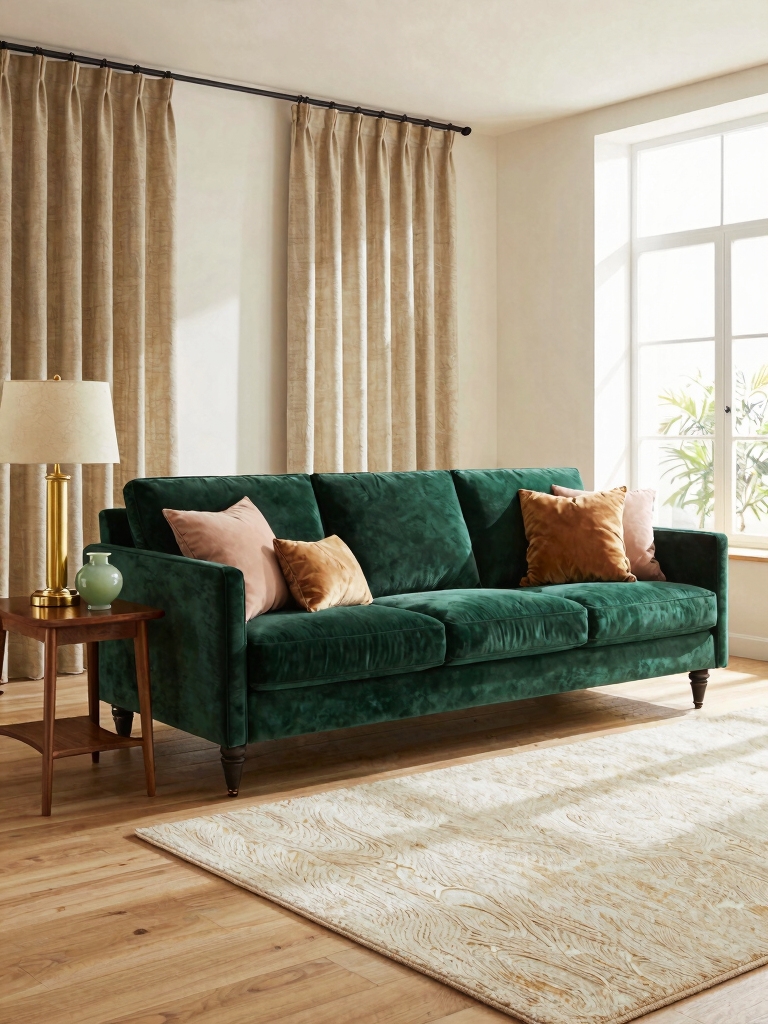
Before you choose a single piece of furniture, I always find it’s smart to decide on your living room’s color palette, as it will guide every other decision.
I start with a base of three to five colors, pulling one dominant shade from a large element like a rug or artwork.
I then choose complementary tones for walls and accents, ensuring everything flows together harmoniously from the start.
Incorporating chic paint colors can instantly transform your living room and set the perfect mood for the space.
Plan Your Furniture Layout for Easy Conversation
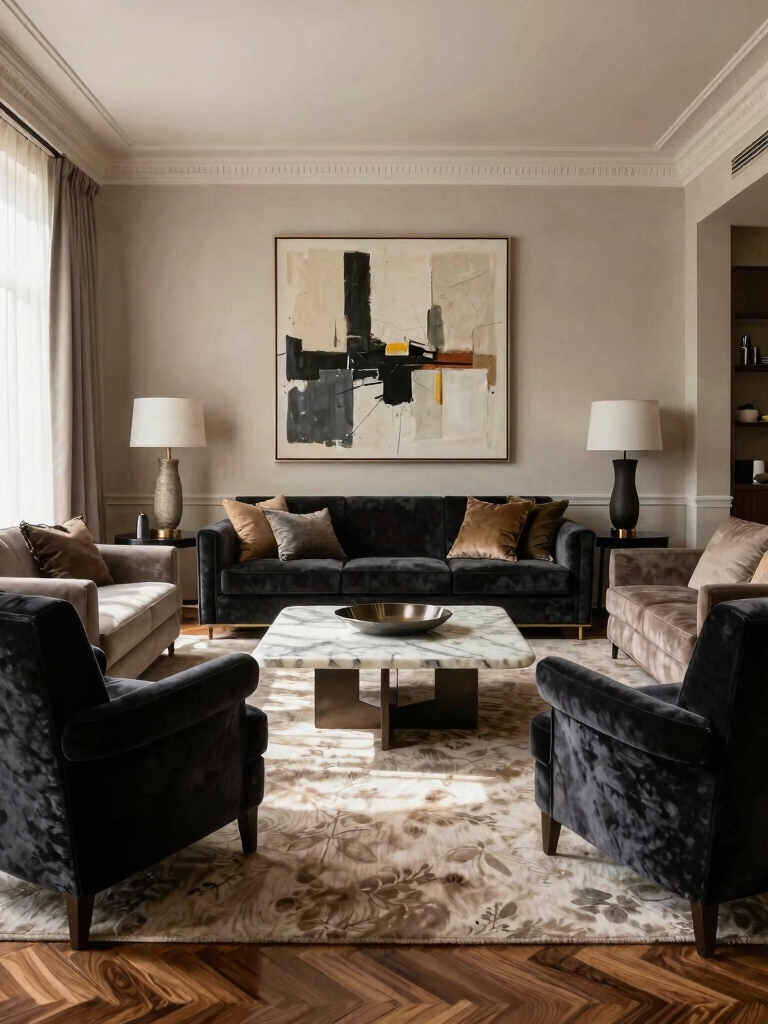
Since a great living room encourages connection, I always start my furniture layout by placing seats to face each other directly.
I create cozy, intimate groupings within the larger space. For larger rooms, I arrange multiple seating areas.
I guarantee a clear traffic flow so you don’t trip over furniture, and I leave a coffee table’s distance between pieces for easy movement and a natural reach for your drink.
To maximize the space, consider using small living room decor ideas that make every inch count without overcrowding.
Anchor the Room With Your Perfect Sofa
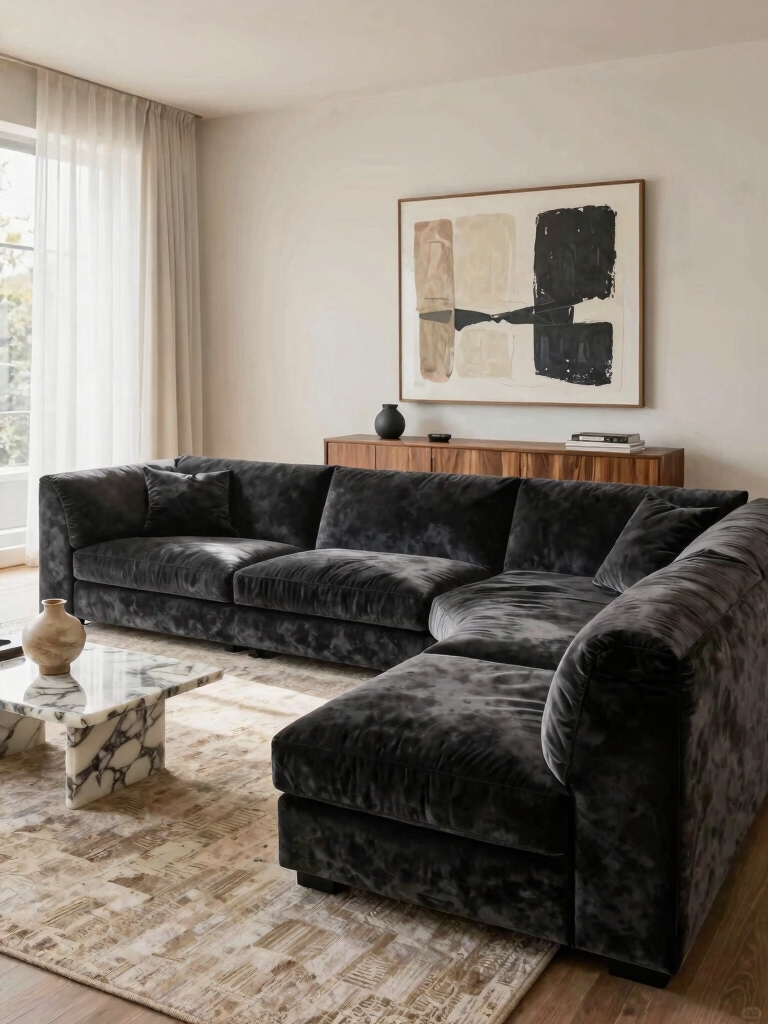
Selecting a statement sofa first gives you a clear foundation, so I always pick one with a bold color or texture that excites me.
Next, I choose complementary colors for my accent chairs and pillows, pulling from the sofa’s pattern or upholstery to create a cohesive look.
Finally, I balance proportion and scale by ensuring the sofa’s size fits the room and other pieces don’t compete for visual attention.
To keep your design chic without overspending, consider affordable living room decor ideas that create a stylish atmosphere on a budget.
Selecting a Statement Sofa
How do you guarantee your sofa becomes more than just a place to sit? I choose a statement piece that defines my room’s personality.
First, I measure my space to confirm perfect scale and flow.
Then, I focus on a bold silhouette, unique texture, or striking color that sparks joy.
A high-performance fabric is non-negotiable for durability.
Finally, I select a versatile design that’ll anchor my look for years.
Choosing Complementary Colors
Now that my statement sofa is chosen, I need colors that truly complement it.
I look at a color wheel to find its direct opposite hue for a vibrant contrast, or a neighboring analogous shade for harmony.
I’ll test paint samples on the wall beside the sofa at different times of day.
This guarantees my accent pillows, artwork, and rug colors enhance, not compete with, my anchor piece.
Balancing Proportion and Scale
Since my sofa’s color palette is set, I focus on its size and shape to guarantee it fits the room’s proportions.
I measure the wall it’ll face and leave ample walking space. A large, deep sofa can overwhelm a small room, so I might choose a loveseat or apartment-sized model instead.
Its scale then dictates my other furniture, ensuring my coffee table and chairs relate harmoniously to this central anchor.
Create a Focal Point: Fireplace, TV, or Art
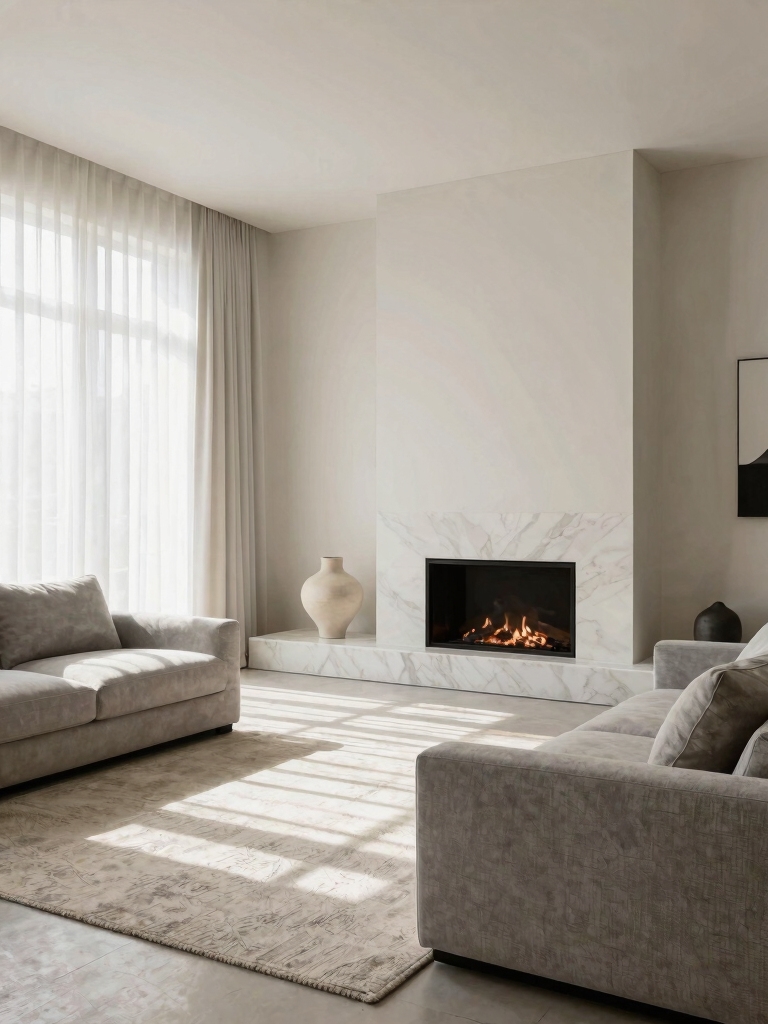
Now I’ll help you figure out which central feature works best for your layout.
We’ll look at building around a fireplace, centering on a television, or designing with statement art. Each approach requires different furniture arrangements and styling techniques. Incorporating creative TV wall ideas can transform your living room into a stunning focal point that enhances the overall decor.
Building Around A Fireplace
While your fireplace is a natural focal point, you can build a cohesive living room by intentionally integrating it with your television or artwork.
I always start by anchoring a large mirror or piece of art directly above the mantel.
I then balance the hearth with symmetrical built-ins or matching chairs.
Using a consistent material or color palette across these elements ties the entire wall together beautifully.
Centering On A Television
One strong focal point can anchor your entire living room design. Centering on a television works beautifully if you integrate it thoughtfully.
I always guarantee it feels intentional, not just a black screen.
- Mount it at eye level for comfort.
- Frame it with built-ins or a media console.
- Use cable management for a clean look.
- Layer lighting around it to reduce glare and add ambiance.
Designing With Statement Art
Sometimes, I prefer a bold piece of art to anchor a room. I hang it at eye level on the largest, clearest wall.
I guarantee it’s properly scaled—it should command attention without overwhelming the space. I then build my color scheme and furniture arrangement around its palette and mood.
This turns the artwork into a true focal point, creating a layered, personal space that doesn’t rely on a TV or fireplace.
Layer Your Living Room Lighting
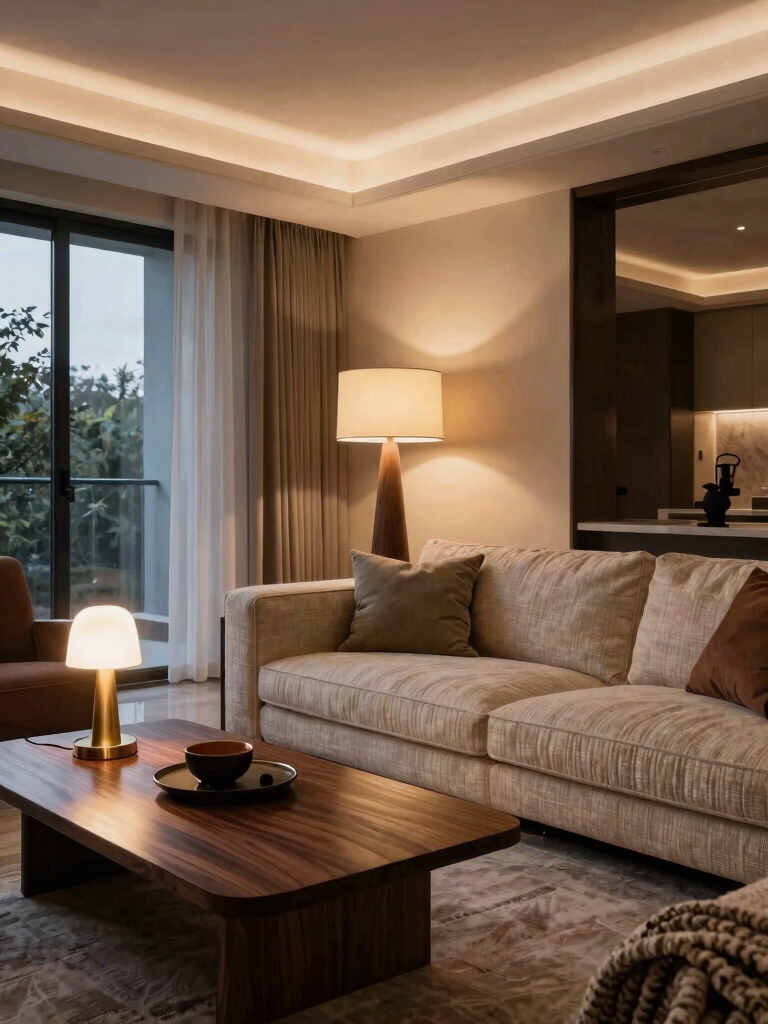
Just like my favorite recipe, a well-designed lighting plan blends different ingredients for the perfect result; layering light in your living room creates depth, mood, and functionality far beyond a single overhead fixture.
I think of it in three distinct tiers.
- Use your ceiling fixture for general, ambient illumination.
- Add floor or table lamps to create pools of task light for reading.
- Incorporate accent lighting, like a small picture light, to highlight artwork.
- Finally, place dimmable candles or LED strips for flexible, atmospheric glow.
Layering lighting not only enhances the room’s functionality but also contributes to a cozy modern living room atmosphere that feels inviting and stylish.
How Mirrors Make Your Room Feel Bigger and Brighter
Strategically placed mirrors can completely transform a cramped or dim room by manipulating light and creating an illusion of depth.
I always position a large mirror opposite a window to bounce natural light deeper inside. A tall, leaning mirror can also visually raise your ceiling.
For a small room, I’ll use a mirror on a wall adjacent to the entry; it tricks your eye into seeing more space immediately.
Using stylish mirror decor is an effective way to open up your living room space while adding a decorative touch.
Choose the Right Rug Size and Texture
I always start by measuring my living room to find a rug that fits the furniture layout, not just the floor.
I consider how much traffic the area gets before I pick a material like a durable wool blend or a soft, low-pile synthetic.
Getting this scale and texture right anchors my entire seating area and makes the room feel complete.
Incorporating smart decor tips can help you choose pieces that open up the space and enhance the overall flow of your living room, creating a more inviting atmosphere with small living room decor ideas.
Scale to Room Dimensions
Since your rug anchors the entire living space, it’s crucial to get its size and texture right for your room’s dimensions.
I always follow these guidelines to guarantee a perfect fit and feel:
- For a standard layout, all main furniture legs should sit on the rug.
- In smaller rooms, just the front legs on the rug can work.
- Leave 12-18 inches of bare floor between the rug and walls.
- Choose a low-pile texture for high-traffic areas to maintain clean lines.
Select Rug Material Type
While I’ve just covered the ideal size and placement, the rug’s material is equally important as it dictates both durability and daily comfort underfoot.
For high-traffic areas, I choose durable, synthetic polypropylene which cleans easily.
In cozy spaces, I opt for soft wool or cotton for warmth and texture.
I avoid delicate silks or jutes where spills are likely, focusing on practicality and feel.
Mix Textiles for Warmth and Comfort
Adding layers of different fabrics is your quickest path to a cozy space, so let’s look at your starting point: the sofa.
I begin by styling it with cushions in varied textures. My go-to method for immediate warmth involves four simple layers:
- A soft, washable throw blanket.
- A chunky knit pillow.
- A smooth velvet lumbar cushion.
- A woven wool or faux fur accent piece.
This mix creates a rich, inviting feel. Embracing comfort through cozy living room decor ideas can transform your space into a warm hug.
Select Window Treatments for Light and Privacy
To balance natural light with your need for privacy, choosing the right window treatments is essential for both function and style.
I layer sheer curtains under blackout drapes for ultimate flexibility.
For a sleek, modern look, I install top-down/bottom-up cellular shades.
Don’t forget hardware; a curtain rod extending past my window frame makes the space feel larger and allows panels to stack completely clear of the glass.
Incorporating elegant curtain ideas can significantly enhance the overall aesthetic of your living room while framing your windows beautifully.
Use Shelving for Stylish Storage and Display
I’m starting with my shelving choices, because picking a style sets the tone for the entire display.
Then I make sure I’m arranging things with visual balance in mind, mixing books, art, and objects at different heights.
Finally, I curate my collections, choosing which items to feature and which to store away for a fresh look.
Incorporating stylish bookcases can significantly elevate your living room’s decor by combining functionality with aesthetic appeal, making them a focal point for stylish storage and display.
Choose Shelving Styles
Shelves can transform your living room from a space that merely stores items into one that actively showcases your style.
I consider both function and form by asking:
- Do I need closed cabinets to conceal clutter?
- Would open shelving better display my favorite books and objects?
- Could a modular system offer the flexibility I want?
- Will floating shelves create my desired clean, modern look?
Create Visual Balance
Achieving visual balance means arranging your shelves so they feel both intentional and effortless.
I group objects in odd numbers, like threes, which naturally pleases the eye. I vary heights and layer items in front of others, adding depth. Heavy objects near the bottom anchor the look, while I keep some negative space.
It’s not about perfect symmetry, but creating a collected, stable feeling across the entire unit.
Curate Your Collections
Collections deserve more than being tucked away; they’re a chance to show personality and solve storage beautifully. I use open shelving to thoughtfully display my finds.
My strategy involves a few key steps:
- Group items in odd numbers for visual interest.
- Mix heights and textures to add depth.
- Leave breathing room to avoid clutter.
- Anchor collections with a few large, statement pieces.
This turns my shelves into curated focal points.
Add Character With Crown Molding and Trim
If you’re looking to instantly elevate your living room’s style, I often recommend starting with crown molding, since it draws the eye up and adds architectural depth that flat walls lack.
Don’t stop there—add chair rails or wainscoting for mid-wall interest. You can install pre-primed, lightweight polyurethane options yourself with a miter box, nail gun, and caulk.
Painting the trim a crisp white provides a classic, finished look.
Showcase Your Style With Collected Treasures
While the architectural details we just covered frame your space, your collected treasures are what truly make it feel like home.
I group them intentionally, mixing old and new.
- Cluster small objects on a tray for a cohesive vignette.
- Prop books both vertically and horizontally on shelves.
- Place a single, sculptural artifact on a prominent ledge.
- Use baskets or bowls to corral similar items, like shells or stones.
Curate a Personal Gallery Wall
One way I bring personality to a large, empty wall is by curating a personal gallery of art and photos.
I first lay all my frames on the floor to experiment with spacing and arrangement. I mix sizes, orientate some vertically, and include meaningful objects like a small shelf or woven textile.
Using paper templates helps me finalize the layout before I hammer any nails.
Bring Life to Your Living Room With Indoor Plants
After curating a personal gallery wall, adding indoor plants is my favorite method for instantly energizing a living room. They purify air and soften hard lines.
I follow these steps for success:
- Assess your light first—a snake plant tolerates low light.
- Choose varied heights with a tall fiddle-leaf fig.
- Group plants in odd numbers for visual impact.
- Use stylish, drainage-friendly pots to complete the look.
Define Spaces With Multi-Functional Furniture
Now that we’ve added life with plants, let’s talk about structure.
In an open floor plan, I use furniture to carve out distinct areas. A large sofa back can define a living zone, while a console table behind it marks a dining space.
I love an ottoman with storage; it’s a coffee table, extra seat, and hides blankets.
A room divider shelf unit offers display and subtle separation without closing things in.
Refresh Your Look With Seasonal Pillows and Throws
Because furniture defines our spaces, soft furnishings like pillows and throws can effortlessly update their mood for any season. I use mine as an easy, affordable switch.
My strategy is simple:
- Store sets in labeled bins for quick access.
- Mix textures, like chunky wool for winter and linen for summer.
- Pull one core color from my existing decor for cohesion.
- Layer in patterns of varying scales for visual depth.
Keep Your Living Room Clutter-Free and Organized
Three simple habits have transformed my living room from a catch-all space into a serene, organized haven.
First, I clear all surfaces every evening.
Second, I use stylish baskets and trays to corral remote controls, magazines, and toys.
Finally, I’ve instituted a strict “one thing in, one thing out” rule for decor.
This practical system prevents clutter from accumulating, so the room always feels polished and ready.
Conclusion
Think of your living room as a living canvas. These ideas are your starter palette. Mix them, layer them, and don’t be afraid to refresh the scene when the mood strikes. Your perfect room isn’t a single masterpiece, but a gallery you curate over time. Start with one brushstroke—a new plant or a cozy throw—and watch the whole space come to life around you