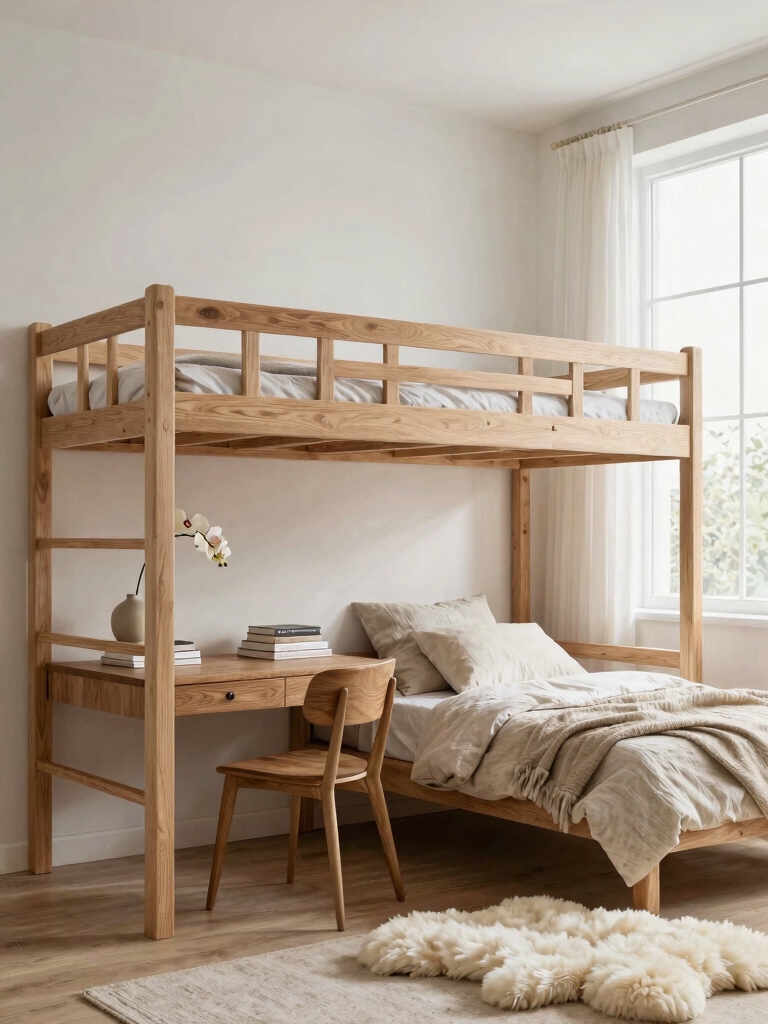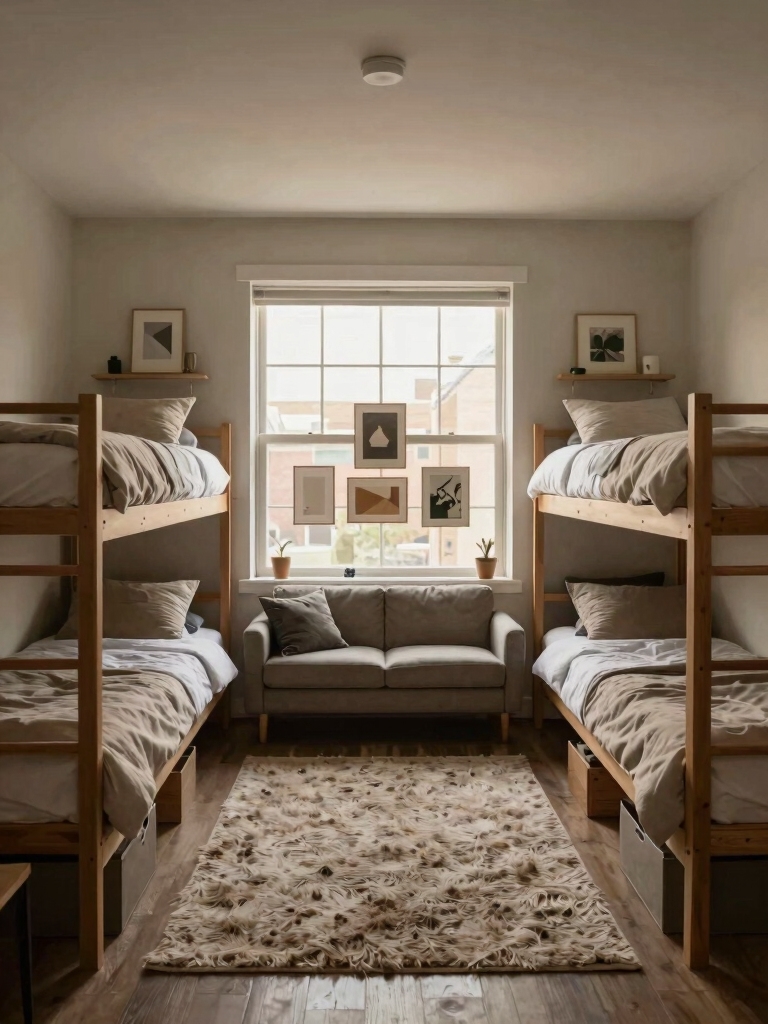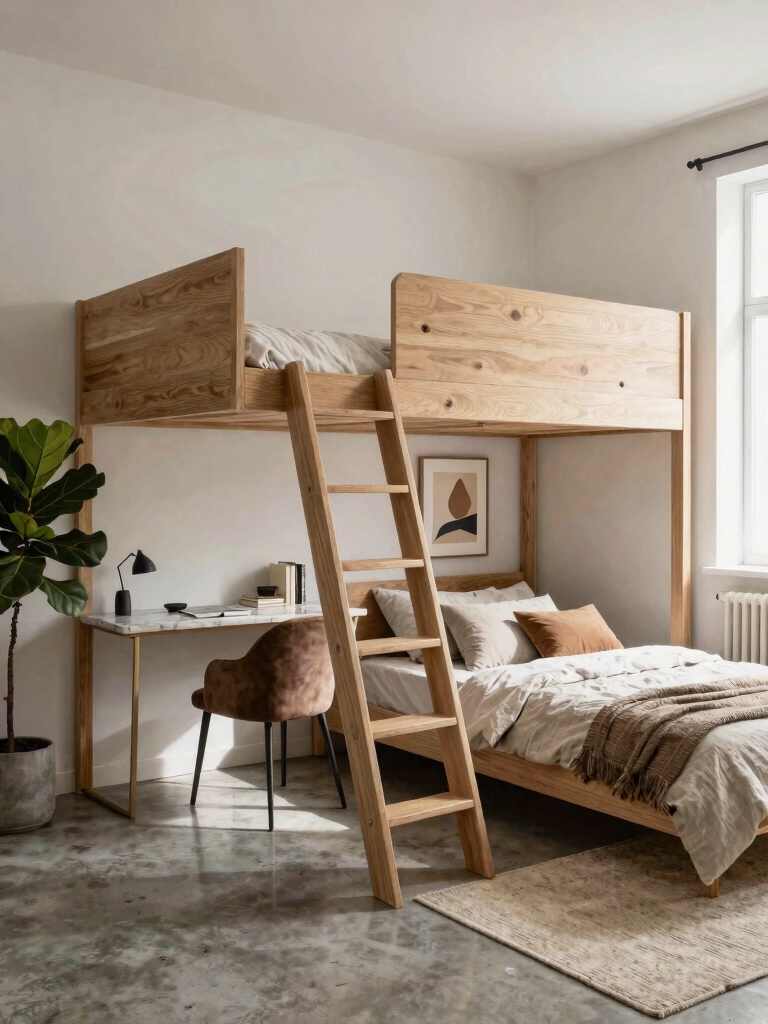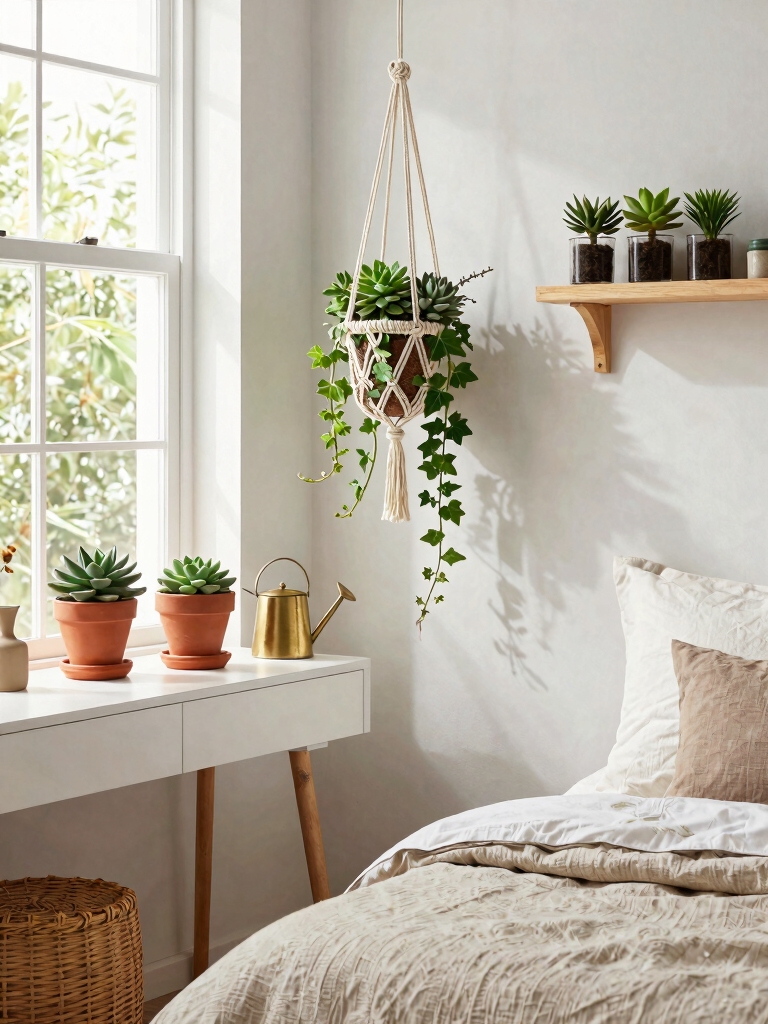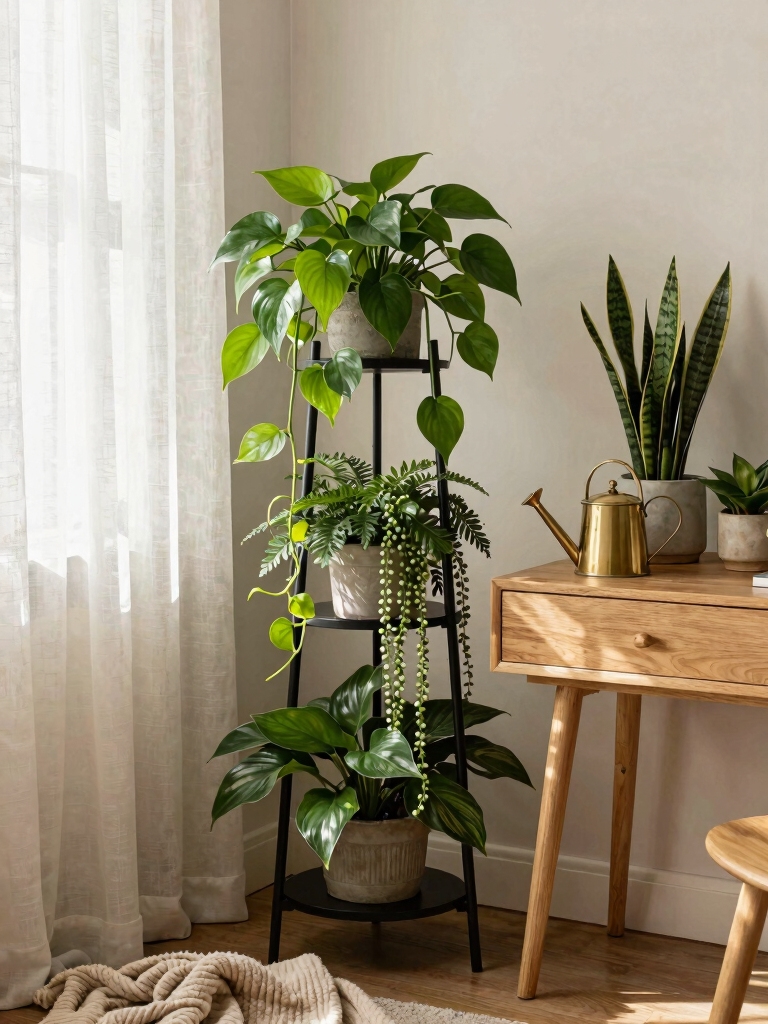
I’ve found creating a dorm jungle starts by knowing your light. I pick tough plants like ZZ or snake plants and use pots with drainage holes to avoid overwatering. Self-watering planters save me during busy weeks, and I hang vines or use shelves to maximize space. Grouping plants by their needs keeps them healthy. There’s more smart tips waiting to turn your room into a true green sanctuary.
Assess Your Dorm’s Light Before Choosing Plants

Before you buy a single plant, you should figure out what kind of light your dorm room actually gets, because that’s the single most important factor for your plants’ survival.
I use my phone’s compass to find north, and I observe the direct sunlight’s path for a full day. A south window gets blazing light, while a north one offers gentle, indirect glow perfect for shade-lovers.
Creating a cozy dorm room atmosphere can be enhanced by choosing plants that thrive in your room’s specific light conditions, helping you feel more at home and relaxed. This is especially important for college girls who want their space to feel inviting and comfortable.
Pick These Foolproof, Low-Maintenance Dorm Plants
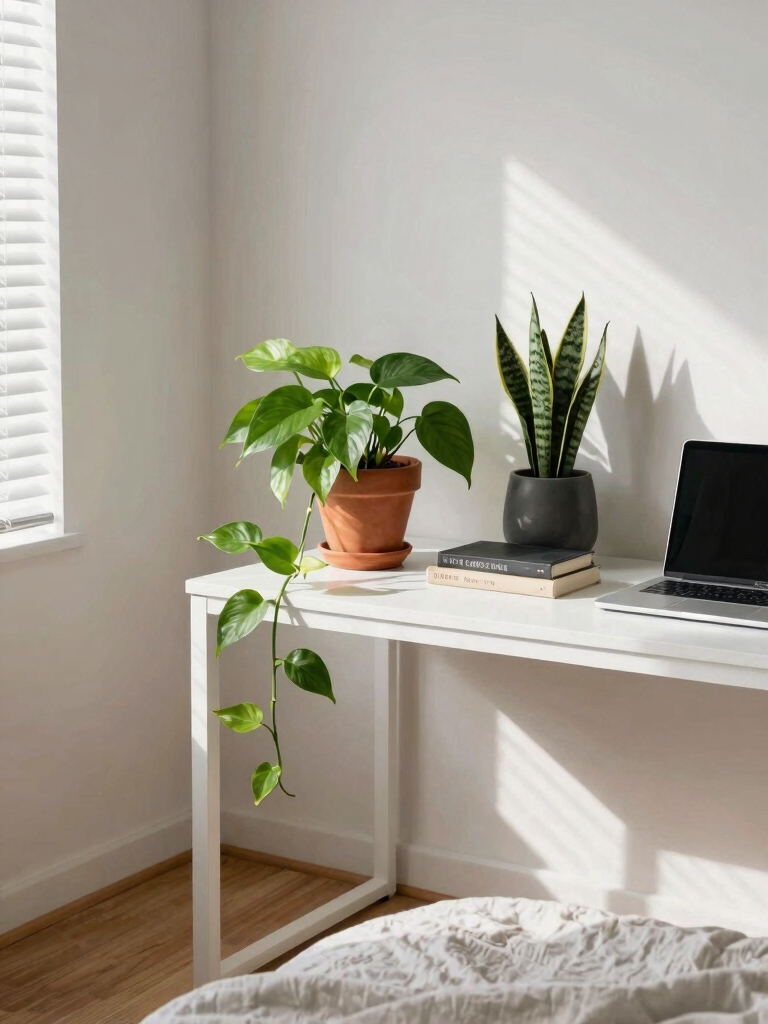
Once you’ve scoped out your light situation, let’s pick some plants that actually thrive on neglect and won’t mind your busy schedule.
I’m focusing on tough survivors that handle low light, stay safe if a pet visits, and won’t break your student budget.
Think of this as your starter squad of green companions ready to brighten that dorm corner without demanding much in return.
For inspiration, consider how adventure-inspired toddler rooms use natural elements to create a lively and engaging space.
Survivors Of Low Light
If your dorm window is practically a glorified wall, you’ll need plants that thrive in dim conditions.
I adore the Zamioculcas zamiifolia (ZZ plant) for its glossy, waxy leaves; it survives on occasional watering.
The humble Pothos vine drapes beautifully from a shelf, tolerating utter neglect.
Snake plants stand upright like architectural sculptures, purifying air even in near-darkness.
These champions ask for little but give so much greenery.
Pet-Free And Pocket-Friendly
Since you’re likely balancing a tight budget with demanding studies, let’s talk about plants that are both easy to find for a few dollars and safe for any visiting pets.
I adore spider plants for their cascading “pups” and resilience. A snake plant thrives on neglect, purifying air overnight.
For instant charm, grab a pothos; its trailing vines forgive missed waterings.
All are common, affordable, and perfectly pet-friendly.
Prevent Overwatering With the Right Soil and Pots
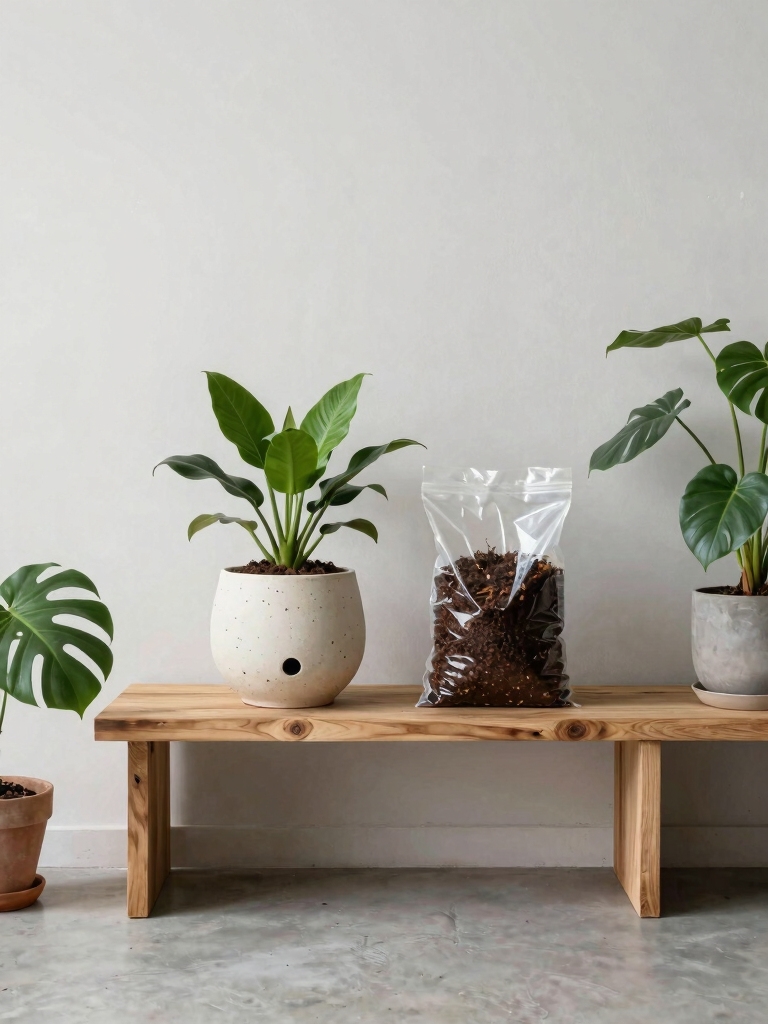
For me, preventing overwatering starts long before I ever pick up a watering can; it begins with choosing the right soil and pot.
I always use a fast-draining potting mix, never dense garden soil.
My golden rule? Every container must have a drainage hole.
I also opt for unglazed terra cotta pots—they’re porous, allowing excess moisture to evaporate through their walls and preventing roots from sitting in soggy soil.
Incorporating earthy dorm room decor elements can enhance the warmth and coziness of your plant space while supporting healthy plant growth.
Choose Self-Watering Planters for Busy Weeks
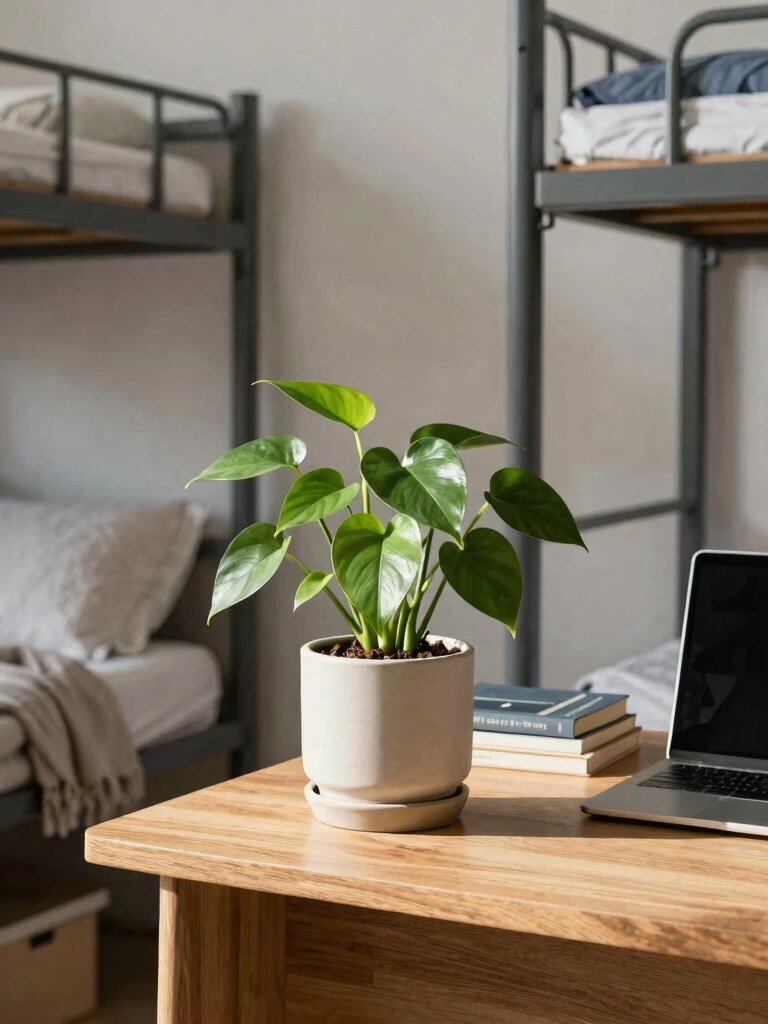
I’ve found self-watering planters ideal for hectic weeks because their clever reservoirs let roots sip water as they need it.
When picking one, I consider materials like sleek ceramics or light plastics to match my dorm’s vibe and my plant’s size.
A well-chosen planter keeps my greens thriving even when my schedule’s packed.
Adding sage green elements can transform a dorm space into a chic and calming retreat, perfectly complementing your plant setup with sage green inspiration.
How Self-Watering Planters Work
Your busy schedule doesn’t have to mean a death sentence for your dorm greenery.
I love how these clever pots use a simple reservoir system. The soil soaks up water through a wick or capillary matting from a separate base chamber. The roots drink what they need, preventing overwatering.
It’s a self-regulating spa for my plants, giving me a week or more of peace between refills.
Selecting Your Ideal Planter
Why does the right planter matter for a thriving dorm garden?
I always choose self-watering pots for my busiest weeks. They’re my secret weapon, holding a hidden water reservoir that wicks moisture directly to the roots.
This clever system prevents both over and underwatering, giving my peace lily a steady drink while I tackle midterms.
For consistent growth with minimal fuss, this practical upgrade is absolutely essential.
Hang Plants From the Ceiling to Free Up Desk Space
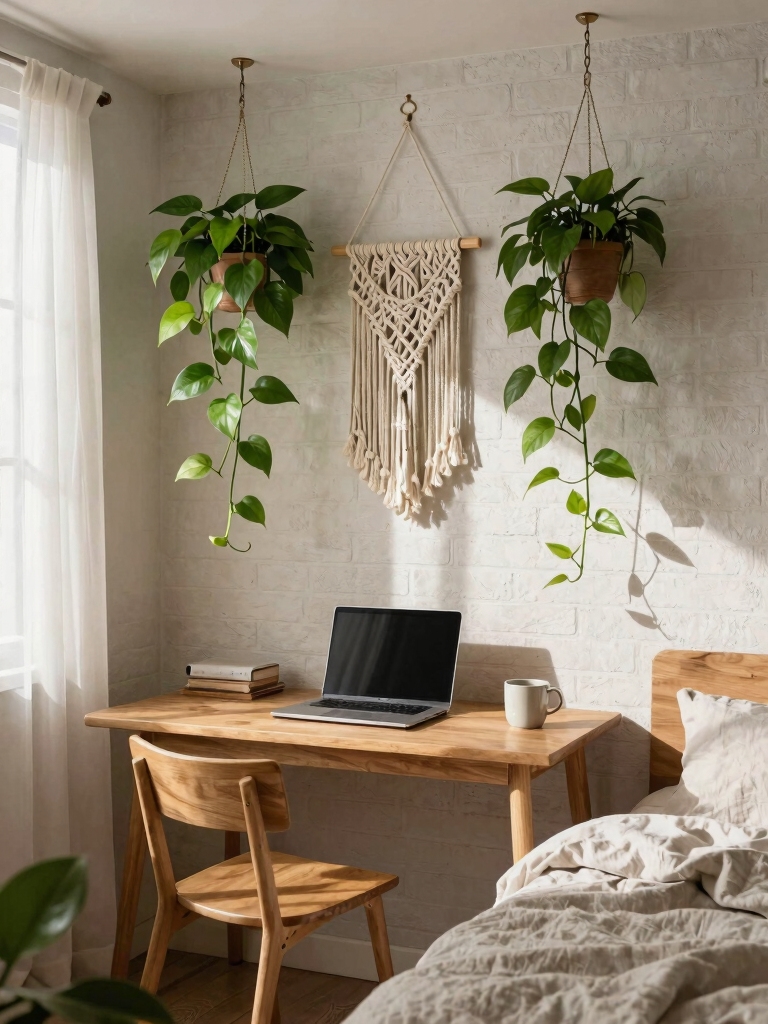
While you’re likely already using your desk for studying, hanging plants from the ceiling can instantly reclaim that precious surface area for your books and laptop.
I install removable adhesive hooks or a tension rod for my macramé hangers. Then, I choose plants that thrive in the airy light.
My go-tos are:
- A cascading pothos.
- A delicate string of pearls.
- A vibrant spider plant.
- A trailing philodendron.
Refreshing your space with greenery is one of the best room decor ideas to uplift your environment this weekend.
Create a Vertical Garden With Wall Shelves
I’m turning my dorm wall into a living tapestry by installing floating shelves that match my room’s color scheme.
I’ll fill them with a mix of hardy snake plants and trailing pothos that thrive in my indirect light.
This strategy lets me build a lush green wall without sacrificing my precious floor space.
Many aesthetic lovers are copying this idea to create inspiring and personalized living spaces with aesthetic room inspirations.
Choosing Stylish Shelving Units
Your dorm’s wall space is prime real estate for a plant collection, so I recommend thinking vertically to maximize it.
I look for shelving that’s both sturdy and stylish to match my decor. Here’s my ideal visual checklist:
- Floating walnut shelves with hidden brackets.
- A tiered, wrought-iron unit shaped like a tree.
- Modular, white grid panels you can reconfigure.
- Ladder-style shelves leaning effortlessly against the wall.
Always confirm weight limits with your housing office first.
Selecting Low-Maintenance Plants
Since we’ve made the most of your vertical space, let’s fill those shelves with greenery that thrives on a little neglect.
I adore hardy snake plants; they only need water every few weeks and handle low light.
Pothos vines are perfect cascaders—just snip them to keep them lush.
A plump succulent, like a jade plant, loves a sunny spot and infrequent watering, making your vertical garden effortlessly chic and thriving.
Maximizing Limited Wall Space
Now that we’ve considered hardy plants, let’s turn our attention to the shelves themselves.
I install floating shelves in a staggered pattern to maximize my vertical real estate. This transforms a blank wall into a lush, living gallery.
Imagine:
- Sunny top shelves for succulents.
- Mid-level trailing vines like pothos.
- Lower, shadier spots for ferns.
- Tiny air plants tucked into wall-mounted terrariums.
Use a Pegboard for a Custom Plant Display
If you’re aiming to maximize vertical space and create a truly personalized garden, mounting a pegboard on your dorm wall offers incredible versatility for your plant collection.
I use sturdy hooks and small shelves to hang a mix of trailing vines and compact succulents. I can constantly rearrange them for better light or a fresh look.
It’s a living, changeable art piece that fits in any corner. This approach also complements charming sitting room ideas by enhancing the flow and connection between your dorm’s living and kitchen areas.
Repurpose Desk Organizers Into Clever Planters
I’m transforming my old desk organizers into mini plant nurseries, starting by selecting compartments with good drainage for my succulents.
I’ll add a layer of gravel before the soil to keep roots healthy in these unconventional pots.
Then, I can create a living mosaic by arranging different plants across the organizer’s sections.
Adding cozy touches like soft lighting and natural textures around the planters can make the space feel inviting and encourage you to stay longer in your green sanctuary, embracing the cozy aesthetic.
Selecting Suitable Desk Organizers
While hunting for a desk organizer, look for those with separate compartments or trays, since you can transform them into a tiered succulent garden or a nursery for propagation.
I prioritize materials like ceramic or metal for durability and drainage. Confirm the compartments are deep enough for small root systems. Avoid purely decorative pieces; functional design is key.
- A three-tiered metal organizer holding vibrant echeverias.
- A ceramic tray with shallow sections for sprouting avocado seeds.
- A repurposed wooden box with dividers nurturing herb cuttings.
- A sleek acrylic organizer showcasing a collection of petite cacti.
Preparing For Plant Health
Now that you’ve chosen organizers with good compartments and materials, let’s turn them into planters that keep your greenery thriving.
First, I drill a few drainage holes in each section. Then, I add a layer of pebbles before filling them with a light, well-draining potting mix.
This simple prep prevents dreaded root rot and gives my plants’ roots the perfect, breathable home from the start.
Creative Plant Arrangement Ideas
Since you’ve prepped your organizers as planters, arranging your plants becomes the fun part where you can express your personal style.
I group them to create dynamic visual stories on my desk and shelves.
- Stack cubical organizers into a vertical, multi-level garden for trailing vines.
- Line a long pencil holder with pebbles and petite succulents.
- Cluster small pots in a tiered tray for an instant herb station.
- Let a single striking snake plant command a sleek, upright holder.
Build a Rolling Cart for a Mobile Plant Station
Because organizing your growing collection can quickly turn chaotic, a mobile plant station built from a rolling cart offers the perfect blend of flexibility and function.
I’ll find a sturdy three-tier cart and paint it my favorite color. Its shelves let me group plants by their light needs, and I can easily wheel my whole collection closer to the window for ideal sun or away for a movie night. Adding creative wall decor around the plant station can enhance the space and make your dorm room feel more personalized and vibrant, transforming plain walls overnight with creative wall decor ideas.
Keep Potted Plants Secure on Shelves and Ledges
I’m using adhesive hooks to clip lightweight pots onto my shelves so they won’t tip over.
For heavier planters, I’ve installed bracket and bar systems that act like little fences across my ledge.
These simple solutions keep my collection stable and give me peace of mind.
Maximizing vertical space with these methods can double your space instantly in a small room.
Adhesive Hook Solutions
Ever wondered how to keep your potted plants firmly on those high shelves or narrow ledges?
I’ve found adhesive hook solutions are my go-to. They’re perfect for dorm walls since you won’t need any tools.
I simply use strong, clear hooks to hang lightweight planters directly, or I loop twine around a pot’s rim and secure it to the hook for extra stability.
- A sleek, clear plastic hook pressed onto a white wall.
- A small macrame hanger looped through the hook’s opening.
- A terracotta pot with twine tied around its lip.
- The pot suspended securely, leaves cascading safely downward.
Bracket And Bar Systems
While adhesive hooks work for lighter pots, bracket and bar systems handle my heavier plants on shelves and ledges.
I install adjustable metal L-brackets for sturdy shelf support. For the ledge, I prefer a tension rod-style bar spanning the window recess; its rubberized grips won’t damage surfaces.
I then hang my pots from S-hooks along the bar. This creates a secure, modular display I can rearrange anytime.
Brighten Dark Corners With Discreet Grow Lights
Since your dorm probably has its share of shadowy nooks, discreet grow lights can be your secret weapon for keeping plants lush.
I mount slim LED bars under shelves that cast a gentle, sunny glow on my fern. Choose a full-spectrum white light to avoid a purple haze.
Set a simple timer for 12-14 hours to mimic perfect days, and watch those dim corners transform into vibrant, leafy vignettes.
- A slender, white LED bar tucked beneath a wooden shelf.
- A golden beam illuminating a fern’s delicate, lacy fronds.
- A small, discreet digital timer plugged into the outlet.
- A once-dark corner now hosting a thriving, green pothos cascade.
Propagate Your Plants for Free Green Decor
Propagating your favorite plants turns a single leafy friend into a personal collection without spending a cent.
I snip a healthy stem below a node, pop it in water, and watch roots sprout in a sunny spot.
Once they’re an inch long, I plant them in spare pots.
Soon, I’ve got lush pothos trails or a spider plant family for my shelves and desk.
Grow Fresh Herbs on Your Windowsill
Even if my kitchen counter is short on space, I always make room for a few small pots of fresh herbs by my sunniest window. They’re my instant seasoning rack.
I start with forgiving varieties like basil and mint. Their vibrant leaves turn cooking into gardening. A weekly watering and some sunlight keeps them thriving.
- Emerald basil leaves catching the morning light.
- The sharp, clean scent of snipped mint.
- Soil crumbling between my fingers during a repotting.
- Bright green chives standing tall like tiny soldiers.
Build a Mini Terrarium in a Glass Container
If your windowsill’s full, consider bringing the greenery inside with a self-contained world under glass.
I start with a clear jar, then layer pebbles, activated charcoal, and soil. I tuck in tiny, slow-growing plants like moss or fittonia. A light misting seals the deal before I close the lid.
Placed in bright, indirect light, it creates its own miniature water cycle, needing care just every few weeks.
Decorate With Soil-Free Air Plants
Since terrariums require a container, let’s explore plants that need no soil or pot at all with air plants.
I love displaying these quirky epiphytes by simply misting them weekly. Their sculptural shapes create living art when you:
- Suspend a Tillandsia ionantha in a geometric glass orb.
- Nestle a Xerographica into a driftwood crevice.
- Clip a small species onto a magnet for your whiteboard.
- Arrange a trio within a hanging macramé web.
Add a Moss Pole for Climbing Vines Like Pothos
To turn your trailing pothos into a stunning vertical display, I’ll show you how a moss pole can encourage lush upward growth.
Simply insert the pole into the pot’s soil. Gently attach the longest vines to it using soft ties.
The pole’s moist moss surface mimics a natural tree trunk, providing aerial roots a perfect grip for climbing.
You’ll soon see your plant reach new, space-saving heights with larger, healthier leaves.
Group Your Plants by Their Watering Needs
Creating a watering schedule becomes much simpler when you organize your plant collection based on thirst levels.
I group my pots so I’m not overwatering a cactus or neglecting my thirsty fern. It saves so much time and guesswork!
- My sun-loving succulents clustered on a bright shelf.
- Moisture-hungry peace lilies and ferns gathered on a pebble tray.
- Moderate-drinkers like pothos and philodendron in the middle.
- My forgetful-me plants, the ZZ and snake plant, in the low-light corner.
Select Pet-Safe Plants for Dorms With Animals
Grouping plants by their watering needs keeps both them and my schedule happy, and it also gives me a clear view of my collection—which helps when considering the safety of my roommate’s curious cat.
I only choose non-toxic varieties like spider plants, Boston ferns, and peperomia. I double-check each new plant on the ASPCA’s list and use high shelves to keep these pet-safe greens out of paw’s reach.
Fix Yellow Leaves, Pests, and Other Common Issues
Even though my plants are safely out of my cat’s reach, I still keep a close eye on their leaves, because catching a problem early is the key to a simple fix.
My essential trouble-shooting list:
- Yellow leaves from soggy soil? I hold back water.
- Tiny webs on stems? I wipe them with a soapy cloth.
- Weak, leggy growth? I move them closer to the light.
- Fluffy white patches? I dab them with rubbing alcohol.
Conclusion
Looking back, I realize my thriving dorm jungle didn’t just coincide with my academic success. Caring for each pothos and spider plant quietly taught me to tend my own roots. I learned to seek the right light, provide steady support, and recover from setbacks. Now, I see that helping these plants grow was, all along, the same quiet work of helping myself bloom in this new space.