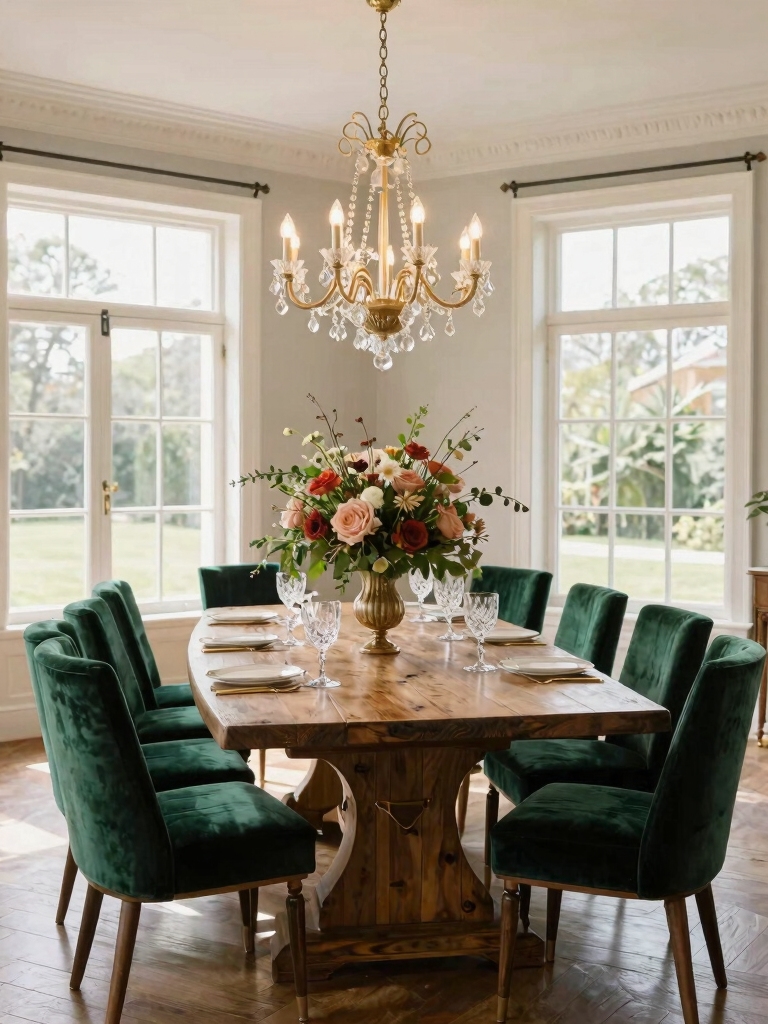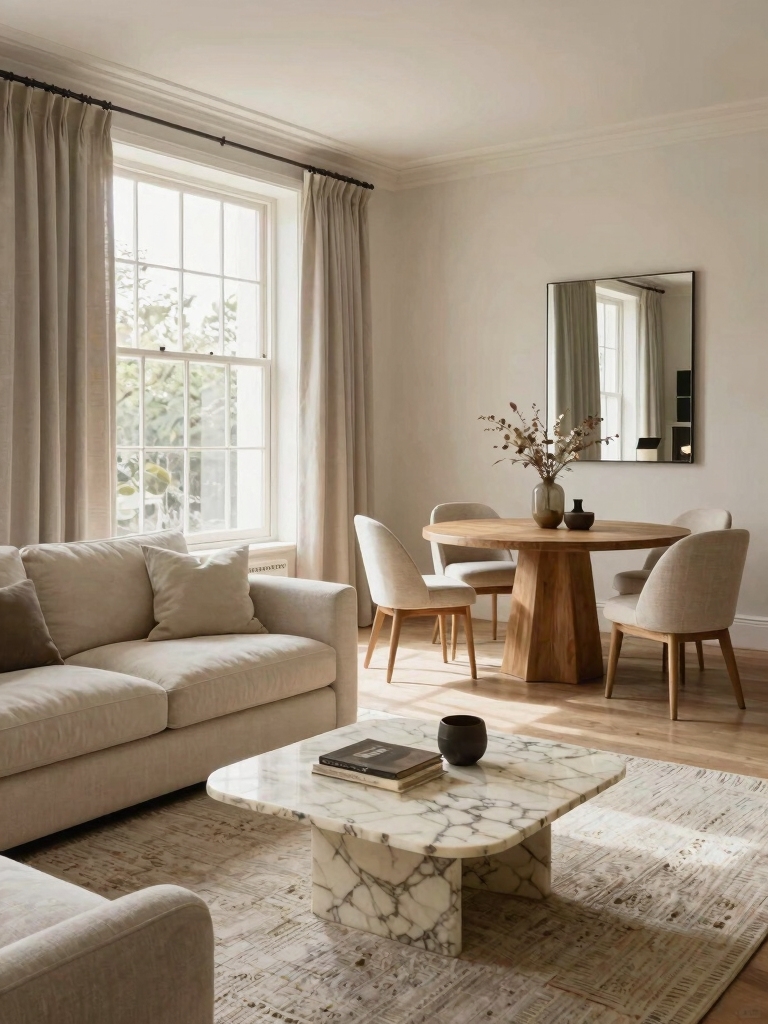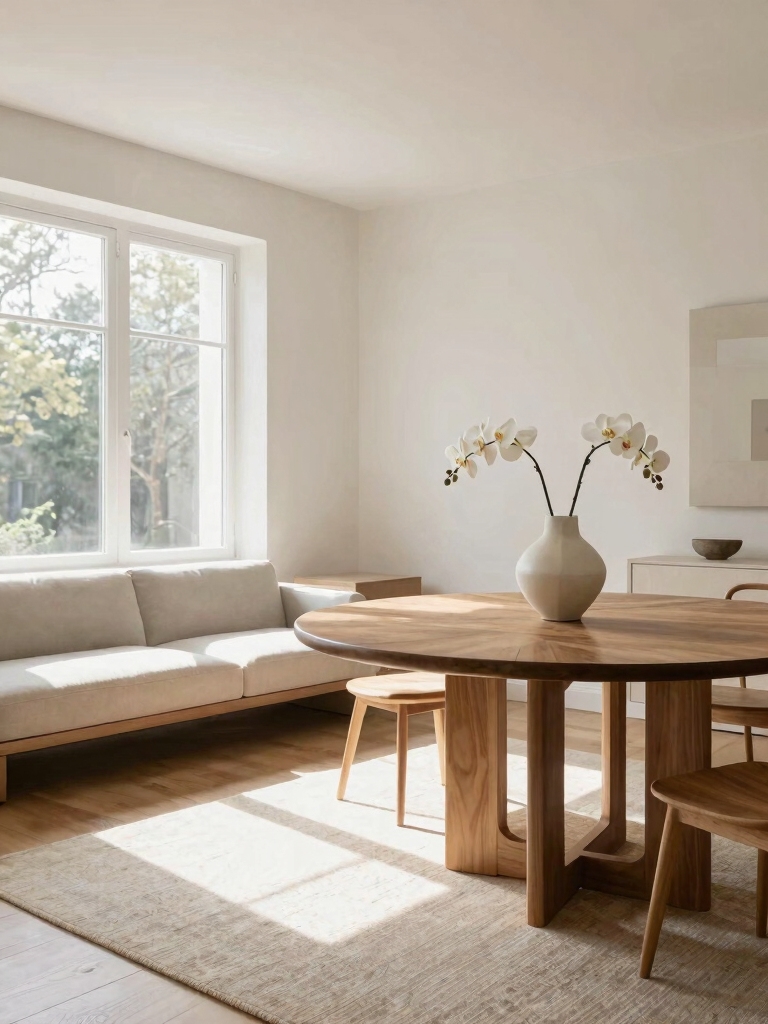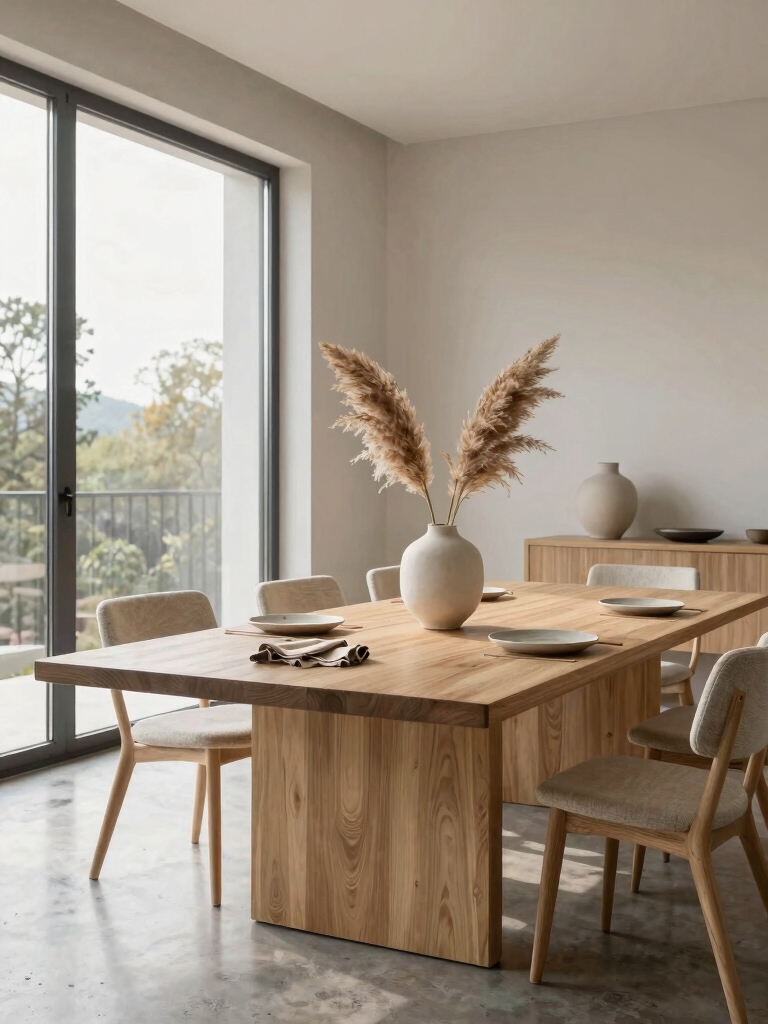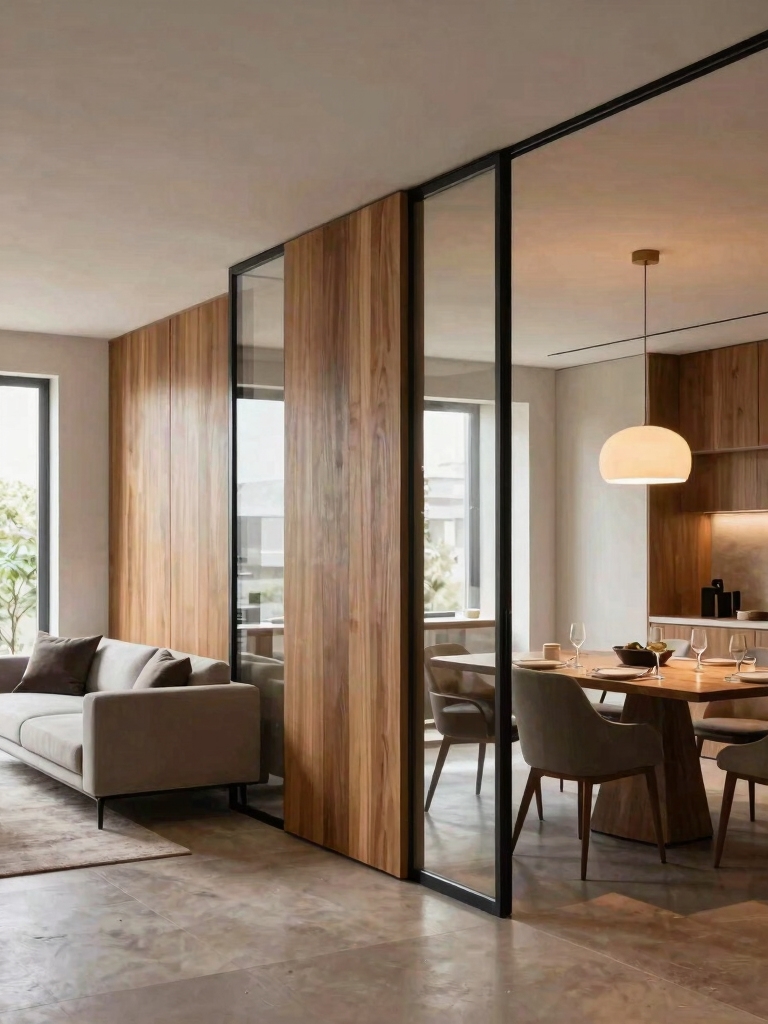
I’ll show you how to carve out distinct zones with style. Hang breezy linen curtains for a soft, sun-dappled divide or angle your sofa on a large rug to anchor the space. Consider a towering bookcase, a living wall of fiddle leaf figs, or even a freestanding fireplace as a sculptural anchor. I love using modern metal grids or glass blocks for a luminous glow. Let’s explore how these ideas can completely transform your open layout.
Hang Breezy Curtains for a Flexible Divide
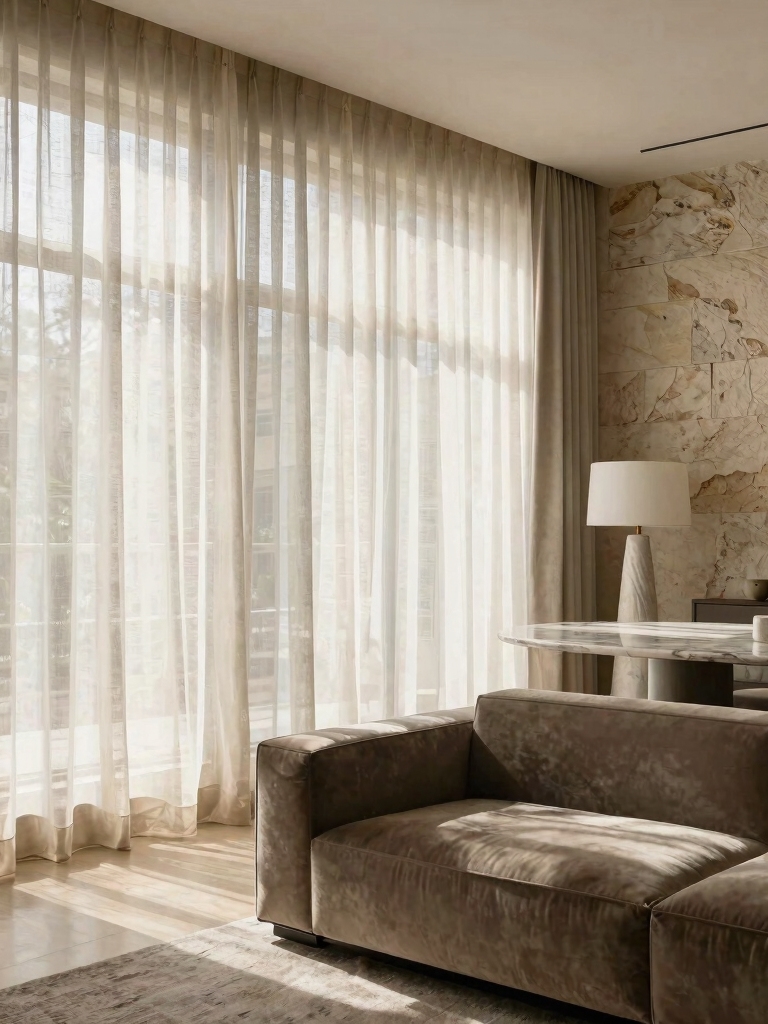
If you’re wanting to keep things light and adaptable, few options are better than hanging some breezy curtains to carve out a space.
I love how a ceiling track and sheer linen can instantly create a soft, sun-dappled nook. You can simply draw them back for a wide-open feel.
This trick adds layers of texture and romance without committing to anything permanent. Many aesthetic lovers are copying this easy way to transform rooms and create dream spaces effortlessly.
Arrange Your Sofa or Rug to Define a Space
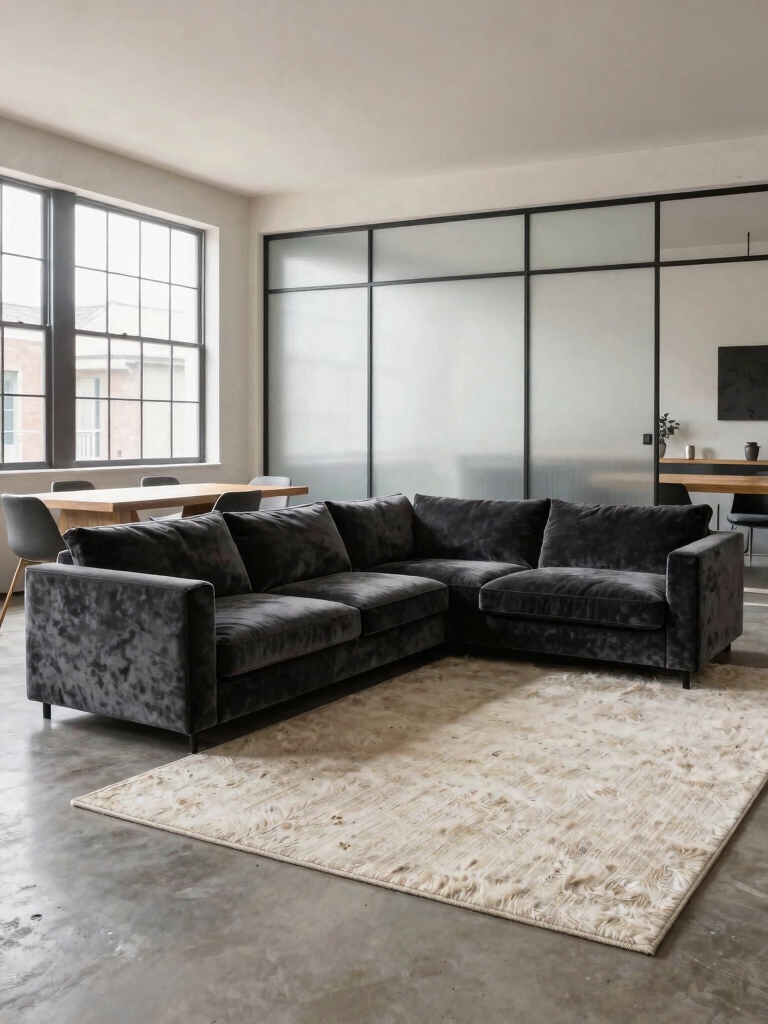
One of my favorite tricks for defining a zone is simply angling your sofa away from the wall or centering a large rug.
That angled sofa instantly creates a cozy nook, while a rug physically anchors your living area. I think of it as drawing a boundary without a wall.
It’s a powerful, visual cue that tells people, “This is the spot for conversation or relaxation.”
Adding warm lighting and soft textures can further enhance the cozy living room decor and make the space feel even more inviting.
Add a Stylish Folding Room Divider
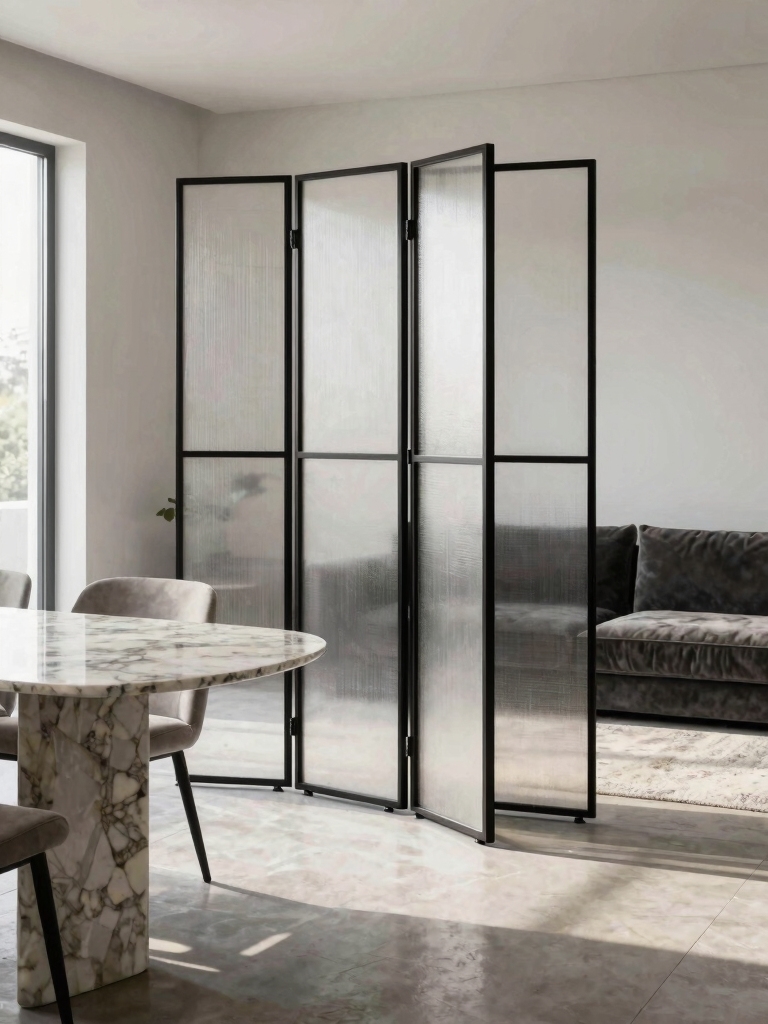
Because flexible spaces are often the most creative, I’m a huge fan of folding screens or dividers—they give you the power to reshape a room in an instant.
Think of them as your home’s temporary walls.
- Choose a screen with a bold graphic print to act as a piece of art.
- Use a lightweight bamboo frame for a zen, airy feel.
- A lacquered three-panel screen can add a glossy, modern accent.
- Position it behind a sofa to instantly carve out a cozy reading nook.
- Fold it flat and tuck it away when you want the space to feel open again.
They also help you transform room corners into stunning decor spaces, turning dead zones into statement spots.
Use a Large Bookcase as a Partition
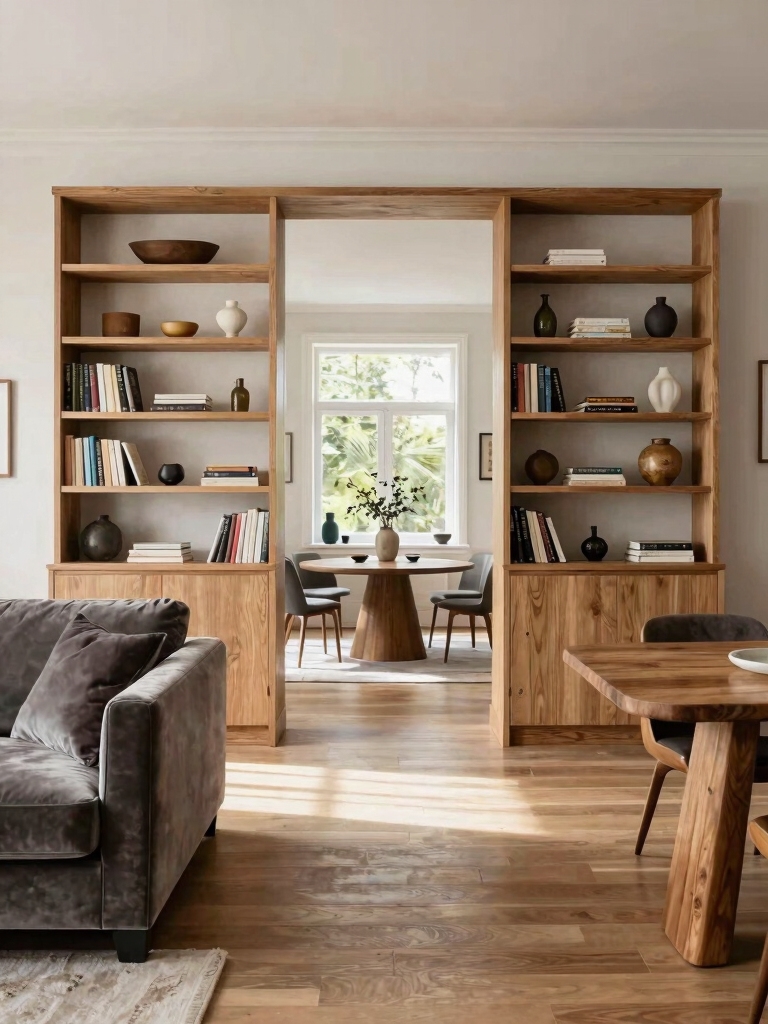
Imagine a towering bookcase as your room’s backbone, holding a world of stories and treasures on one side while artfully defining space on the other.
I love that this approach gives me a serious double-duty storage solution and opens up a flexible room arrangement I can shift with my mood.
Just pick a shelf style with open backs to keep the light flowing, and you’ll instantly craft a boundary that feels both substantial and inviting.
This technique is perfect for small living room decor ideas that elevate the whole space without making it feel cramped.
Double-Duty Storage Solution
Think beyond a solid wall and divide your space with a towering bookcase that’s as much a storage powerhouse as it’s a visual barrier.
I love how it organizes my life while defining rooms. Don’t just stack books—curate a collection that tells your story from both sides.
- Frame a vignette with art and objects on alternating shelves.
- Hide media clutter in decorative boxes behind a literary facade.
- Create depth by mixing open and closed storage.
- Let light dance through by leaving some sections sparsely filled.
- Anchor the divide with a large potted plant atop or beside it.
Choosing Shelf Styles
Moving from what you stock your shelves with to how you build them, your bookcase’s design itself shapes its presence.
I choose industrial steel frames for a graphic, open grid or warm walnut slabs for a solid, sculptural wall.
Play with asymmetry; stagger depths. A deep base shelf grounds it, while floating top cubes catch light.
This structure becomes your room’s bold backbone, not just a stack of boards.
Flexible Room Arrangement
A towering bookcase can instantly carve a new room from your existing space, turning one open area into two distinct zones without a single permanent wall.
I love its duality—it’s a sculpture filled with stories and a functional, flexible barrier you can shift with your life.
- Choose a unit with depth; it muffles sound and holds more than books.
- Style both sides to feel intentional.
- Leave space behind it—a secret passage for flow.
- Anchor it with a heavy rug if freestanding.
- Light it from above like a gallery wall.
Grow a Living Divider With Tall Houseplants
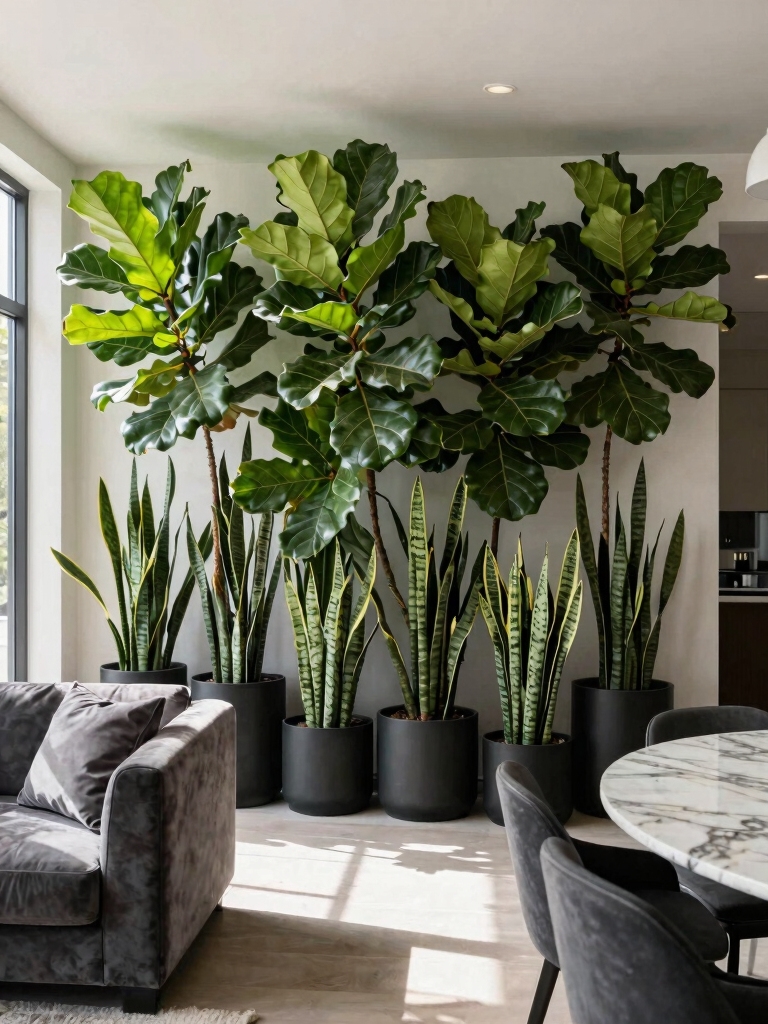
I picture a lush, green wall of foliage separating my reading nook from the living area.
I’ll focus on finding the right plant species that thrive in my home’s light and can grow tall enough to offer real privacy.
Then, I’m arranging them in staggered clusters, creating a dynamic barrier that feels both intentional and wonderfully wild.
This approach not only adds beauty but also maximizes space, a key principle in clever space-saving solutions for small rooms.
Selecting Ideal Plant Species
Imagine your living room bisected by a lush wall of greenery, where each towering leaf sculpts the space and breathes life into it. Your species selection is your design foundation.
I prioritize structural drama, manageable growth, and resilience. Think of this green architecture.
- Cast Iron Plant (Aspidistra): An unkillable, deep-green column of glossy leaves.
- Bird of Paradise: Sculptural, banana-like foliage that screams tropical boldness.
- Fiddle-Leaf Fig: An iconic, large-leaved statement that demands (and defines) a corner.
- Snake Plant (Sansevieria): Vertical, architectural spears that thrive on neglect.
- Dracaena ‘Janet Craig’: A dense, dark-green tower perfect for a full, opaque screen.
Arranging Plants For Privacy
Now that you’ve chosen your structural plants, let’s construct that green wall.
I start by placing the tallest, like a Fiddle Leaf Fig, as my anchor. I’ll flank it with dense, leafy Dracaenas, weaving in textures—a spiky Yucca here, a cascading Pothos there.
You’re not just lining them up; you’re layering heights and fullness to craft a living tapestry that breathes and obscures the view completely.
Hang a Large-Scale Art Piece or Tapestry
To transform a wide-open wall without permanent construction, try hanging a large-scale art piece or tapestry that demands attention. I use it as a visual anchor, creating a powerful psychological boundary.
- Choose a piece with colors that echo elsewhere in the room.
- A textured, woven tapestry adds softness and absorbs sound.
- Position it to partially obscure sightlines for an instant “room” feel.
- An oversized, bold abstract painting defines a modern zone.
- A vintage rug hung as art tells a story and divides space.
Large blank walls offer a perfect canvas to transform your space with stunning decor ideas that enhance both living and dining areas.
Place a Console Table as a Partial Wall
I picture my console table like a handsome fence, instantly carving a distinct zone from my main space.
You can lean a sculpture or stack books on it to seriously upgrade your style while dividing areas.
This trick gives you that perfect, airy separation without ever needing a real wall.
Incorporating stylish storage solutions alongside your console table can further enhance both function and aesthetic in your living and dining spaces.
Strategic Style Enhancement
While you’re carving out distinct zones within an open floor plan, consider the console table as your stylish and functional ally. It’s a visual anchor that defines space without building walls.
I use mine to stage artful vignettes that tell a story.
- Layers a curated collection of books and objects to create depth.
- Introduces a new finish or material for tactile contrast.
- Provides a stage for sculptural lamps or bold art.
- Offers a landing strip for keys and mail, marrying beauty with utility.
- Reflects light strategically with a mirror to amplify the space.
Practical Partial Separation
Because you’re embracing openness but crave a bit of definition, placing a console table as a partial wall is my go-to move for carving out a practical boundary without losing airiness.
It’s a floating anchor for your space. Think of it as a stage for art books, a sculptural lamp, or a cascading vine.
This thin line of curated objects visually divides rooms while physically inviting flow.
Use a Counter or Bar to Divide a Room
Installing a counter or bar is a brilliantly functional way to carve distinct living and dining zones from a single open space.
I love how its surface becomes a stage for both morning coffee and evening cocktails, all while keeping sightlines blissfully open. Think of it as your home’s stylish multitasker.
- Anchor a floating walnut slab for a modern, airy perch.
- Repurpose a vintage dresser top into a salvaged-character bar.
- Layer with pendant lights to define the space from above.
- Keep stools sleek and tucked-in for clear circulation paths.
- Use the lower cabinetry for dual-zone storage—glasses one side, linens the other.
Adding a counter or bar not only divides space but also helps maximize small living room functionality by creating distinct areas that feel open and connected.
Install a Modern Metal Grid Screen
Sixth on our list, a modern metal grid screen slices through an open floor plan with the sharp, clean lines of a sculptor’s sketch.
It defines spaces without sacrificing light or a feeling of airiness. I love how its industrial geometry plays against softer furnishings.
You can find sleek, powder-coated panels or build a custom frame yourself. It’s a structural statement that organizes your view while letting life flow through.
Adding such a feature is a perfect way to revitalize your space with fresh room decor ideas this weekend.
Choose Light-Diffusing Glass Blocks
To transform harsh sunlight into a soft, luminous glow, consider building a partition from light-diffusing glass blocks. I love how they sculpt light without sacrificing it, creating a bright, private barrier.
- Craft a glowing veil that obscures clutter but bathes your space in ambient light.
- Anchor them with a steel frame for a sturdy, modern look.
- Mix block patterns—fluted, frosted, clear—for a dynamic texture.
- Pair with a bold paint color on adjacent walls; the blocks become radiant filters.
- Think beyond the grid; lay them in a staggered, artistic pattern.
For an added touch of style without breaking the bank, explore budget-friendly decorating ideas to complement your partition and enhance the overall space.
Build a Custom Slatted Wood Wall Divider
For your second luminous barrier, imagine crafting a rhythm of wood and shadow with a custom slatted divider.
I build mine with vertical cedar strips, spacing them to let light dance through while defining zones. You control the privacy and pattern.
Stain some pieces, leave others raw for eclectic texture. This isn’t just a wall; it’s a sculptural screen that breathes.
Incorporate a Freestanding Fireplace as a Divider
While a slatted wall plays with light and shadow, a freestanding fireplace builds its own gravitational pull, carving warmth and focus from open space.
I treat it as a sculptural anchor, defining zones without closing them off. Position it to face the primary seating area, ensuring it’s the room’s glowing, communal heart.
- A dual-sided design fosters connection between two spaces.
- Its thermal mass becomes a tangible, warming boundary.
- Choose a bold material like black steel or sculpted concrete for impact.
- Always follow local codes for venting and clearance—safety fuels beauty.
- Let its flickering light be the only “wall” you need at night.
Construct a Half-Wall With Built-In Storage
Because I see walls as limits, I build a half-wall that holds more than it hides, transforming a boundary into a library, a bar, or a display for everything I use and love.
Frame it from sturdy lumber, then clad it in reclaimed wood or sleek tile. I always install lighting inside the cubbies—it turns my favorite books and glassware into a glowing, functional sculpture dividing the room.
Conclusion
After exploring these ideas, I’m convinced the perfect divider marries form and function. A surprising fact: clever zoning can make a small space feel 30% larger. I’ll be pulling my sofa into the room’s center to carve out distinct areas. My advice? Let the space breathe. Mix a vintage screen with trailing ivy—create a layered, dynamic divide that reflects your life’s beautiful chaos.