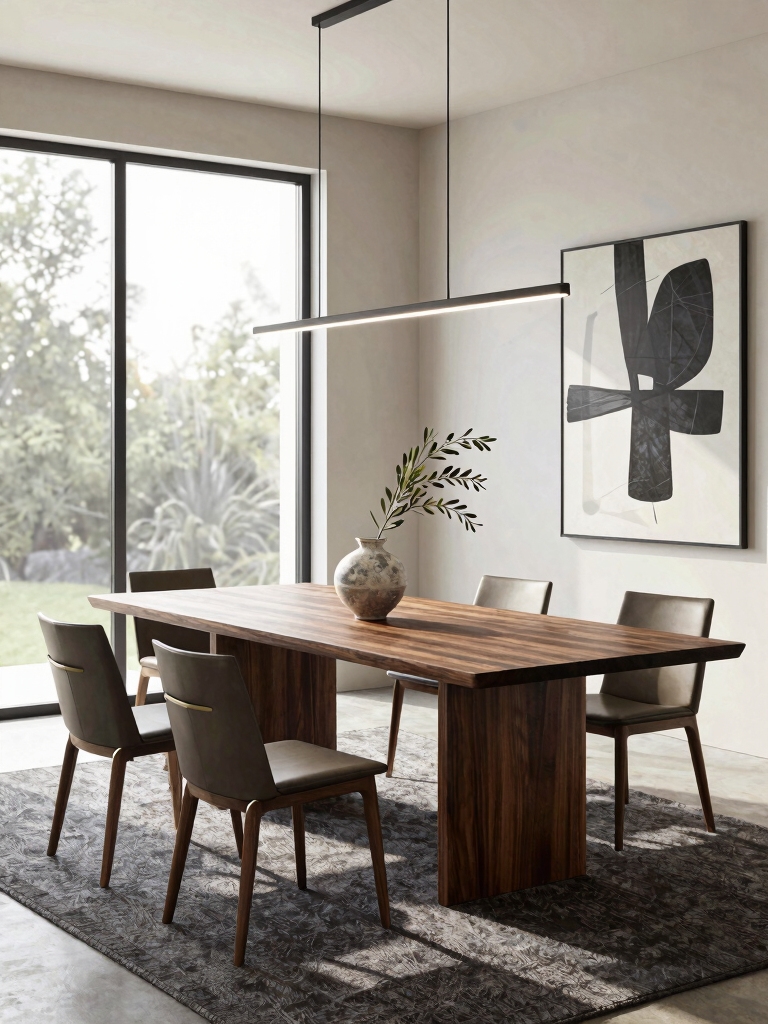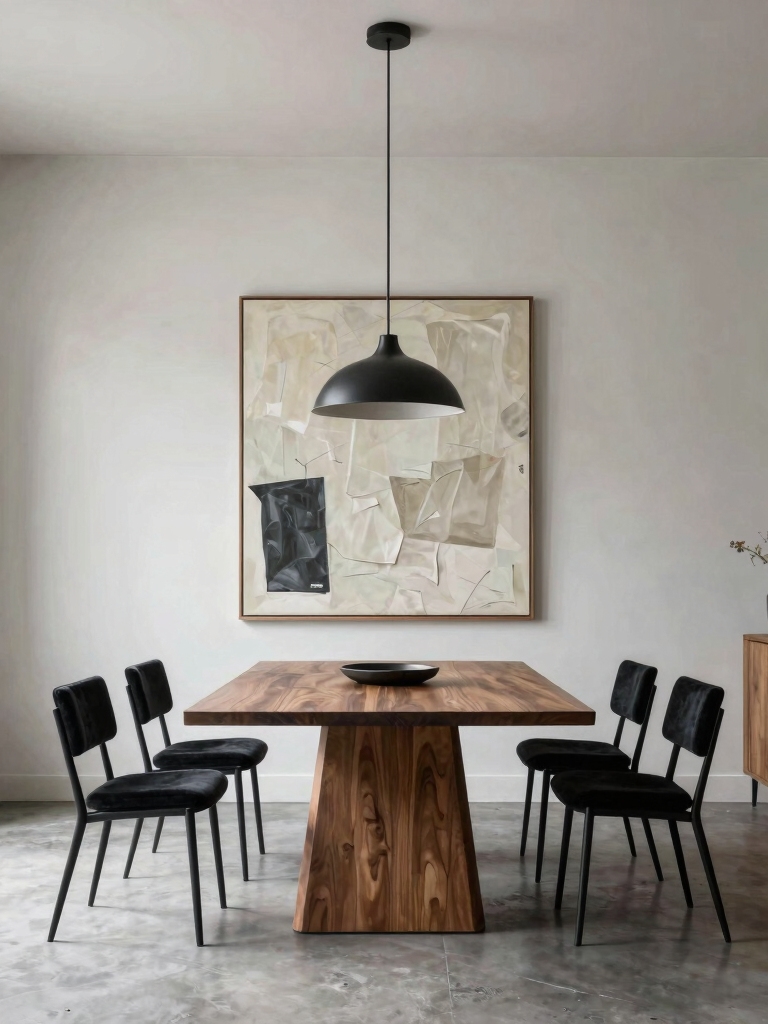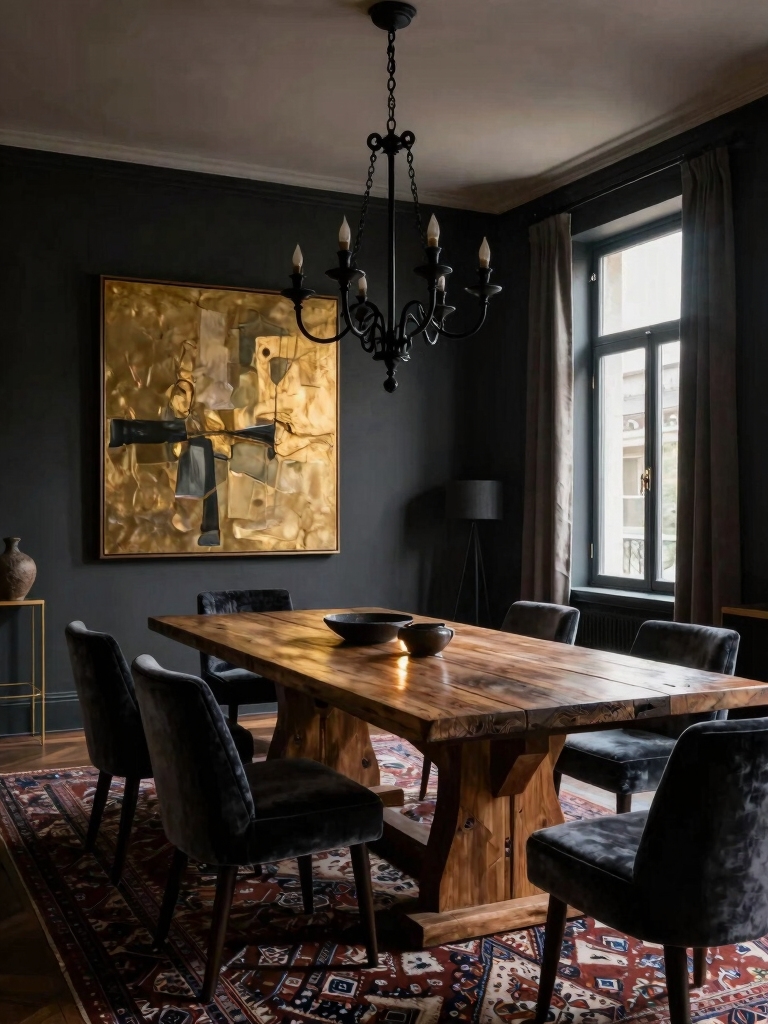
I’ll show you how to build a dramatic dining room. Start by painting a single dark wall or your ceiling in a deep jewel tone. Layer textures with a patterned rug and rich linens. Install low, layered lighting to sculpt intimate shadows, then balance the darkness with light-colored sculptural accents and a glossy mirror. The final details are what truly transform the space.
Paint a Dark Statement Wall or Ceiling
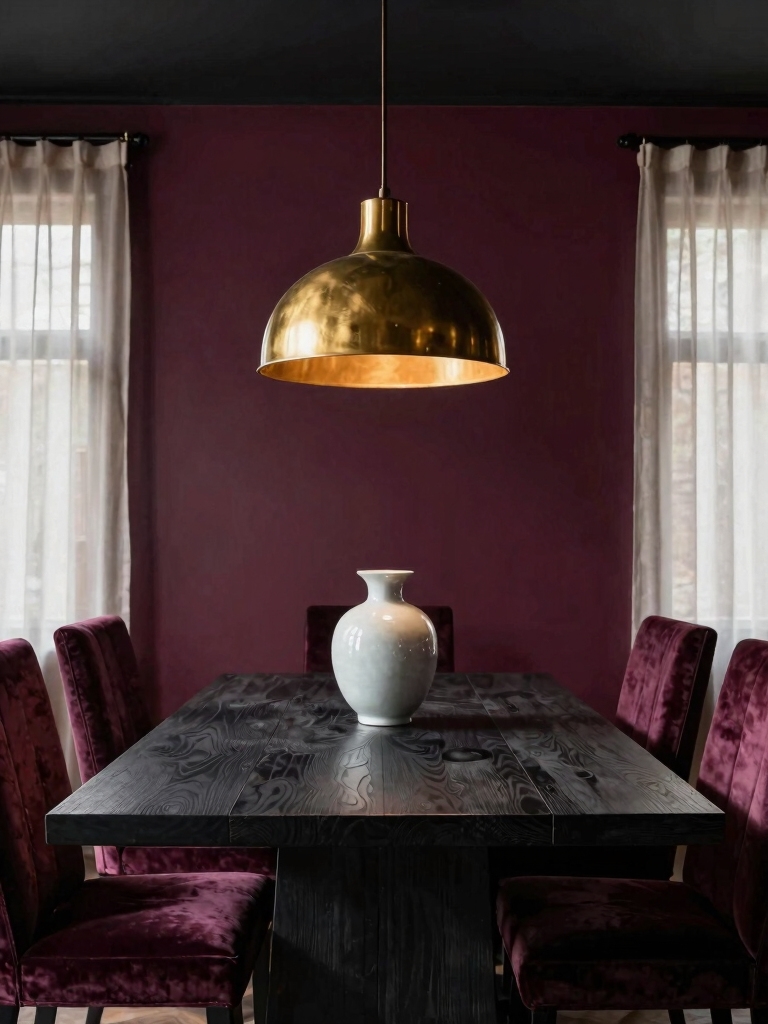
To immediately anchor your dining room’s mood, consider painting a single dark wall or ceiling.
I find this creates instant, powerful drama. It frames the space, making your table the focal point.
Don’t fear the darkness—embrace its sophistication. A matte finish absorbs light beautifully, enhancing intimacy.
This isn’t just paint; it’s a foundational gesture that defines the entire room’s character before you add a single piece of furniture.
Bold wall designs are key to adding living room drama and can transform your space with striking visual impact.
Choose a Deep Jewel Tone Color Palette
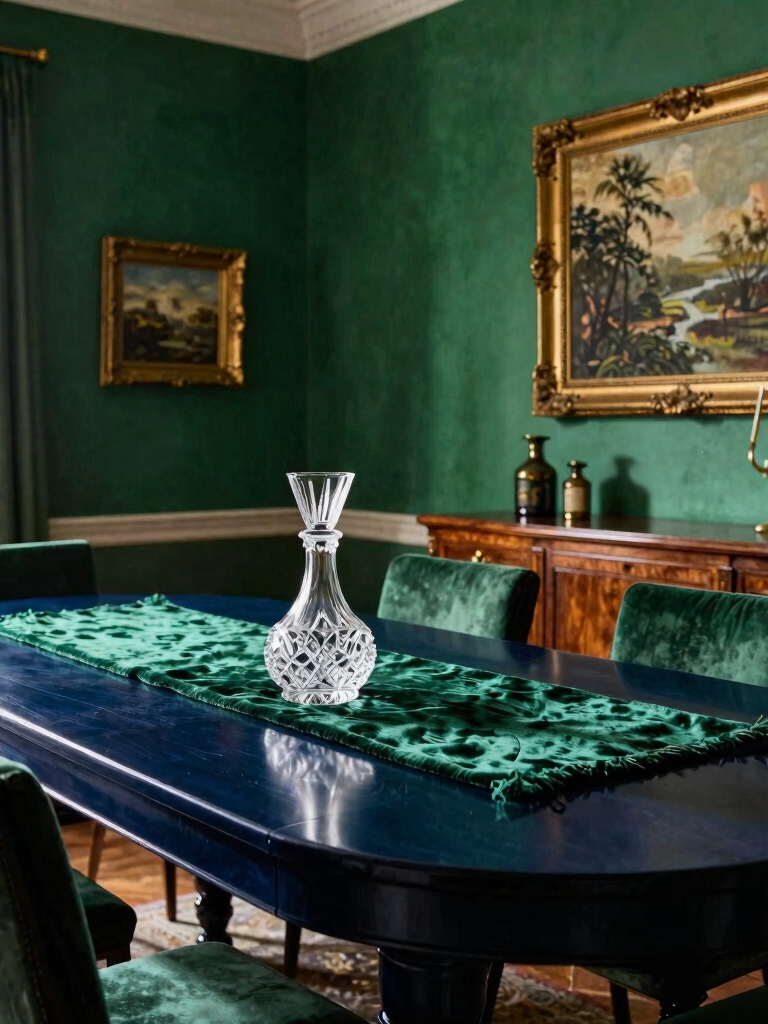
Building on that dramatic foundation, I select deep jewel tones for the entire palette. Think emerald, sapphire, or amethyst.
These saturated hues create an intimate, enveloping atmosphere. I use them on walls, cabinetry, or even the ceiling for a fully immersive effect.
They’re rich but never garish, providing a sumptuous backdrop that feels both timeless and deeply personal. This bold color choice is the core of the room’s mood.
Incorporating timeless design principles, like those found in powder room design ideas, ensures the look remains elegant and cohesive.
Layer Textures From Rug to Tablecloth
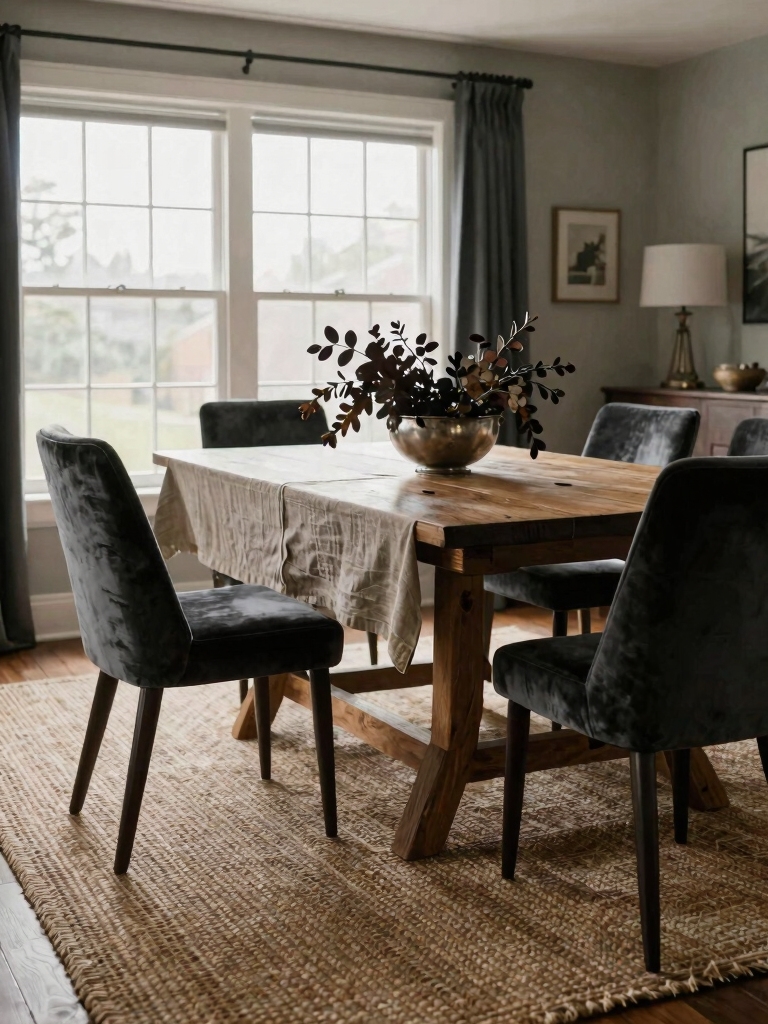
I start by selecting a foundational floor covering that grounds the space with its tactile presence.
My focus then rises to the table, where elevated textiles introduce a contrasting, intimate softness.
I see this textural conversation as essential for building a room’s sensory depth.
Choosing the right paint colors can further enhance this layering by setting the perfect dining room mood.
Foundational Floor Coverings
Let’s establish your moody dining room from the ground up, starting with a rich, textural rug.
I’d choose a low-pile wool in charcoal or deep navy. Its dense weave absorbs light, anchoring the space.
This foundation is non-negotiable—it’s the quiet, sophisticated base upon which every other dramatic layer will rest.
Make certain it’s large enough to frame the table and chairs.
Elevated Table Textiles
Two distinct textures are now essential: a thick linen runner and soft, heavyweight cotton napkins.
I layer them directly atop my foundational rug to create a tactile ascent. This intentional progression—from floor to table—builds visual weight and drama.
I never use flimsy fabrics; their substance commands attention. The contrast between the rugged linen and plush cotton defines the entire mood, making the table a central, textured sculpture.
Install Low and Layered Moody Lighting
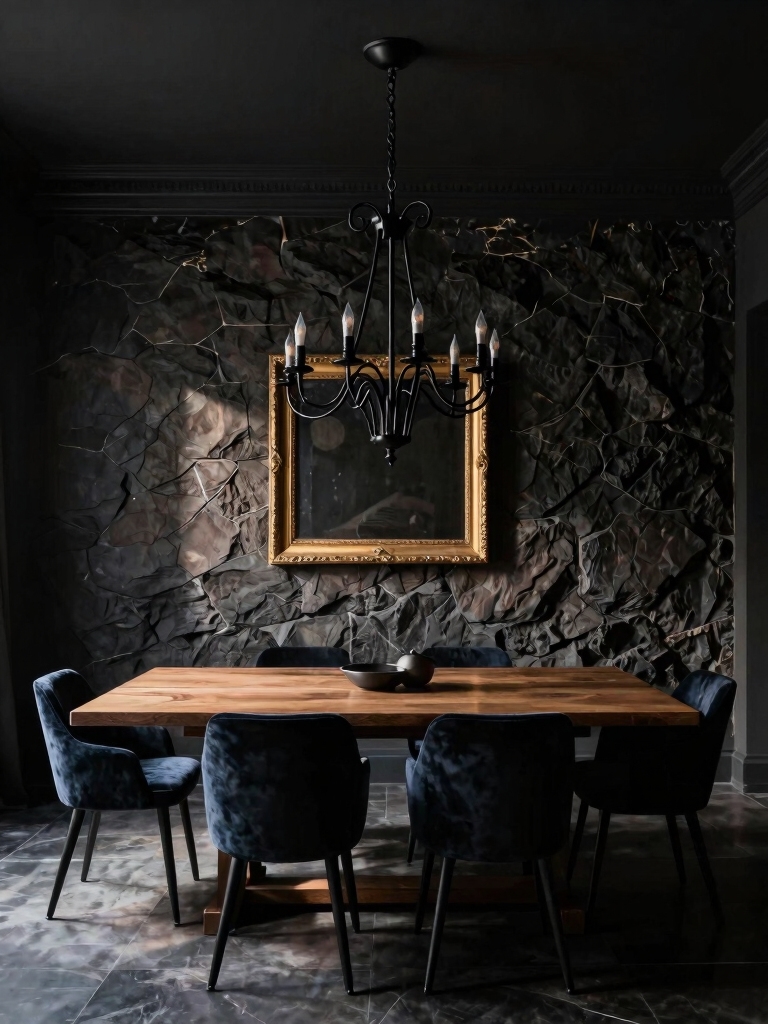
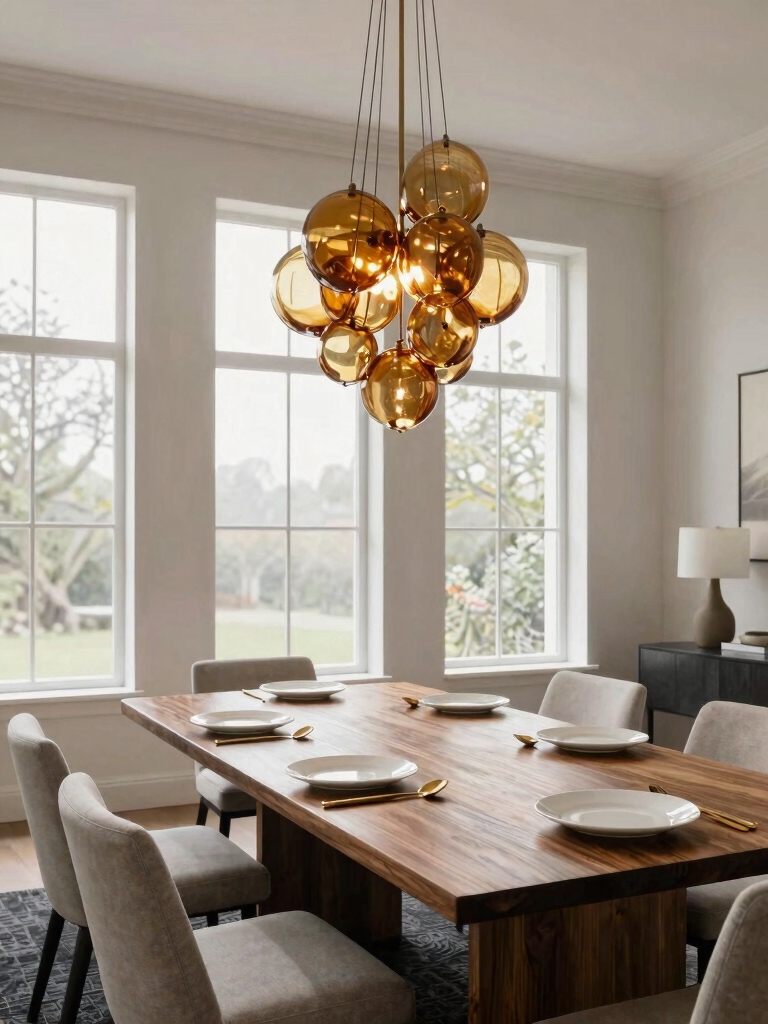
Start by installing your primary light source lower than standard—think just above head height for a pendant. This instantly pools light on your table, creating an intimate focal point.
I then layer in secondary lighting: discreet sconces or concealed LED strips. This builds depth and shadow—the essence of drama.
I avoid overhead glare completely, crafting a cocoon of sophisticated contrast that makes every meal feel like an event.
Choosing from stunning chandelier ideas can further elevate the mood and steal the spotlight in your dining room.
Add Light-Dimming, Dramatic Curtains
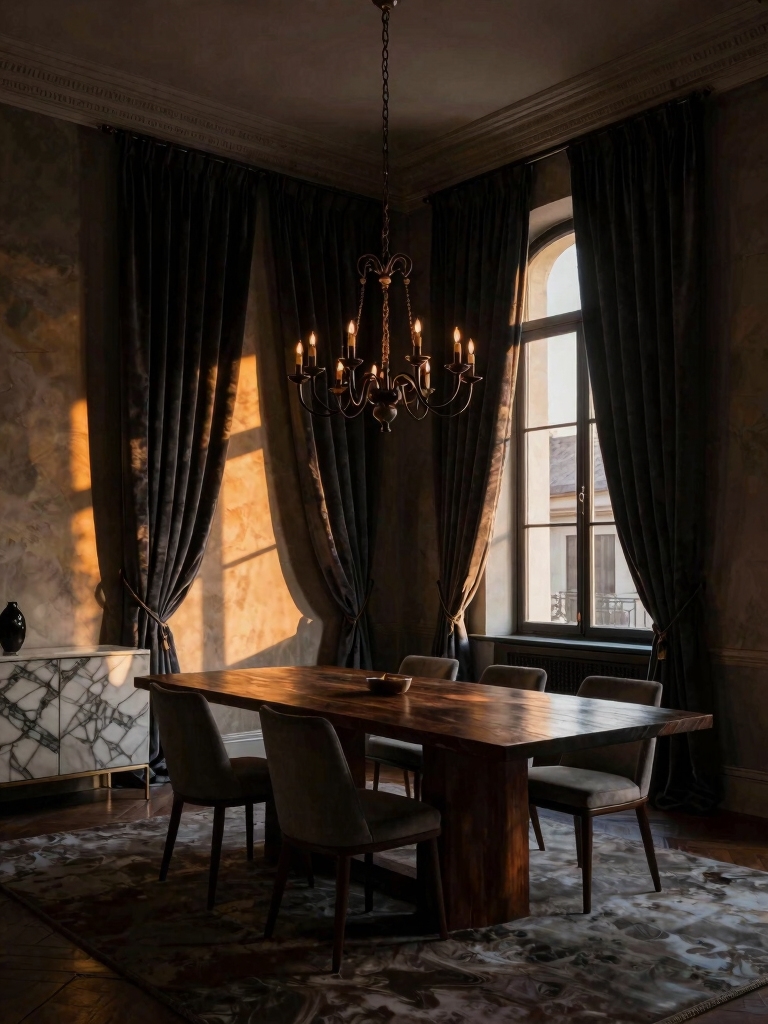
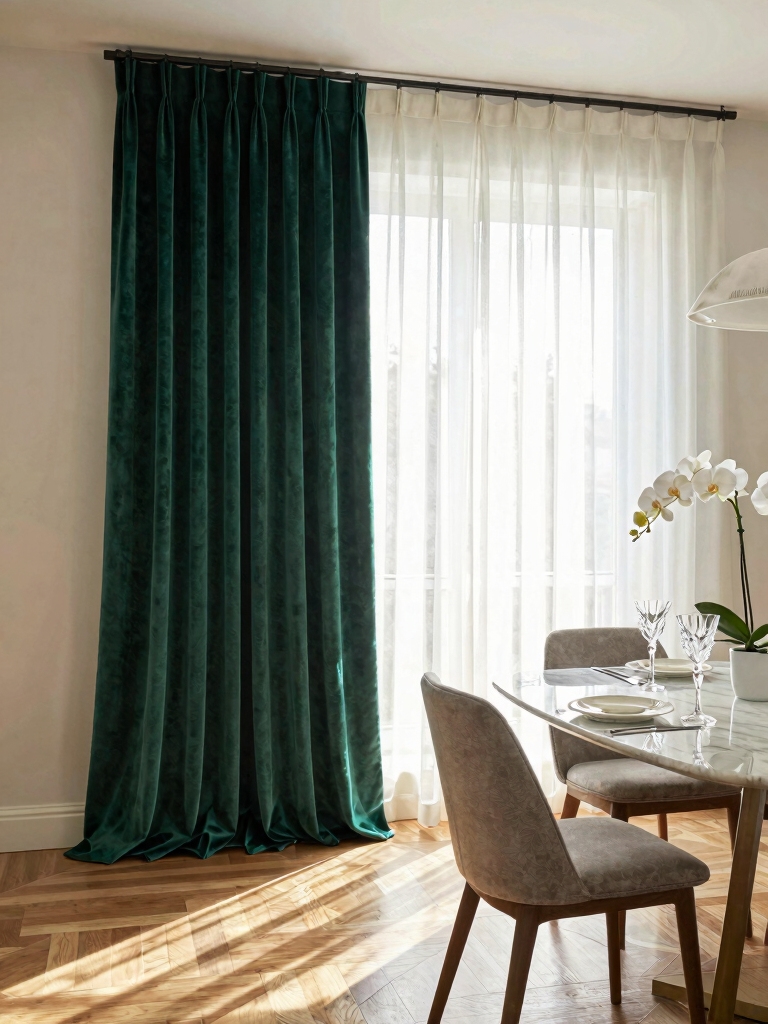
I always choose velvet for its rich embrace, which instantly deepens the room’s atmosphere.
I hang them floor-to-ceiling to achieve a sense of grandeur that commands attention.
This combination doesn’t just dim the light; it crafts a dramatic, enveloping scene.
For a budget-friendly approach, consider affordable fabric options that still offer a luxurious feel to enhance the room’s mood with budget-friendly decorating.
Velvet’s Rich Embrace
One element can redefine a dining room’s atmosphere: velvet curtains. Their dense weave absorbs light, dimming the room instantly.
I choose a saturated color—emerald, charcoal, or burgundy. The fabric’s inherent weight and depth create a palpable sense of enclosure.
This isn’t just decoration; it’s an architectural gesture. The texture alone commands attention, turning your dining space into a focused, intimate chamber.
Floor-To-Ceiling Grandeur
To command the entire vertical plane, I hang light-dimming curtains from the very ceiling, letting them pool on the floor. This creates an instant, enveloping drama.
I choose a heavy, opaque fabric in a deep charcoal or black. It’s a stark, architectural gesture that frames the window and severs the outside world.
The room turns inward, becoming a private, theatrical chamber perfect for intimate, candlelit gatherings.
Pick a Substantial, Anchor Dining Table
While establishing a moody atmosphere, your dining table becomes the undeniable centerpiece—choose one with significant presence.
I look for solid, heavy materials like aged oak or blackened steel. Its proportions should command the room.
This foundational piece grounds my entire design narrative, so I never opt for something light or fleeting. Its weight visually and emotionally anchors the space, setting a deliberate, dramatic tone from the start.
Incorporating dining room ideas that elevate every meal helps ensure the space feels inviting and memorable for every gathering.
Upholster Chairs in Luxe Moody Fabrics
After choosing that anchoring table, I turn to the seating, because the right fabric transforms a chair into pure atmosphere.
I opt for velvet or brocade in deep emerald, charcoal, or burgundy. It’s not just color; it’s texture and weight.
I skip patterns, letting the material’s own richness dominate. This choice turns each chair into a tactile, shadowy sculpture, contributing depth and quiet drama to the room’s mood.
In small spaces, selecting the right seating can also elevate the whole space by adding both style and comfort without overwhelming the room.
Place Mirrors to Reflect Soft Light
Mirrors become my next focus, because they capture and amplify the room’s ambient glow. I position them opposite my candle sconces or a lone window.
They’ll double the flicker of a flame and soften shadows on the wall. I choose antique or smoked glass for depth, never a stark reflection.
This isn’t for vanity; it’s a calculated play with light to deepen the room’s intimate atmosphere. Using mirror decor can also open up the space, making the room feel larger and more inviting.
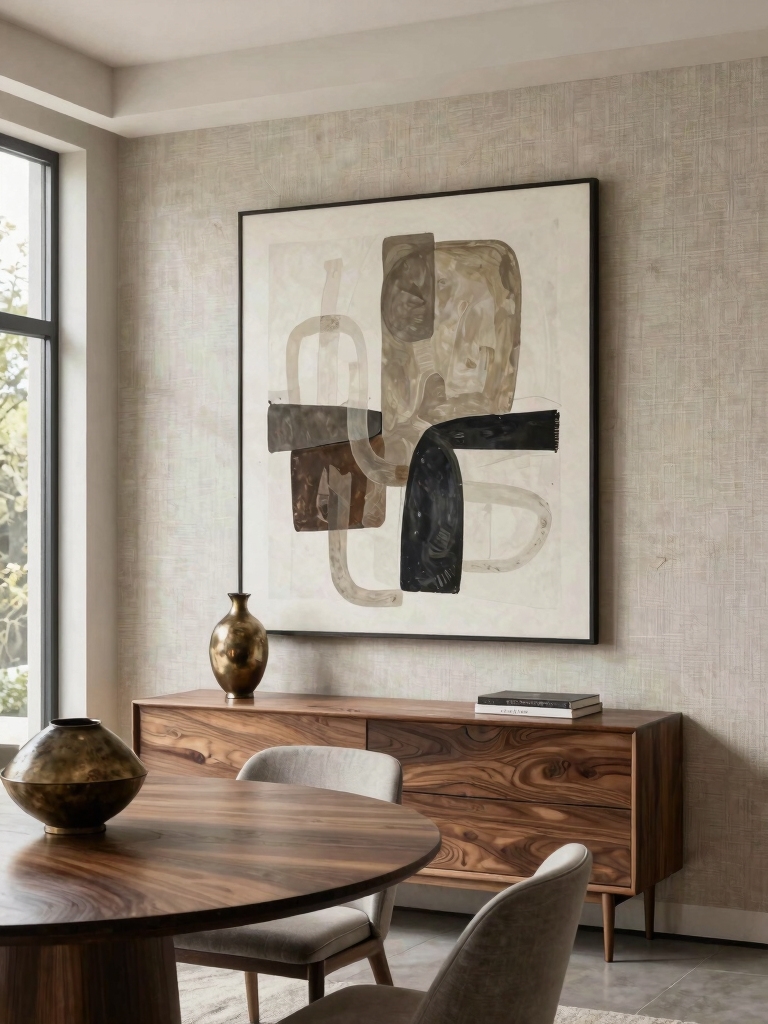
Hang Oversized or Classical Artwork
I start by selecting just one statement piece to serve as my singular focal point.
I’m not afraid to use an oversized canvas or a classical painting with weighty presence.
This bold choice immediately establishes a sense of depth and dramatic scale in the room.
Incorporating these elements helps to command attention and elevate your dining space with stunning style.
Select Statement Pieces
One single, monumental piece of art can define your entire dining space, so choose yours with decisive confidence.
I prefer a dramatic, oversized canvas or a classical portrait with a brooding gaze. It’s not about filling a wall but making a profound assertion. This piece should command the room.
Let its mood—dark, contemplative, or stark—dictate your palette and atmosphere. Everything else recedes around this anchor.
Use A Singular Focal Point
When curating a moody dining room, let a single, substantial artwork establish the entire scene’s emotional gravity.
I choose a monumental canvas or a powerful classical piece, then build the room’s palette around its tones. This creates an immediate, undeniable narrative.
Everything else recedes, becoming a supporting actor. It’s a bold, minimalist move that avoids clutter and guarantees a sophisticated, dramatic focus for every gathering.
Emphasize Depth And Scale
Hanging an oversized or classical piece creates instant scale and a sense of vast depth.
I choose a single, powerful artwork and let it dominate the wall. This dramatic gesture draws the eye, making the room feel grander.
It’s not about clutter; it’s a bold, calculated move. That scale juxtaposes intimately with the dining table, crafting a sophisticated and immersive atmosphere.
Lay Down a Rich, Patterned Moody Rug
To ground your moody dining space, I’d begin with a rich, patterned rug. It instantly anchors the room.
I’d choose a deep jewel tone or inky charcoal base. Then, I’d layer on a complex, low-contrast geometric or damask design. This adds essential texture and visual weight underfoot.
It’s the foundational element that connects your furniture, establishing a sense of intimacy and drama before anything else enters the room.
Incorporating farmhouse decor ideas can also add warmth and character to balance the drama in your moody dining room.
Introduce Natural Wood or Stone Elements
I start by anchoring the room with a dark wood table as my centerpiece.
Then I’ll add raw wood beams overhead for a touch of structural drama.
A stone fireplace completes the scene, offering a cold, textural contrast.
Raw Wood Beam Accents
Because a truly moody dining room often feels elemental, raw wood beam accents can ground the entire space.
I don’t want them polished. Their rugged texture and deep grain contrast beautifully with matte paint or plaster.
I’ll run them along the ceiling or as structural supports. This isn’t rustic charm; it’s architectural weight.
It forges a direct, honest connection to nature that feels inherently dramatic and soulful.
Stone Fireplace Statement
A stone fireplace becomes a monumental anchor in a moody dining room. I choose raw, textured stone to create an elemental focal point. Its rugged presence contrasts beautifully with smoother finishes, grounding the entire space.
For maximum impact, I consider three things:
- Scale: It must command the room.
- Texture: Rough-hewn stone adds essential tactile depth.
- Finish: A natural, unpolished look enhances the organic drama.
Dark Wood Table Centerpiece
While the fireplace anchors the wall, the dark wood dining table anchors the meal. I let its grain command the space.
For a centerpiece, I introduce raw, contrasting elements. A single slab of pale limestone or a cluster of fossilized wood creates weight. It’s elemental, not decorative.
This juxtaposition of dark timber and pale stone feels ancient and grounding, pulling the entire moody narrative together.
Style a Moody Everyday Tablescape
Since moody tables are meant to be lived with, I start by selecting a singular, dramatic centerpiece: a single black candle, a low vessel of dark branches, or one weighty sculpture. Everything else stays functional and edited.
- Layer in texture, not color, with matte ceramics and linen.
- Use simple, substantial dishware that feels anchored.
- Keep place settings minimal—I often forgo a tablecloth to highlight the wood.
Build a Moody Monochromatic Scheme
Focusing on a single color family, I build depth through texture and tone rather than introducing contrast.
I’ll layer shades from charcoal to slate, adding richness with velvet upholstery, matte walls, and a gloss-finish table. This monochrome approach feels inherently dramatic and cohesive.
I keep the silhouette of each piece clean and intentional. The result is a powerful, enveloping space that commands attention through restrained elegance.
Mix Aged-Patina Metals Throughout
A patina’s time-worn whisper introduces soul into a monochrome room. I mix burnished brass, darkened bronze, and tarnished silver. It creates depth and tells a story. I layer these finishes in my lighting, hardware, and decorative objects.
- I choose one dominant metal.
- I never use more than three finishes.
- I guarantee they share a similar undertone.
This curated imperfection is the ultimate sophistication.
Arrange Furniture for Intimate Zones
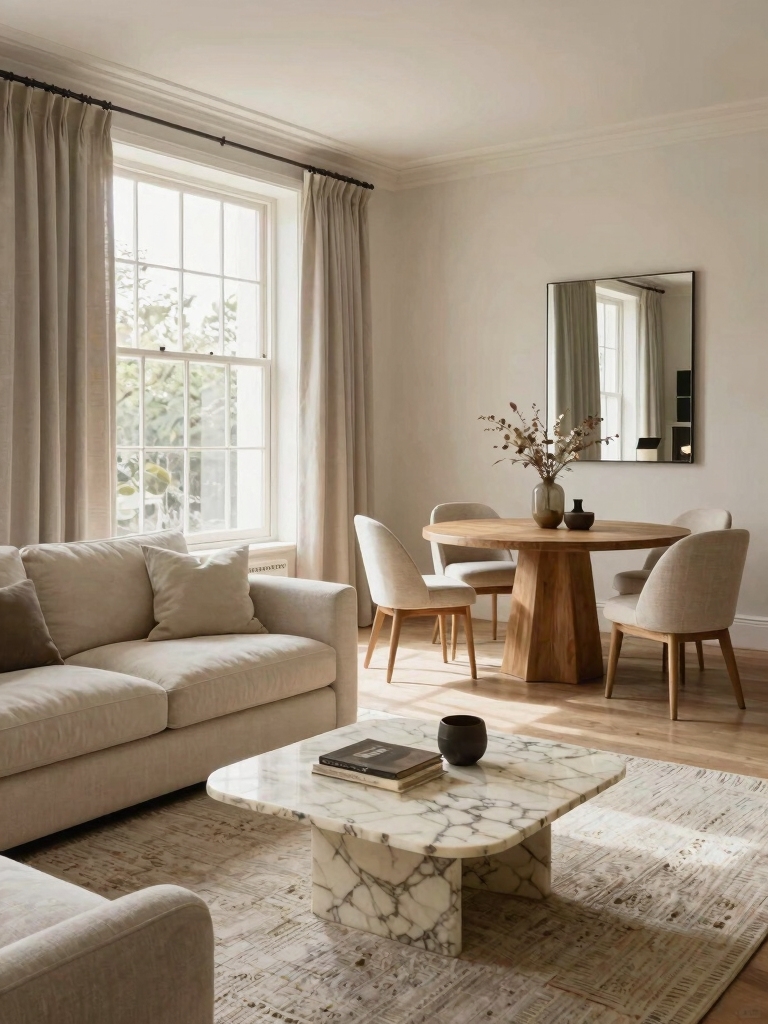
Rather than letting a large dining room feel cavernous, I carve out intimate zones with intentional furniture arrangements. I place a round table as an anchor, encouraging closer conversation.
A low-slung sideboard or a pair of deep armchairs beside a fireplace creates a separate enclave. I keep pathways clear between these zones, ensuring each feels like a destination, not an afterthought.
This layout fosters connection within the dramatic scale.
Showcase Your Collections Like a Gallery
I think of my collections as art, so I arrange them in curated, intentional groups.
I mount sleek wall shelves to stage these vignettes away from the clutter of the table.
Finally, I use strategic lighting to cast dramatic shadows and make each piece a focal point.
Curated Displays and Arrangements
Transforming your dining room into a gallery begins with curation. I edit ruthlessly, pairing objects that share a tonal or thematic bond.
It’s not about quantity, but intentional placement.
- Edit with intention: Remove clutter, focus on cohesion.
- Build tonal groups: Link objects by color or texture.
- Create visual rhythm: Alternate heights and forms for drama.
This discipline creates a powerful, collected atmosphere.
Utilizing Wall Shelves and Ledges
With your edited collection ready, wall shelves become the stage.
I treat them as a gallery wall, arranging books, ceramics, and found objects with intention.
Space is my secret; I leave breathing room between each piece.
This isn’t clutter—it’s a curated vignette.
The result feels intentional and artful, transforming functional storage into a dramatic focal point that commands attention without saying a word.
Strategic Lighting for Emphasis
Because those curated shelves demand a proper gallery’s focus, I use strategic lighting to sculpt the drama. Skip harsh overheads. My arsenal is precise.
- Picture Lights frame individual artifacts.
- Recessed Spots carve objects from shadow.
- Concealed LED Strips add a soft, ambient glow.
This layered approach spotlights texture and form, transforming objects into protagonists against the dark backdrop.
Use Bookshelves for a Library Feel
If you want to carve out a true library atmosphere, install deep bookshelves. I’ll fill mine with leather-bound volumes and stack them artfully.
This creates instant texture and intellectual gravitas. It’s not about neat rows; it’s a curated collection.
The shelves’ shadows and the books’ varied heights become part of the room’s architecture. They anchor the space, transforming a dining area into a sanctuary for contemplation.
Pick the Right Paint Finish: Matte or Satin
Choosing your paint finish shapes the light and mood dramatically. I always opt for a matte finish in a moody dining room. It absorbs light, creating a deep, velvety backdrop. Satin reflects it, adding a subtle sheen. For ultimate drama, matte wins.
Consider its forgiving nature:
- It hides wall imperfections beautifully.
- It delivers a flat, non-reflective surface.
- It intensifies the richness of dark pigments.
Balance Darkness With Pops of Light Color
While matte paint grounds the room in shadow, I counter that depth with sharp accents of light. A cream-colored ceramic vase or a stark white sculptural piece cuts through beautifully.
I focus these pops strategically: on a sideboard, within a centerpiece, or as art. This contrast defines the drama; it prevents the space from feeling heavy, creating a dynamic tension that’s both modern and intentional.
Incorporate Reflective and Glossy Accents
To amplify the layered shadows, I add reflective and glossy accents. They catch the light, creating dynamic points of drama in the darkness.
This isn’t about adding shine; it’s about sculpting with light.
My favorite pieces to use:
- A gilded, ornate mirror
- Polished nickel candleholders
- Lacquered black sideboard
They anchor the mood, making the space feel intentional and deeply sophisticated.
Conclusion
I’ve shown you how deep tones and layered light forge a dramatic space. Now, make it yours. Remember, nearly 60% of us say a beautifully designed dining room greatly boosts our enjoyment of meals. That’s not just decorating—it’s crafting moments. So, dare to go dark. Your most memorable gatherings are waiting in the moody shadows you create.