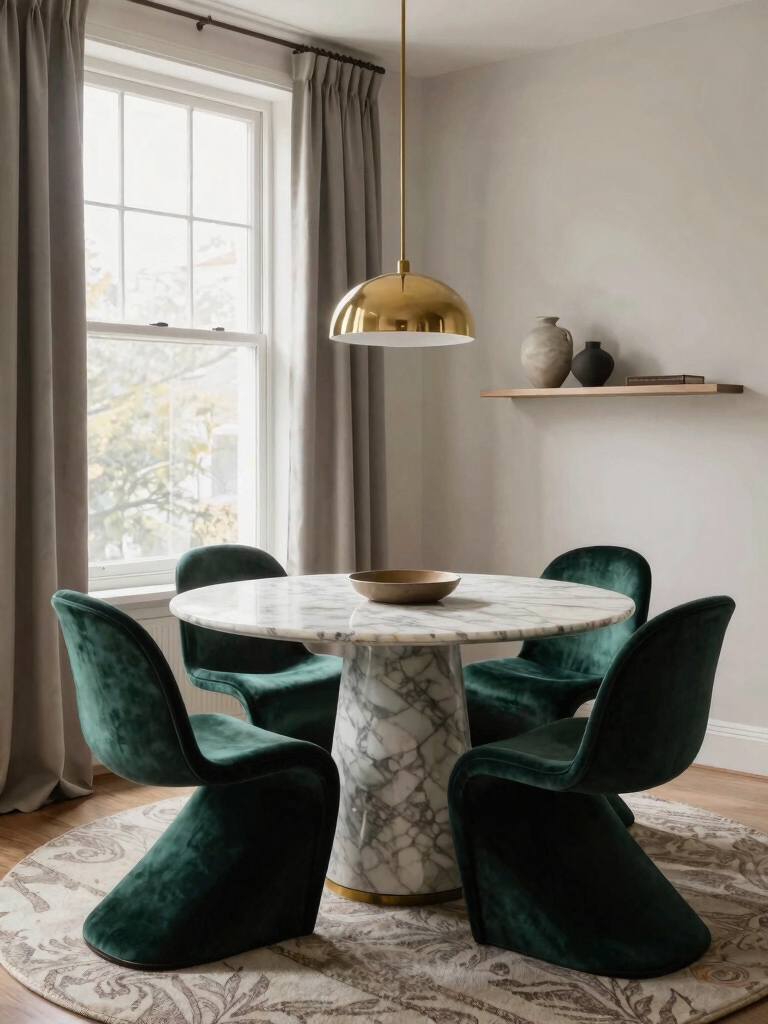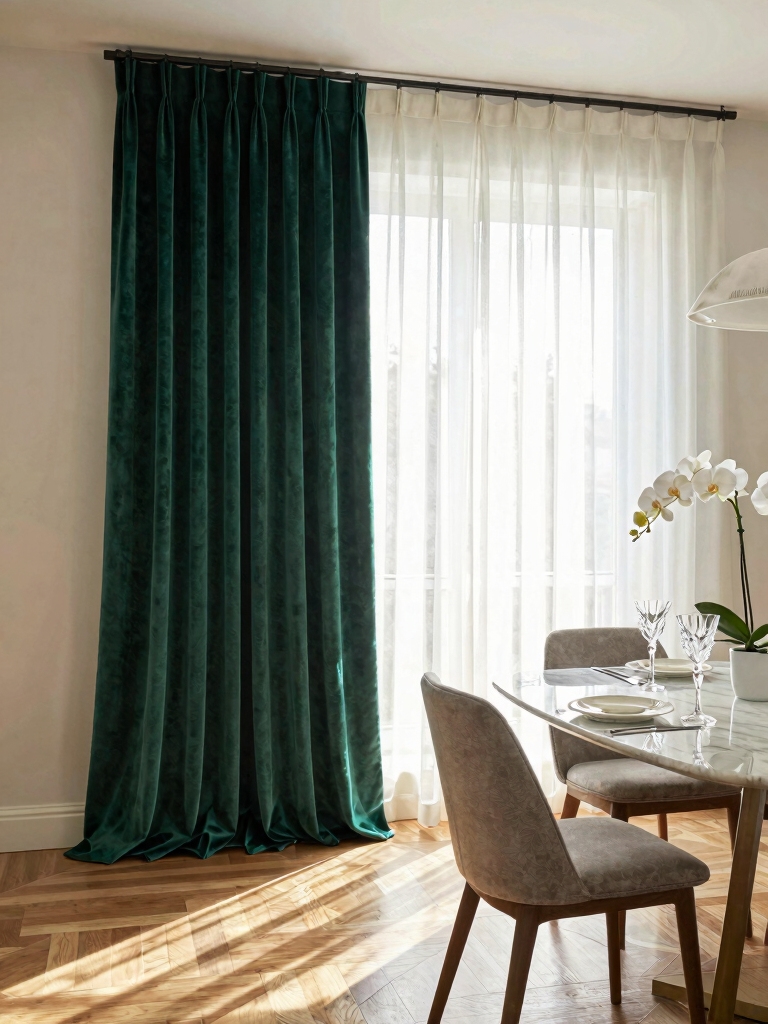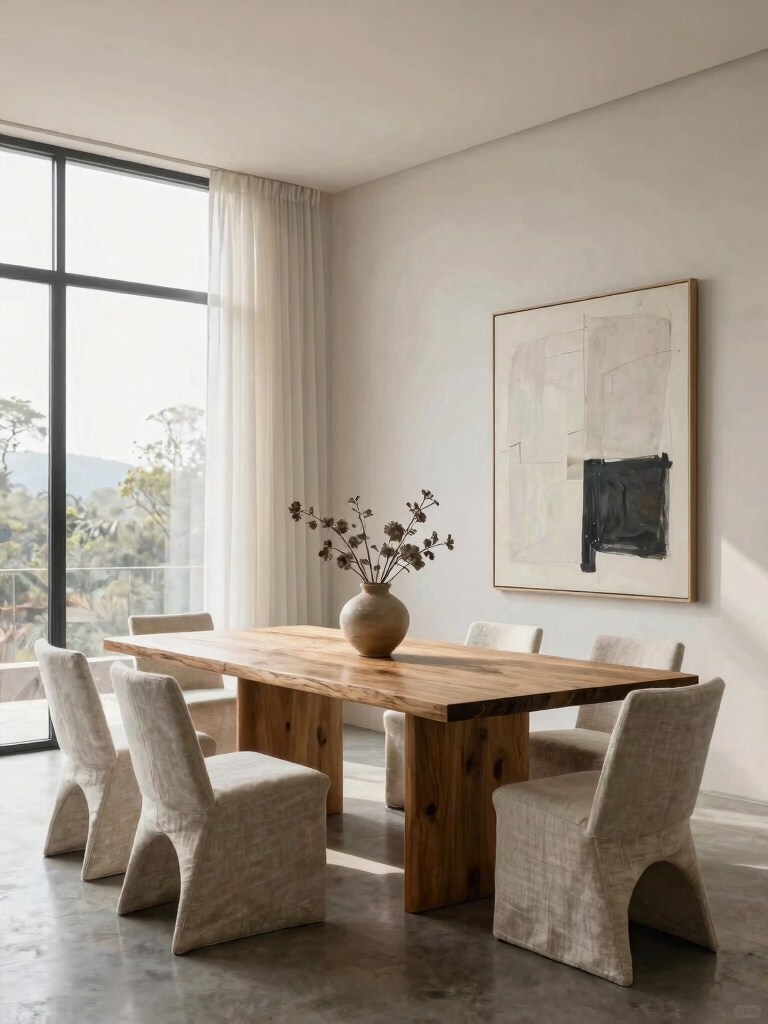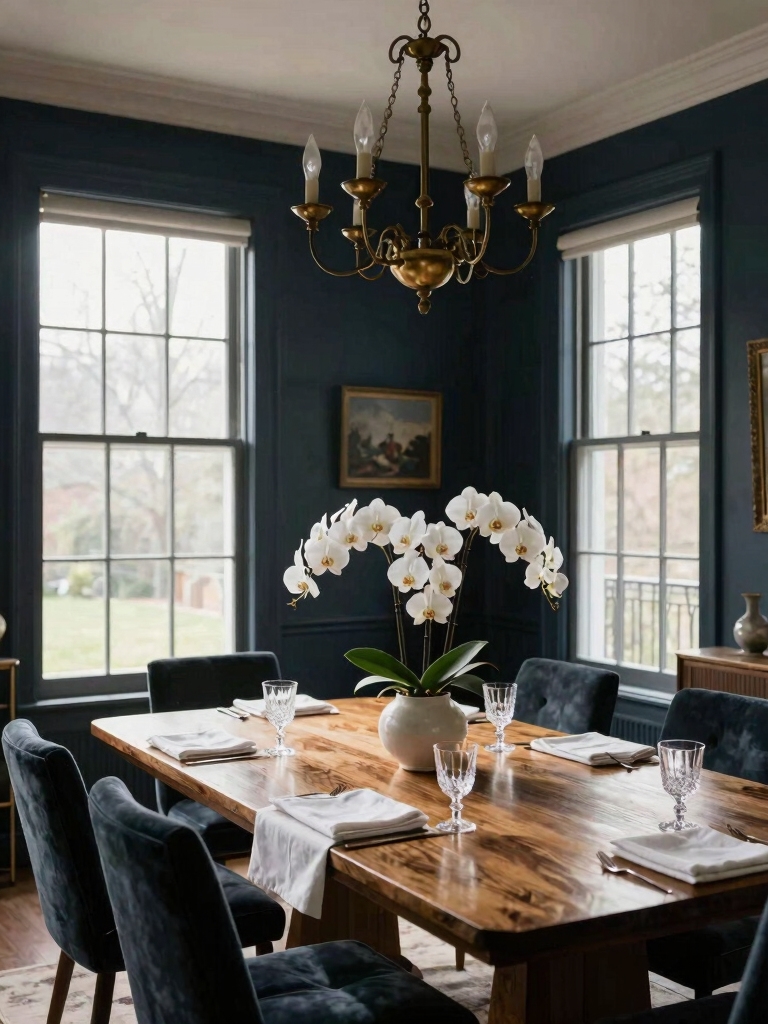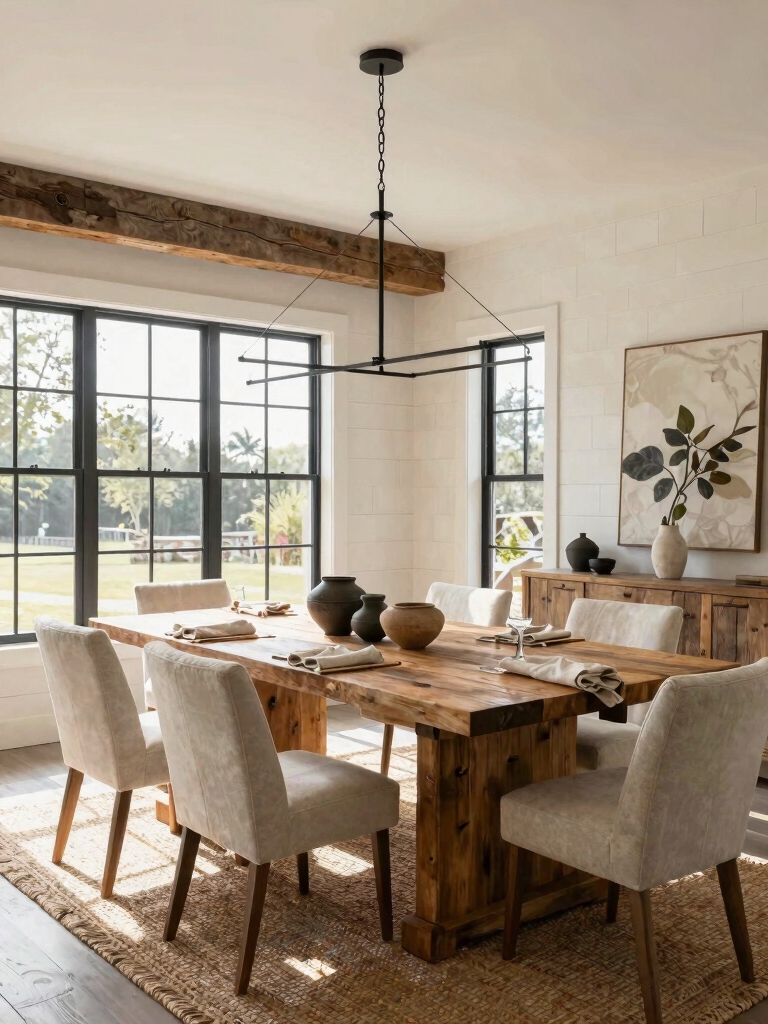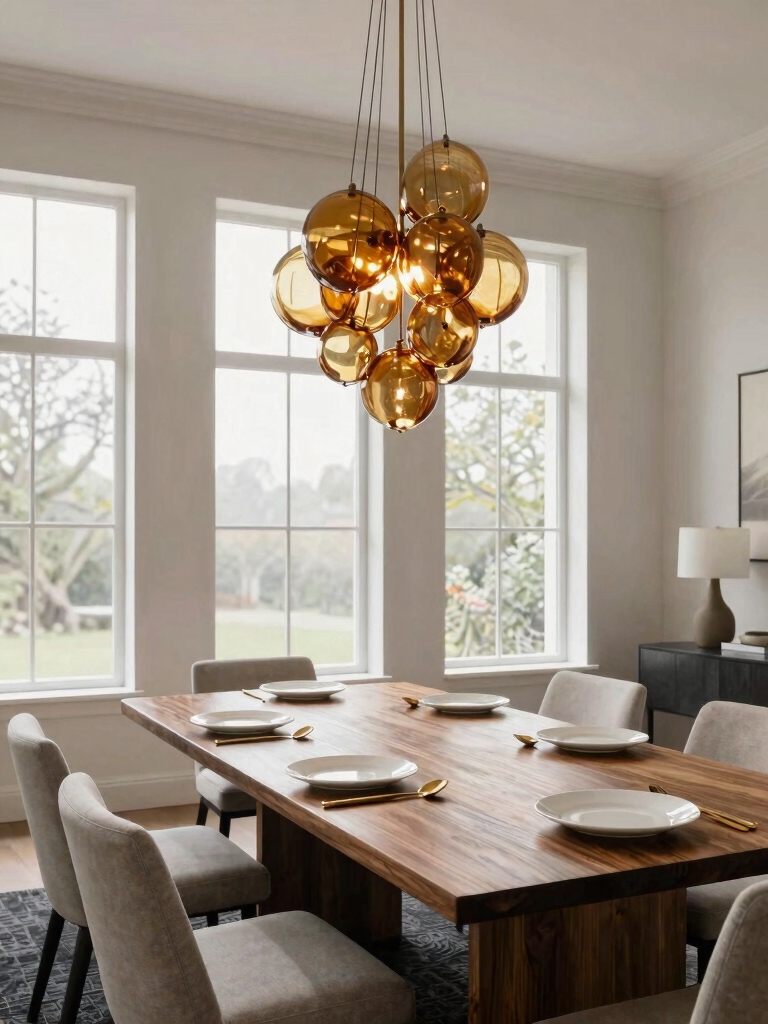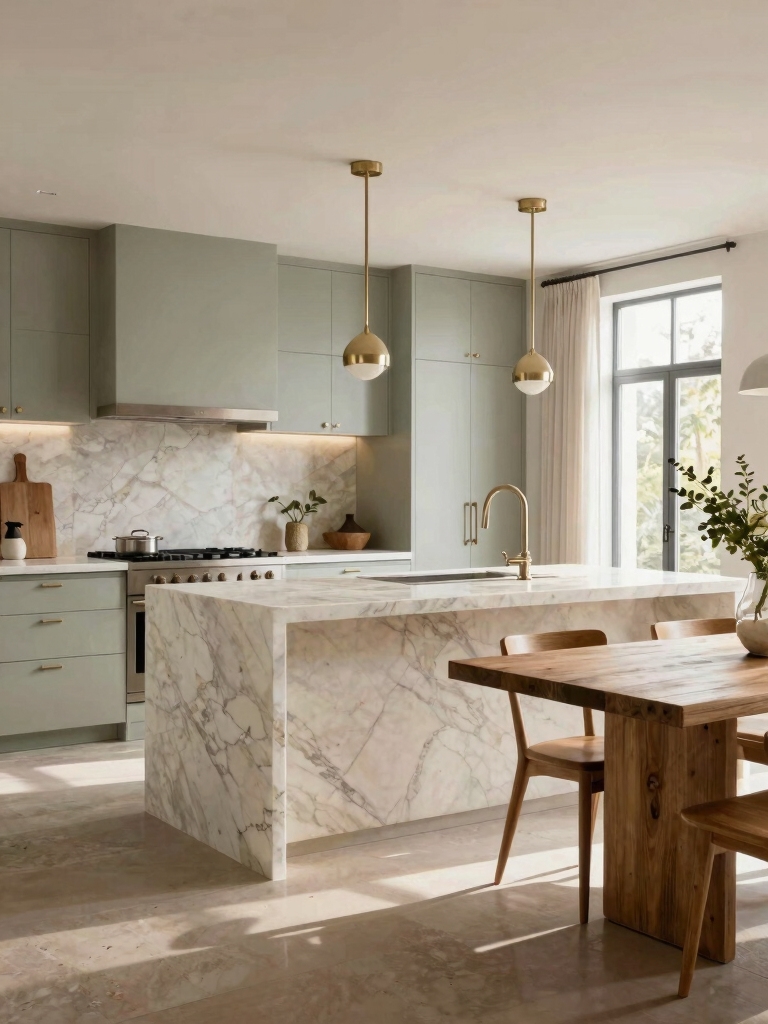
I’m convinced a seamless flow starts with your color palette. I’d pick one dominant material, like warm oak, and repeat it in cabinetry and flooring. My multi-function island anchors everything, while a single statement chandelier ties the rooms together. I love repeating a scallop or reeded motif to create rhythm. Clear those countertops for clean sightlines, and you’ll craft a home that feels both curated and effortless. There are so many more beautiful tricks waiting for you.
Define Flow With a Consistent Color Palette
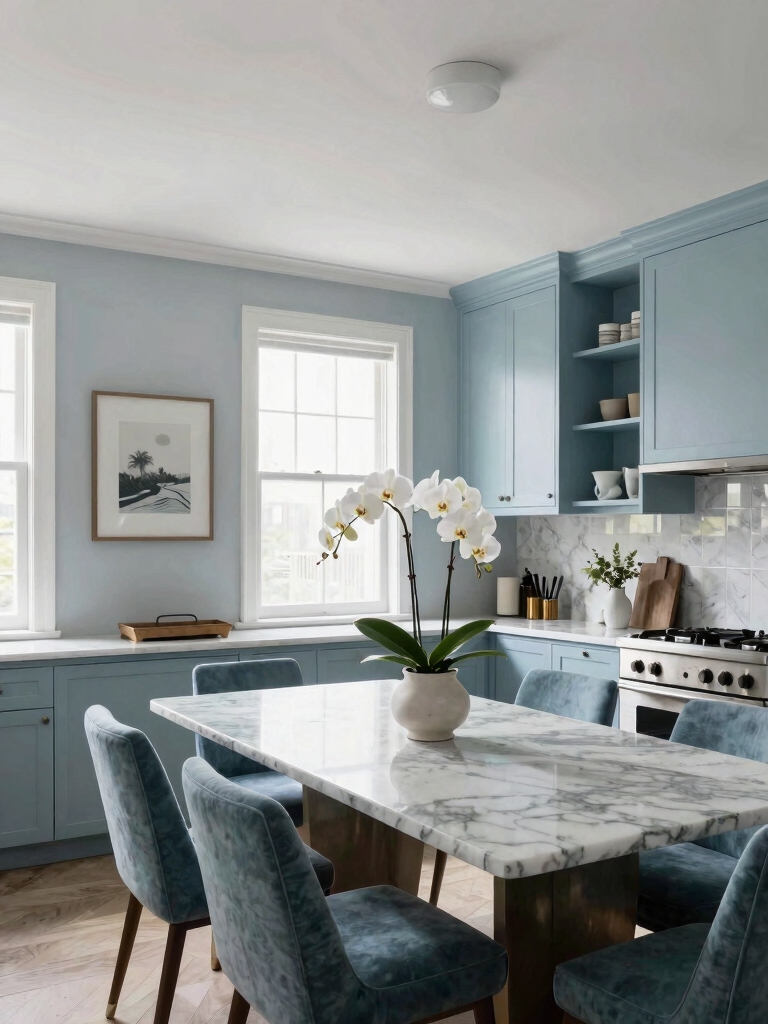
Let’s define flow by choosing a consistent color palette that I can weave through my kitchen and dining room; this simple decision creates a seamless visual story, making both spaces feel intentionally connected rather than accidentally adjacent.
I’m mixing modern neutrals with a traditional accent color I’ll use on cabinetry hardware and drapery.
That thread of continuity is my favorite DIY trick for building visual harmony effortlessly.
Selecting the perfect paint colors is key to setting the right mood and enhancing the connection between these spaces, as highlighted in dining room paint color ideas.
Connect Spaces With Continuous or Complementary Flooring
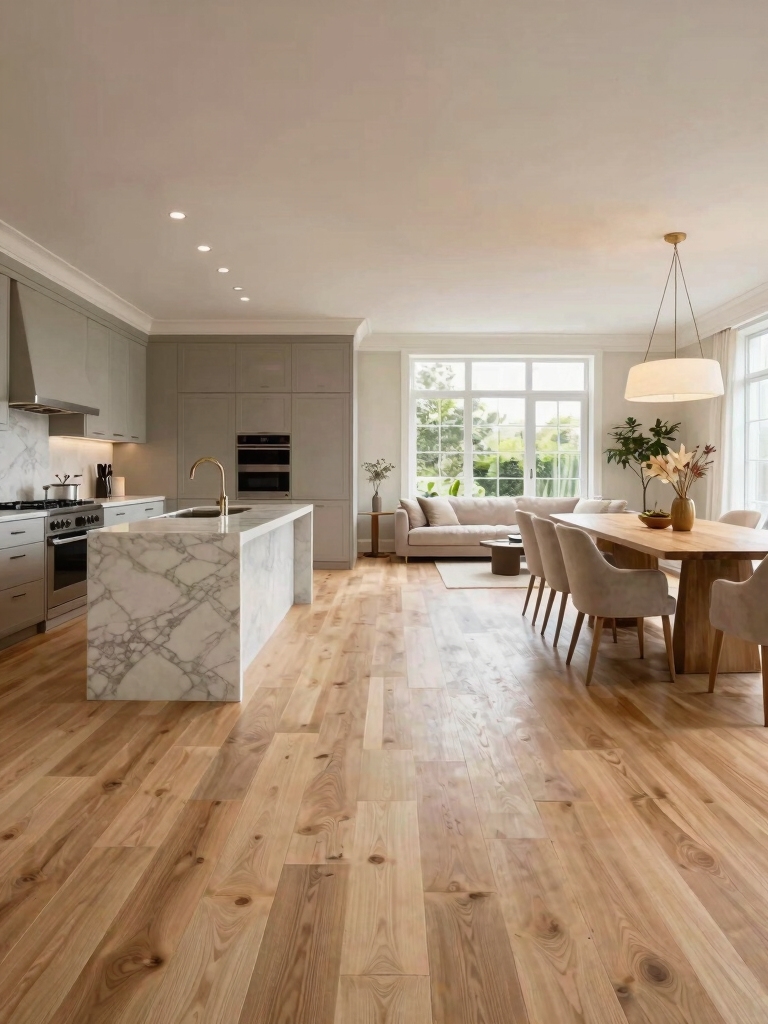
Now that we’ve tied the rooms together with color, I’m carrying that unity right underfoot by choosing continuous or complementary flooring.
Running the same hardwood from kitchen to dining room is my favorite trick—it instantly expands the space.
If budgets or layouts differ, I’ll select a tile that echoes the wood’s tone for a cohesive, modern-traditional vibe you can absolutely DIY.
This approach helps maximize space while keeping the rooms feeling open and connected.
Lead the Design With a Single Dominant Material
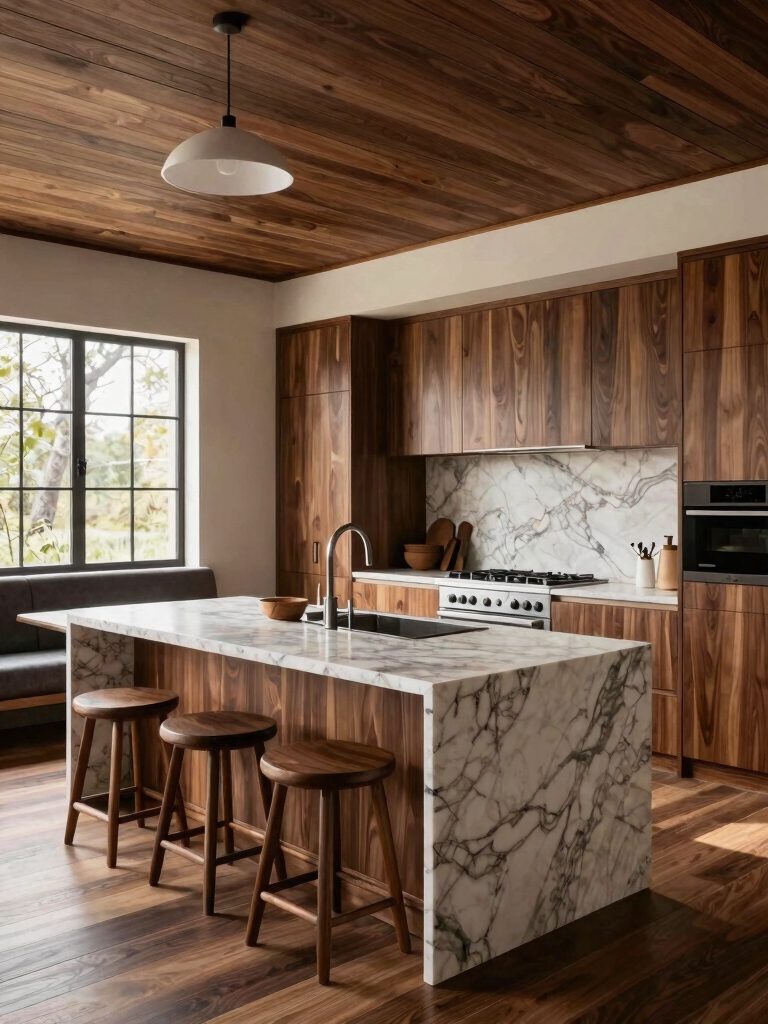
Since we’ve already built continuity underfoot, I’ll take that idea further by choosing one standout material to define the entire space.
I’m passionate about letting one hero element, like warm oak or honed marble, anchor both rooms. This creates a collected, modern-traditional feel that’s deeply personal. For a powerful DIY impact, repeat it in key places.
- It creates instant, sophisticated harmony.
- It feels intentional and curated, not accidental.
- It simplifies every subsequent design choice.
- It gives the space a soulful, authentic character.
Connecting rooms through design elements helps in creating a harmonious flow that enhances the overall aesthetic and functionality of your home.
Hang One Statement Light Fixture as a Focal Point
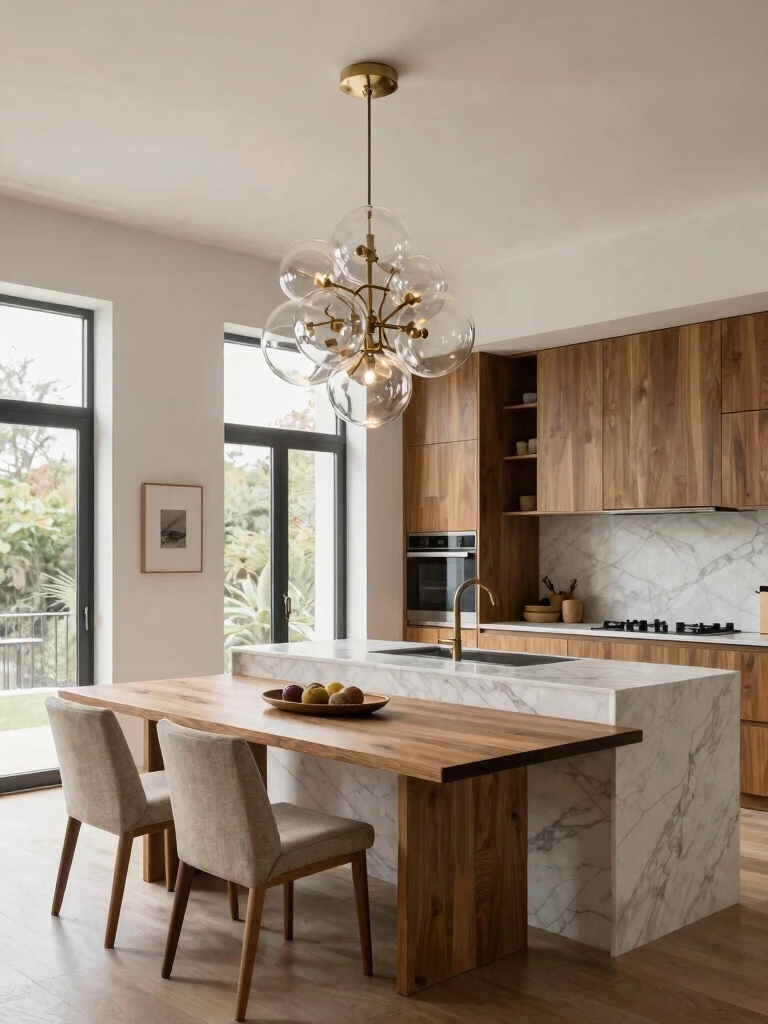
I love how a single statement fixture instantly anchors my kitchen island.
I’m always careful to choose the right size, using the island’s dimensions as my guide.
It’s the perfect blend of classic form and modern function, and I can handle the installation myself.
A stunning chandelier can truly steal the spotlight and elevate the entire dining area with its dining room chandelier ideas.
Choosing The Right Size
When you’re ready to hang that one statement light fixture as your focal point, getting the size right is absolutely essential for impact.
I follow a simple rule of thumb to find that perfect balance, which makes the whole space feel cohesive and intentional.
- It should command the room, not cower in it.
- Let it whisper elegance, not shout for attention.
- Find a scale that feels harmonious, not forced.
- Its presence should make your heart swell with pride every time you walk in.
Over The Kitchen Island
To achieve a true showstopper over your kitchen island, hanging a single statement fixture perfectly focuses the entire room’s design.
I always install a singular, sculptural piece. Think of a modern iron chandelier with clean lines or a classic drum pendant. It instantly becomes your kitchen’s jewel.
Resist the urge to cluster smaller lights; one bold choice provides gorgeous task lighting and an anchor that harmonizes modern and traditional elements effortlessly.
Design a Layout With a Multi-Function Island
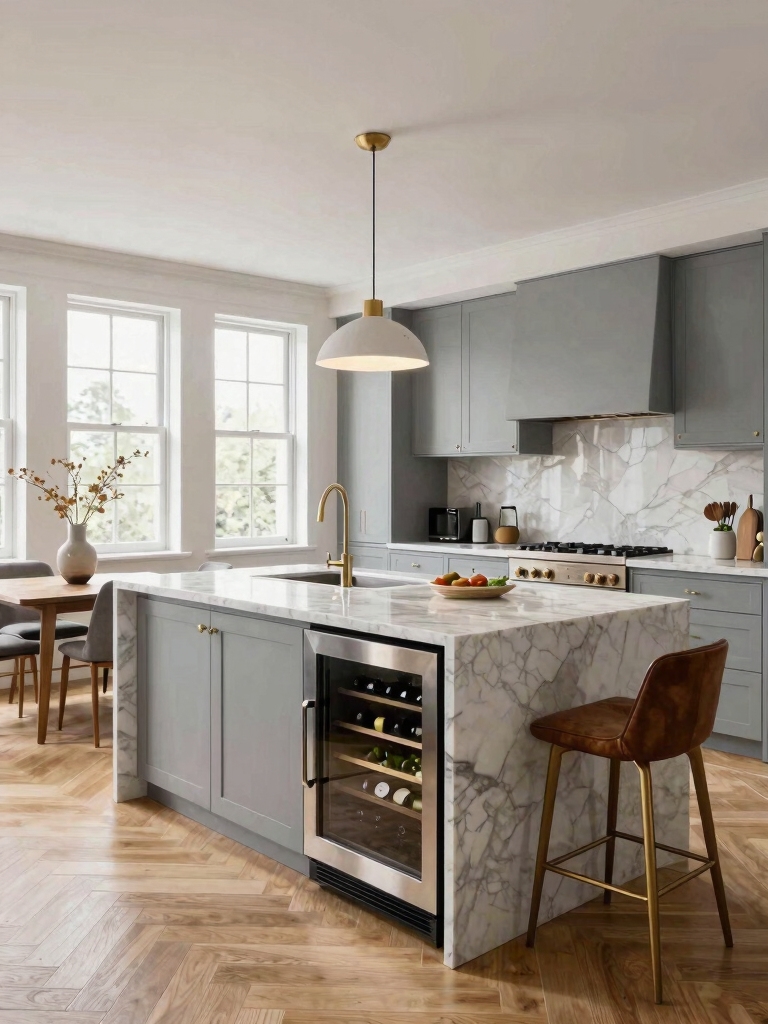
I love designing an island that’s truly versatile, so I start by defining clear zones for prep work, dining, and storage.
I always aim to anchor it as the social hub of my kitchen, where I can cook and entertain guests at once.
Choosing adaptable materials like a butcher block top lets me achieve that perfect blend of modern convenience and traditional warmth.
Incorporating budget-friendly elements inspired by powder room decorating ideas can add style without overspending.
Define Zones and Functions
Imagine your kitchen island as the bustling command center of your culinary world. I define zones for prep, cooking, and cleanup, ensuring every tool has its place. This functional choreography streamlines my DIY projects, blending modern efficiency with traditional warmth.
- The prep zone’s spacious countertop, awaiting a mound of fresh herbs.
- The cooking zone’s strategic placement, keeping pans within easy reach.
- The cleanup zone’s integrated bin, discreetly tucking away the day’s mess.
- The display zone’s open shelving, proudly exhibiting my grandmother’s mixing bowls.
Anchor the Social Hub
A multi-function island anchors the kitchen’s social hub, transforming it from a solitary workspace into the heart of my home.
I designed mine with a thick quartz counter for baking, an overhang for three barstools, and deep cabinets for my stand mixer.
It’s where I prep dinner while chatting with guests—this DIY project blends classic shaker-style cabinetry with sleek, modern hardware for a space that’s always buzzing.
Select Adaptable Materials
Just as my multi-function island anchors our social life, choosing materials that can handle everything from spilled wine to hot pans makes it a true workhorse.
I’m passionate about selecting surfaces that blend modern durability with traditional warmth. My advice? Pick materials you love that also forgive life’s beautiful messes.
Here’s what I swear by for a space that’s both stunning and livable.
- Quartz Countertops: Their enduring beauty laughs at stains and heat.
- Hardwood Flooring: It gains character with every scuff and tells your story.
- Ceramic Backsplash: A timeless canvas that wipes clean in a flash.
- Metal Hardware: Solid brass or matte black finishes that feel substantial in your hand.
Zone Spaces With a Change in Ceiling Height
Because I want my open floor plan to feel intentional, I’ll often zone the kitchen and dining areas with a change in ceiling height.
I love adding classic beams or a coffered detail over the dining table, creating a cozy, defined room within a room.
It’s a project I can tackle myself, and this architectural layer adds modern-traditional character while guiding the eye and flow beautifully.
Transforming your space with inspiring ideas can truly elevate the overall design and make each area feel purposeful.
Create a Servery or Pass-Through for Easy Access
I love a server pass-through for its perfect blend of open shelving or cabinetry and seamless design.
It bridges my public and private spaces, letting me serve guests without missing a moment of conversation.
This thoughtful element is what makes a modern-traditional kitchen truly sing for me.
Incorporating smart design ideas can elevate your dining room layout and enhance the overall flow between spaces.
Open Shelving Or Cabinetry
One of the most rewarding upgrades you can tackle is transforming a solid wall between your kitchen and dining area into a functional servery or pass-through.
I love choosing between open shelving and cabinetry to frame it. This choice defines the space’s soul.
- Showcase heirloom dishes on open shelves.
- Conceal clutter with elegant, panel-ready cabinetry.
- Mix materials like wood and metal for depth.
- Build a timeless bridge between cooking and gathering.
A Seamless Design Element
While carving a servery or pass-through into that dividing wall, you’re not just creating an opening—you’re designing a seamless connection that lets conversation and platters flow effortlessly from kitchen to dining room.
I envision a classic, framed opening you can DIY, bridging modern convenience with traditional charm.
It’s my favorite design element because it actively connects spaces without sacrificing style, making every meal feel like a cohesive, gracious event.
Bridge Public And Private Spaces
Since a home truly comes alive when its spaces interact, creating a servery or pass-through brilliantly bridges your bustling kitchen with the more formal dining area.
I love how this modern-traditional element fosters connection.
- Imagine passing a hot dish directly to awaiting guests—pure joy.
- Feel included in conversations while finishing meal prep.
- Preserve your dining room’s elegance without closed-off walls.
- Achieve a custom, built-in look with a savvy DIY project.
Use a Large Rug to Visually Link Seating Areas
A large rug is your secret weapon for unifying seating spaces in an open-concept kitchen and dining area.
I love how a single, substantial piece grounds the entire conversation zone, pulling your table and chairs into a cohesive vignette. It’s my favorite DIY styling trick!
Choose a classic pattern with modern colors to bridge styles.
Just make sure the rug’s big enough for all chair legs to stay on it.
Refreshing your space with updated decor can make a big difference, so consider these tips as part of your room decor ideas to refresh your home this weekend.
Create Flow With Open or Glass-Fronted Shelving
Open or glass-fronted shelving can beautifully extend the visual connection you started with that large rug.
I adore how it lets me weave stories across both rooms.
Try this to craft your own flow:
- Display heirloom china for a soulful, traditional touch.
- Mix modern ceramics for crisp, clean lines.
- Let your favorite cookbooks add color and personality.
- Use greenery to breathe life into the entire space.
Incorporating creative decor ideas can transform your kitchen and dining area, making the flow between spaces seamless and inviting.
Match Your Dining Chairs to Your Kitchen Cabinetry
I’m absolutely loving the idea of pulling my kitchen cabinetry colors right into my dining chairs for a truly unified space.
Think about reflecting those warm wood tones or crisp painted finishes in your chair frames or upholstery.
It’s a simple, yet impactful, DIY move that beautifully blends modern simplicity with traditional cohesion.
This approach is a great way to transform your dining room and create memorable meals.
Color Echoes And Tones
Let’s plunge into color echoes, a simple yet powerful trick where your dining chairs harmonize beautifully with your kitchen cabinetry.
I love creating this visual thread! My heart races when I see it work.
To evoke emotion:
- The cozy warmth of a perfect tonal match.
- The delightful surprise of a playful, lighter echo.
- The grounding sophistication of a deep, rich shade.
- The joy of crafting your own signature palette.
Finish And Material Harmony
Following those color echoes, consider how the finishes and materials themselves can connect your kitchen and dining room.
I love matching my dining chair frames to my kitchen cabinet hardware. Think brushed nickel on chairs with polished nickel pulls, or oak chair legs echoing an oak island.
This subtle, layered harmony feels curated, not matched, giving your whole space a modern-traditional soul that I find simply beautiful.
Frame Views With Cohesive Window Treatments
Because nothing elevates a room’s architectural details quite like cohesive window treatments, I see them as the unsung heroes that frame your views and unify your spaces.
I’m passionate about using them to create a collected, modern-traditional look you can DIY. They truly transform the feeling.
- Create a serene, intentional first impression.
- Forge a beautiful visual bridge between rooms.
- Highlight your home’s best natural assets.
- Achieve a polished, designer-grade finish yourself.
Blend Styles With Unified Wood Tones
While mixing furniture styles creates that collected look we all love, unified wood tones are the secret to making it feel entirely intentional.
I personally pull my modern chairs and traditional table together by staining them a similar mid-tone oak. It’s a simple DIY trick!
This shared warmth makes the space feel cohesive, proving you don’t need matching sets for a beautifully flowing kitchen and dining room.
Ensure Cohesion by Repeating Hardware Finishes
As I blend modern and traditional elements throughout my kitchen, I’ve found that repeating hardware finishes is the key to locking that cohesion into place.
Match your cabinet knobs, faucet, and even your light fixture arms! It’s a simple DIY that makes the whole space feel thoughtfully curated.
- Creates a subtle, powerful rhythm.
- Unifies mixed materials effortlessly.
- Feels like a designer secret.
- It’s your signature touch.
Flow Beautifully With a Continuous Backsplash
I love how a continuous backsplash creates a unified color and material story.
It draws those stunning floor-to-ceiling visual lines that make a space feel grand.
You can achieve this elegant modern-traditional look with careful planning and some DIY spirit.
Unified Color And Material
One fantastic approach I love for connecting these spaces seamlessly is extending a continuous backsplash.
I choose one unified material and color palette to visually marry the kitchen and dining areas, creating a stunning, custom look.
It’s a perfectly achievable DIY project that blends modern simplicity with timeless appeal.
- Feel the serene, expansive calm it creates.
- Marvel at the custom, high-end aesthetic.
- Love the cohesive, intentional flow.
- Enjoy the streamlined cleaning simplicity.
Floor-To-Ceiling Visual Lines
To really amplify that stunning, custom look from your continuous backsplash, extend those visual lines from the floor all the way to the ceiling.
I love how a single, elegant tile running vertically behind open shelving creates dramatic height. It’s a modern-traditional trick that makes your space feel grander and perfectly unified.
Honestly, it’s one of my favorite DIY projects for creating a powerful, seamless flow between rooms.
Connect Rooms With a Dedicated Beverage Station
Because you’re aiming to blend modern convenience with timeless hospitality, consider bridging your kitchen and dining room with a dedicated beverage station.
I love this fusion spot. It’s a functional anchor that encourages gathering.
Build your own with:
- A salvaged dresser for character.
- Open shelving to display glassware.
- A small sink or undercounter fridge.
- Your favorite coffee maker as the centerpiece.
It makes every day feel like an occasion.
Establish Rhythm by Repeating a Decor Motif
While your spaces should feel distinct, I think establishing a visual rhythm between them creates a beautifully intentional home.
I love repeating a decor motif. Carry a classic shape, like a scallop or reeded detail, from your cabinetry to your dining chair backs.
Paint a unifying color on just an accent wall in each room. This simple, DIY-friendly trick creates a modern-traditional flow that feels completely designed.
Separate Without Closing With a Stylish Divider
Even if your kitchen flows openly into the dining area, you can still craft a subtle sense of separation using a decorative divider.
I love how it defines spaces without blocking light. A stylish screen or a sleek, open shelving unit works wonders.
Try these ideas:
- A vintage-inspired fretwork screen for a graceful, airy boundary.
- A tall, sculptural plant stand for living, breathing architecture.
- A sleek, black metal bookshelf to display curated treasures.
- A cascading macramé hanging to add soft, textural intrigue.
Bridge the Gap With a Kitchen-Adjacent Herb Garden
Since you’re already cultivating connection between your kitchen and dining space, why not extend that idea into a literal garden?
I love potting fresh herbs on a sunny windowsill or a simple shelf unit. It’s a DIY project that blends modern convenience with traditional charm.
You’ll bridge the rooms with living greenery, and the instant access to flavor makes every meal feel special.
Maintain Open Flow by Decluttering Key Sightlines
I love that our spaces feel connected, but true flow demands clean sightlines, so let’s tackle the visual clutter that can block it.
Think from the kitchen island looking into the dining area—that’s your key vista. I relentlessly clear countertops and streamline decor there. My focus is on curated displays, not collections. This discipline creates a serene backdrop for life’s moments.
- Feel the instant calm of a cleared countertop.
- Cherish the view of your dining table, ready for guests.
- Elevate a single heirloom instead of crowding surfaces.
- Bask in the uninterrupted light flowing between rooms.
Conclusion
Just as I’d plant my herb bridge between these spaces, I see a home cooked here. The island is our family’s sturdy oak table; the repeated motif in the tile, our shared laughter echoing. That single, glowing pendant is the hearth we gather around. This flow isn’t just about floors and paint—it’s the current that carries our stories from stove to supper, crafting a life that’s beautifully, intentionally lived.