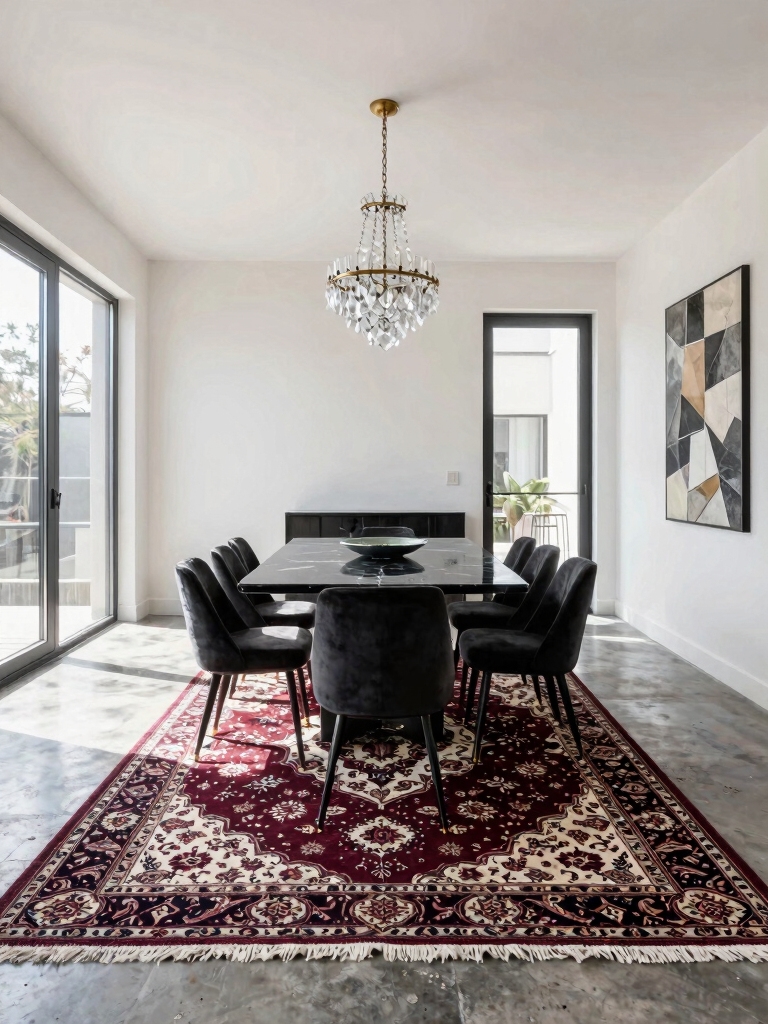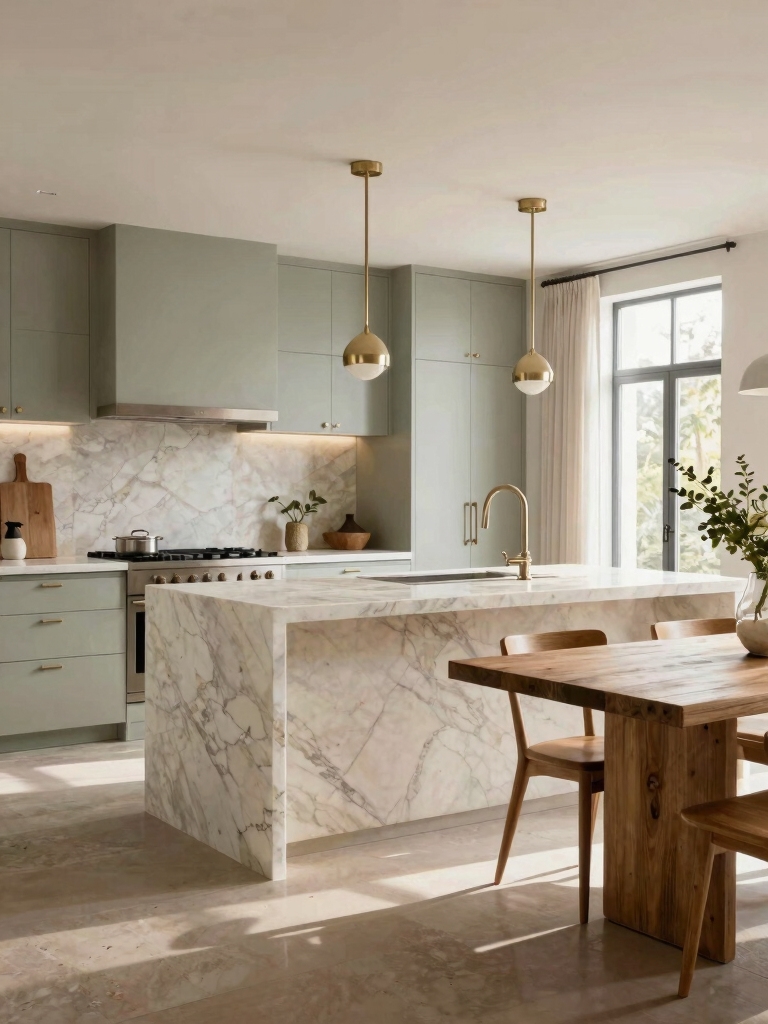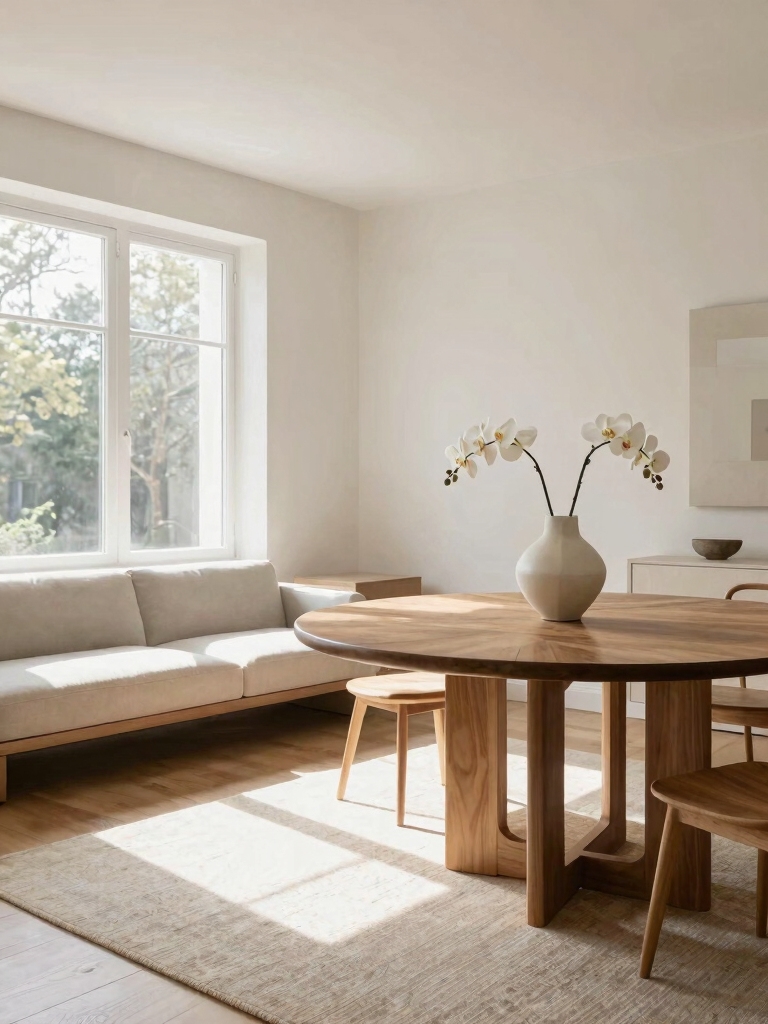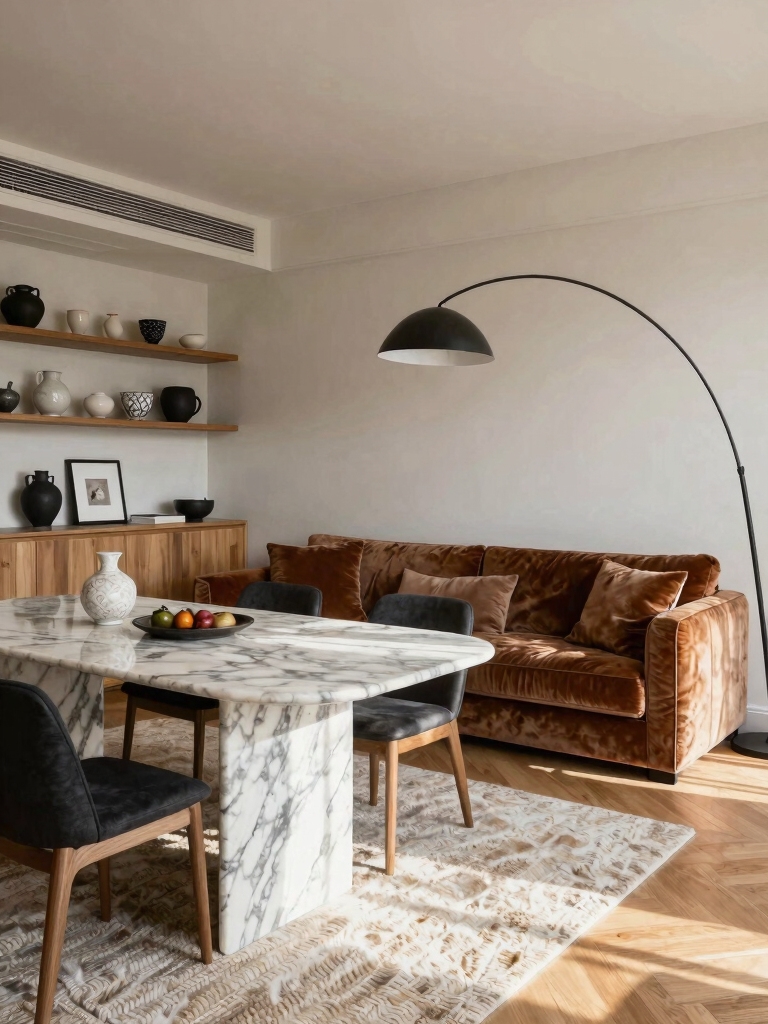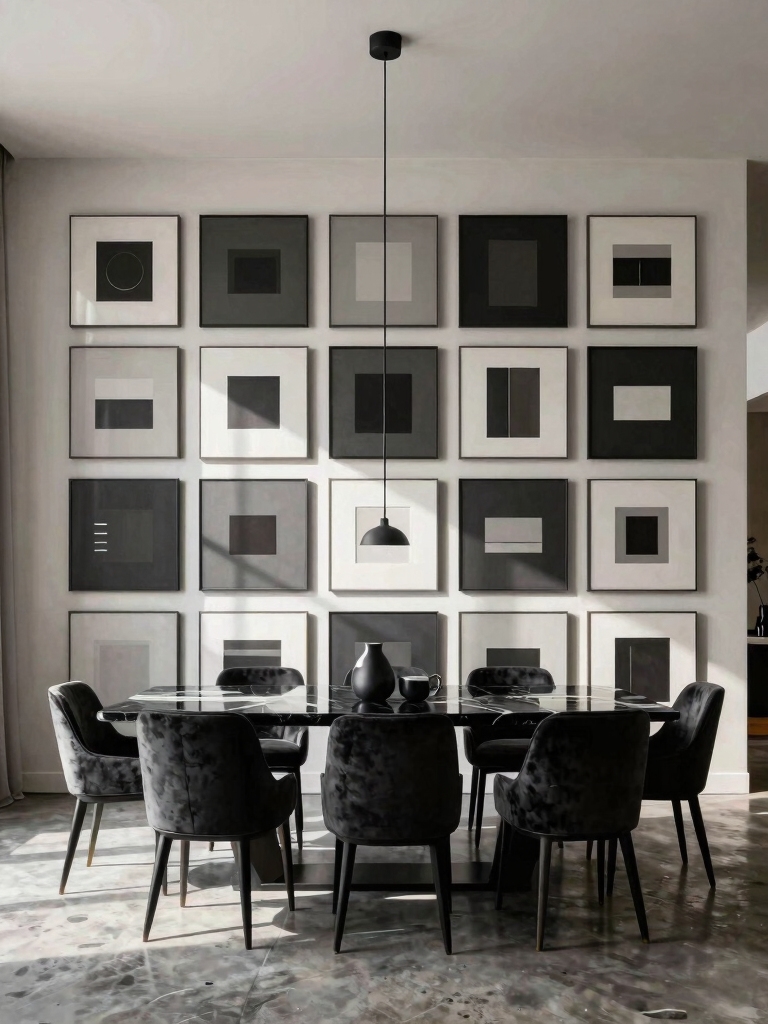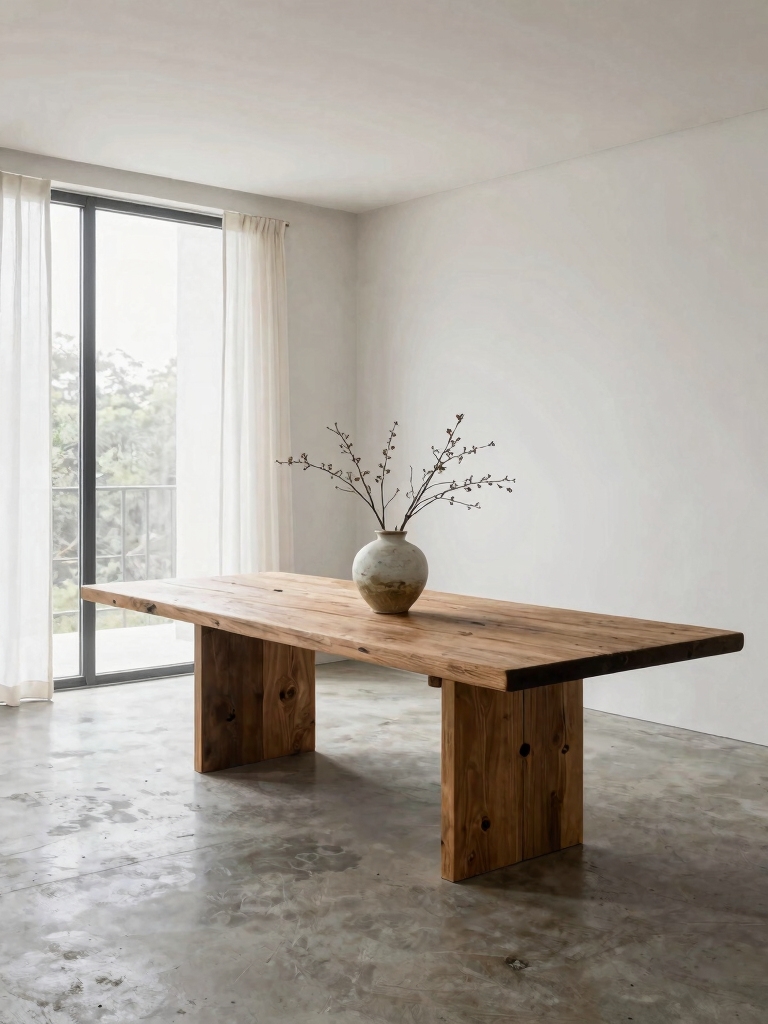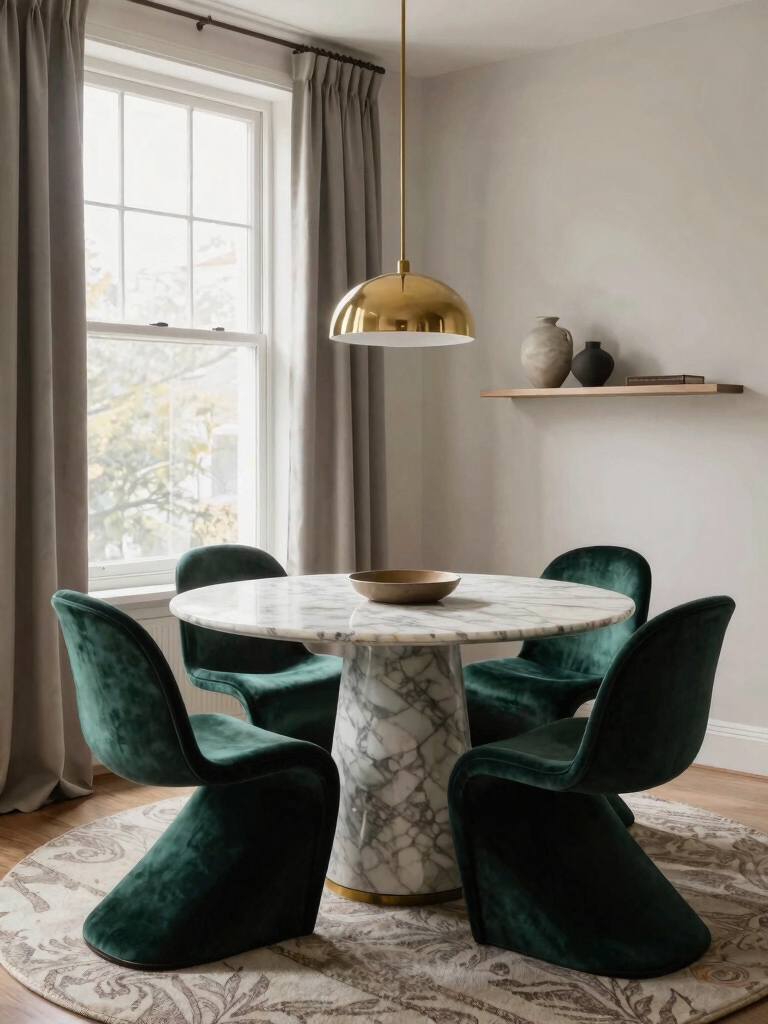
I’ve found the key is choosing smart furniture, like a leggy pedestal table or wall-mounted drop-leaf. I use transparent chairs and a bold rug to define the space visually. Painting my ceiling a dramatic color drew the eye up, while wall sconces freed up precious table space. My monochromatic scheme made everything feel cohesive and larger. I’ll share more of my favorite tricks next.
Start With the Right Table for Your Tiny Dining Room
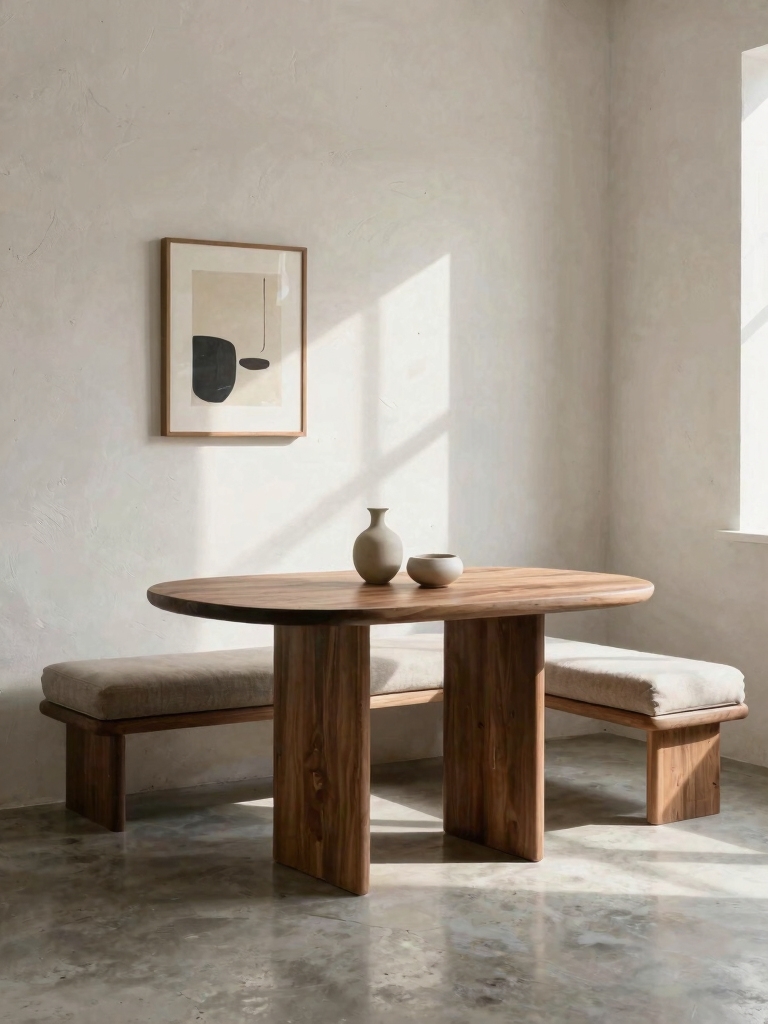
Since space is limited, I’ve found your dining table becomes the absolute anchor of the entire room.
I always choose a rectangular or oval shape to maximize usable surface area against a wall. A slim, leggy profile maintains visual lightness.
Personally, I’ve tested extending tables; they’re perfect for hosting but keep compact dimensions for daily life.
This practical choice dictates your room’s flow and feel more than any other piece.
Incorporating smart design ideas can further elevate the functionality and aesthetics of your tiny dining space.
Choose a Round Table to Improve Traffic Flow
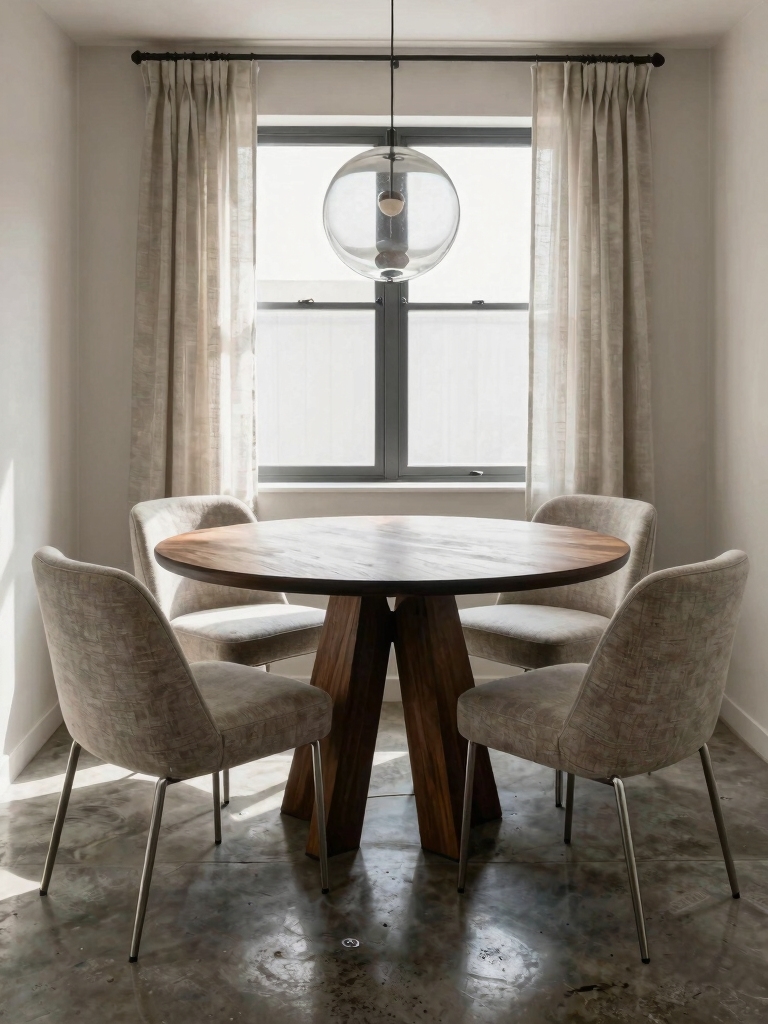
While rectangular tables are great for walls, opting for a round table often creates a better flow for tight spaces.
I’ve found its lack of sharp corners is key; it prevents bumps and lets you navigate freely. A circle naturally guides movement around it.
Visually, it feels softer and takes up less perceived space than a square table of similar surface area, which immediately opens up a compact room.
Additionally, incorporating clever design elements can help you maximize every inch and optimize your cozy dining space.
Opt for a Space-Saving Pedestal Table
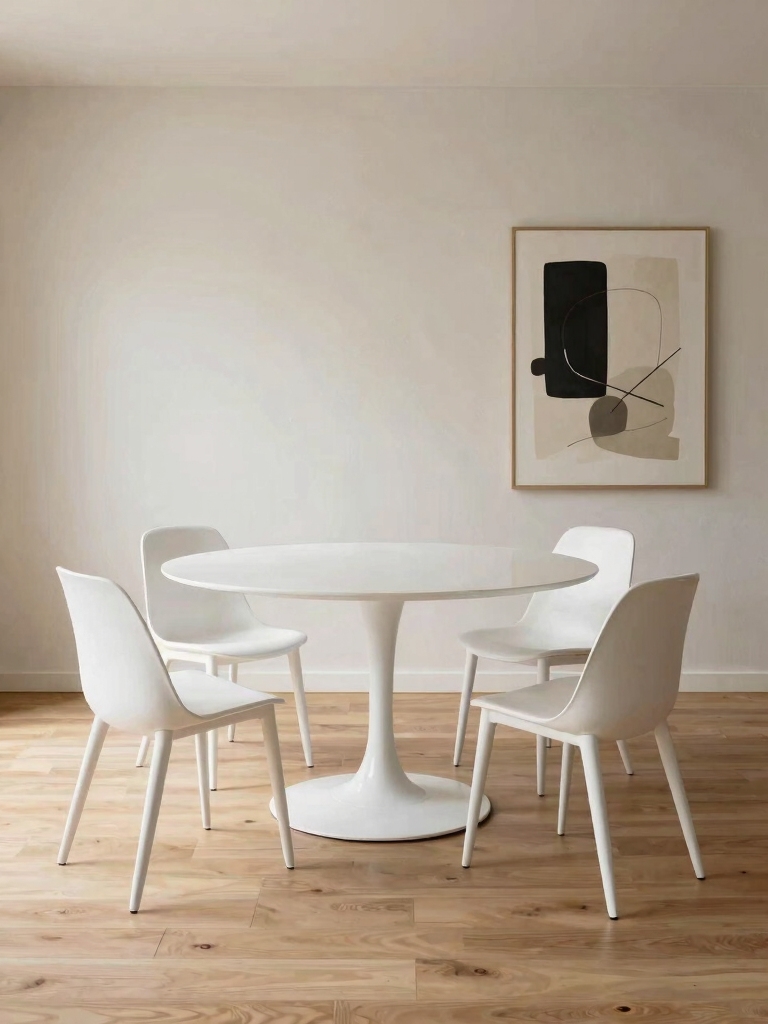
A pedestal base might be the ultimate space-saving trick for your tiny dining table. I’ve found it eliminates obstructive legs, giving you more usable floor space and easier chair placement.
- The single central column creates a clean, visually light silhouette that makes the room feel larger.
- You can comfortably tuck in all chairs without maneuvering around table legs.
- It often allows for a slightly larger tabletop within the same footprint.
Incorporating thoughtful dining room ideas can truly elevate every meal and transform your space.
Use a Wall-Mounted Drop-Leaf Table
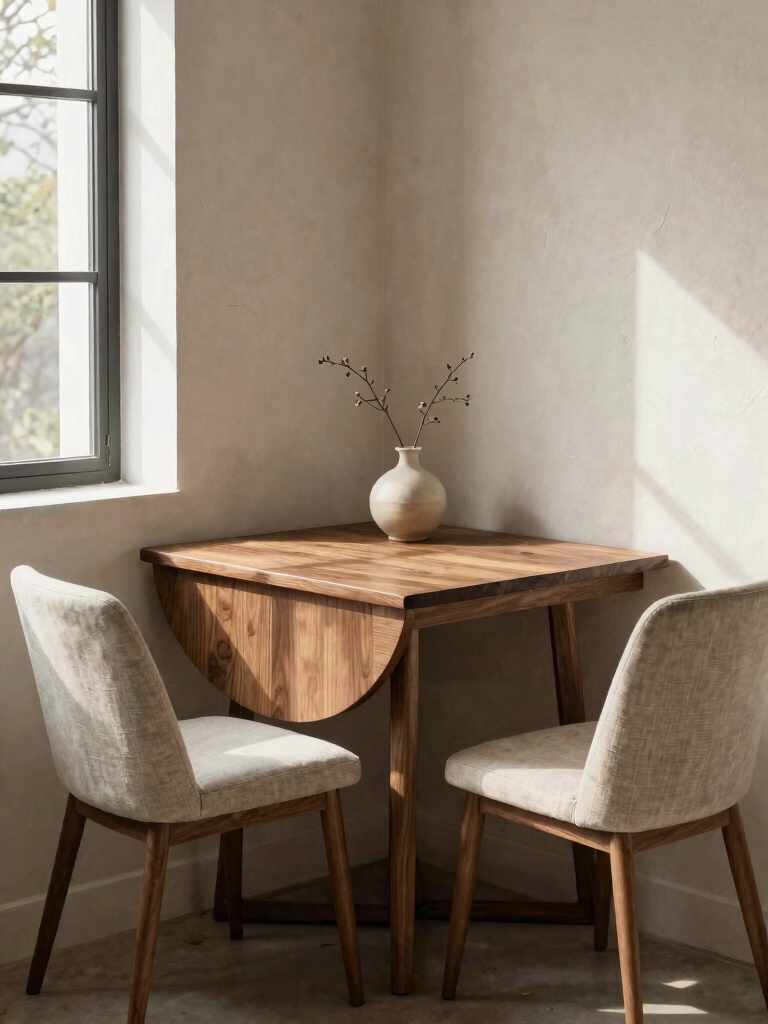
I often find a wall-mounted drop-leaf table solves two major problems in a tiny dining room: it gives me a dedicated surface when I need it, and it disappears when I don’t.
Folded against the wall, it’s nearly invisible, freeing up precious floor space. When I’ve guests, I simply flip the leaf down.
My favorite versions have integrated shelving for a clean, uncluttered look that feels permanent, not temporary.
This smart solution is one of the best ways to maximize your small dining room for entertaining guests without feeling cramped.
Select Chairs That Maximize Your Tiny Dining Room
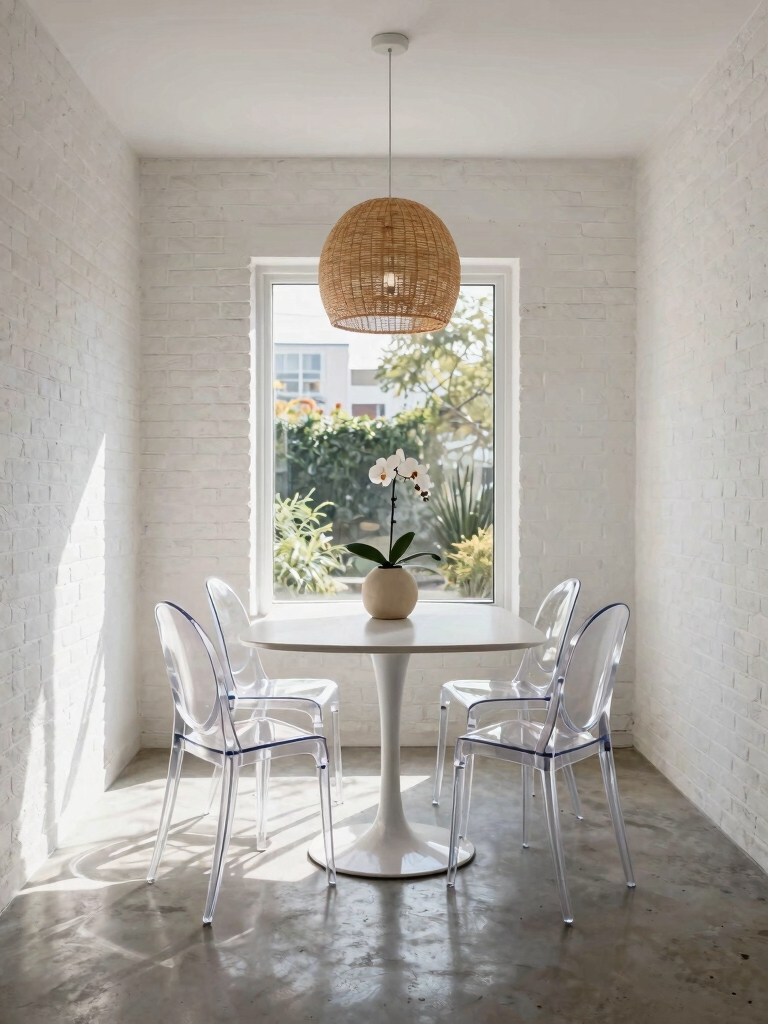
I’ve found transparent acrylic chairs don’t visually clutter a tiny space.
A bench is another winner because you can tuck it completely under the table when it’s not in use.
These two choices make my room feel instantly larger and more flexible.
Incorporating decor tips tailored for small spaces can further transform your dining area into a charming and functional spot.
Choose Transparent Chairs
Choosing transparent chairs is our second major move for maximizing your tiny dining room’s visual space.
I’ve found they vanish in a room, creating an airier feel that’s pure magic.
Here are my key takeaways:
- Material Matters: Acrylic feels lighter than glass, but both boost light flow beautifully.
- Keep It Simple: Choose chairs with clean lines; ornate frames reintroduce visual clutter.
- Mind the Legs: Opt for slim, straight legs that don’t block your view of the floor.
Bench For Flexible Seating
Adding a versatile bench solves two major tiny dining room problems at once: it provides extra seating that tucks neatly away and visually anchors the space without bulky chair backs.
I’ve slid one under my table, which immediately streamlined the room. It accommodates extra guests easily, and I love how its clean line makes the whole area feel more intentional and spacious.
It’s a tested, simple win.
Try Transparent or Ghost Chairs for a Light Look
Because visual bulk can overwhelm a small space, transparent or “ghost” chairs are a fantastic solution.
I’ve found they create an airy feel, letting your eye travel through to the floor and walls. They virtually disappear.
- Choose acrylic for a modern, seamless look that pairs with any table.
- Opt for a tinted style if you want a hint of color.
- Use them around a glass table to double the light effect.
Additionally, incorporating budget-friendly elements from powder room decorating inspiration can help keep your small dining area stylish without overspending.
Use a Bench That Tucks Under the Table
I’ve found a bench that tucks under the table truly maximizes my seating capacity without taking up extra floor space.
It creates a much cleaner visual line that helps the whole room feel more open. This simple swap instantly simplified my layout and enhanced the sense of continuity.
Incorporating multifunctional furniture like this bench is a key strategy to maximize space in small living and dining areas.
Maximize Seating Capacity
When I needed to seat more people in my small dining area, swapping chairs for a bench that tucks under the table was my go-to solution.
It visually expands the space and lets me easily add guests. For the best results, I found these details matter most:
- Measure for a bench seat depth of 16-18 inches.
- Choose a low-profile, backless design for full tucking.
- Use plush cushions to compensate for the lack of a backrest.
Simplify Floor Space
That bench’s ability to slide under the table directly clears floor space, which makes moving around and cleaning much simpler for me.
I’ve found this creates a cleaner, more open look instantly. When not in use, it tucks away completely, eliminating visual clutter.
It’s a functional choice I rely on daily to keep my compact dining area feeling spacious and uncluttered.
Enhance Visual Continuity
Because a bench that tucks under the table aligns with the table’s silhouette, it maintains a clear, uninterrupted line that makes my small dining room feel longer and more cohesive.
This practical trick maximizes my visual floor space instantly.
- I choose a bench that’s narrower than the table for seamless tucking.
- I guarantee its legs don’t protrude to avoid visual clutter.
- I opt for a matching finish to create a unified furniture piece.
Opt for Foldable or Stackable Chairs to Stash Away
Your chairs shouldn’t claim your space when you’re not using them, so I always recommend choosing foldable or stackable models you can easily stash away.
I tuck mine in a closet or line them against a wall. This instantly clears the floor, making the room feel larger.
Opt for slim, modern designs; they look intentional when out and disappear gracefully when not needed.
Incorporating space-savvy furniture helps maximize functionality without overcrowding these dual-purpose areas.
Build a Banquette for Seating and Storage
While foldable chairs are great, you can get even more space by building a banquette that combines seating and storage.
I’ve built mine to maximize every inch. Here’s how I made it work:
- Lift-up bench seat: The top hinges open to stash linens or seasonal decor.
- Open-front cubbies: I use these for everyday dining essentials.
- Back panel extension: Extending it slightly creates perfect narrow shelf space.
Integrating a banquette is one of the small living room ideas apartment renters will love for making the most of limited space.
Create a Cozy Window Seat Dining Nook
I always position my window seat nook to maximize natural light for a bright, inviting feel.
I build storage directly into the base to stow linens and serving pieces, which keeps things looking clean.
This setup gives me a pretty view and keeps my tiny dining area completely clutter-free.
Incorporating smart design tips can transform your small space into a functional and stylish area with major impact.
Maximize Natural Light
Because light transforms any space, consider dedicating your dining area to a window seat.
I’ve found these three tactics essential:
- Keep any window treatments sheer or absent to flood the nook with daylight.
- Choose a light-colored, reflective paint for surrounding walls to amplify the sunshine.
- Position a mirror opposite the window to bounce light back into the room, making it feel larger.
Built-In Storage Solutions
Every tiny dining space needs the clever efficiency of built-ins to create a cozy window seat nook.
I’ve designed mine with a hinged-lid bench that stores my linens and tableware. Flanking it with floor-to-ceiling shelves for glassware keeps everything organized and off the tabletop.
This visual neatness turns a cramped corner into a cherished, functional spot I genuinely love using every single day.
Integrate Dining Into a Living Room Corner
To turn an underused corner into a functional dining spot, you’ll want to focus on compact, multi-purpose furniture.
I’ve used a small round table that tucks neatly against the walls, paired with two sleek armchairs that can easily be pulled into the living area for extra seating.
- A round pedestal table eliminates sharp corners and improves flow.
- Chairs with a slim profile save essential inches.
- A pendant light defines the zone without a bulky fixture.
Go Vertical With Storage in Your Tiny Dining Room
Maximizing floor space means looking up. I’ve installed open shelving directly above my table for dishes.
I also chose a tall, narrow cabinet that fits snugly in a corner, holding linens and serving pieces. You’d be surprised how much these vertical moves clear the floor.
They keep essentials accessible but off my tiny table, making the room feel instantly larger and more organized.
Install a Floating Shelf as a Bar or Buffet
I’ve found that floating shelves are perfect for displaying glasses and bottles without needing a bulky cabinet.
This simple installation really maximizes your wall space for storage, freeing up floor area.
It turns an unused wall into a functional bar or buffet station.
Floating Shelves For Drink Display
While your counter space might be limited, you can transform a bare wall into a dedicated drink station with a floating shelf.
I installed one above my dining table, and it’s now my go-to spot for serving guests. It holds glassware, decanters, and a few favorite bottles, freeing up my table and making the whole process feel more intentional and stylish.
- Choose a shelf depth that can securely hold your heaviest decanter.
- Arrange items in layers: tall bottles behind shorter glasses for visibility.
- Use a cohesive material, like wood matching your table, to visually anchor the display.
Maximize Space With Wall Storage
Because my dining room is small, I installed a floating shelf as a wall-mounted buffet to reclaim floor space.
It’s perfect for serving dishes or displaying decor. I chose a deep, sturdy model to hold my dinnerware securely.
Mounting it at the right height keeps it functional yet unobtrusive. This simple switch freed my floor for chairs and movement, making the whole room feel instantly larger and more organized.
Use a Ladder Shelf for Footprint-Free Storage
Finding extra storage without giving up floor space is a common challenge in small dining rooms. I’ve found a ladder shelf solves this beautifully; its vertical design stores linens or decor without consuming precious square footage.
You lean it against a wall for footprint-free utility.
- Opt for a narrow, wooden design for a warm, space-conscious look.
- Use the stepped shelves to display plants or stack dinnerware.
- Secure the top lightly to the wall for safety without permanent mounting.
Add a Multi-Tiered Cart for Flexible Serving
A multi-tiered cart is my go-to solution for adding flexible serving space that rolls away when not in use.
Mine has three shelves; I’ll style the top as a mini bar, use the middle for plates, and store linens below.
Its mobility lets me extend a buffet line or tuck it into a corner.
I chose a metal-and-wood design that feels substantial, not flimsy, in the room.
Use a Mirror to Visually Double Your Space
To visually expand a cramped dining area, I’ve found that strategically placing a large mirror is one of the most effective tricks. It instantly bounces light and creates depth.
I personally hang one opposite a window or a nice light fixture.
- Lean a tall, slim floor mirror behind a sideboard to reflect the room’s length.
- Use a mirrored console table to add surface and illusion.
- Try a gallery wall of smaller mirrors for artistic reflection.
Paint the Ceiling to Draw the Eye Upward
For a small dining room, I often choose a bold color for the ceiling to make it a focal point.
Extending your wall color upward creates a seamless, taller-looking space. This trick creates an airy illusion that feels much more open and intentional.
Choose a Bold Color
Often, the most impactful design move in a tiny dining room is your fifth wall—the ceiling.
I’ve found painting it a bold color creates incredible vertical drama without shrinking the space. My favorite shades are deep charcoal or a rich navy.
- A dark ceiling can actually make walls appear to recede, expanding the room’s feel.
- It frames the space, creating a cozy, intimate canopy for dining.
- This focus upward distracts from a tight floor plan, making the room feel grander.
Extend Wall Color Upward
While a bold ceiling makes a statement, you can also create a seamless, expansive effect by continuing your wall color overhead.
I’ve done this in my own dining nook, and it visually dissolves the upper boundary. There’s no jarring line to stop your gaze, making the room feel taller.
Just use the same paint sheen on your walls and ceiling to guarantee a perfectly uniform finish.
Create an Airy Illusion
If you want to make your ceiling seem higher, painting it a lighter color than your walls is a trick I’ve tried and loved. It visually lifts the boundary, making the room feel airier.
- Use pure white on the ceiling to maximize the contrast and light reflection.
- Choose a semi-gloss finish to subtly bounce light around the space.
- Continue the ceiling color onto the crown molding to blur the line.
Define the Area With a Bold Rug
Because a tiny dining room can feel adrift in an open floor plan, a bold rug is your secret weapon to anchor the space.
It visually defines the zone for your table and chairs. I’ve found a high-contrast pattern or deep color works best.
Make certain it’s large enough so chair legs stay on it when pulled out—this creates a cohesive, intentional look that makes the area feel complete.
Try a Monochromatic Color Scheme for Cohesion
Another powerful tactic I use is a monochromatic color scheme to create a cohesive look.
It visually expands the space by eliminating harsh color breaks. In my own small dining room, I layer varying tones of a single, calming color.
- I start with a neutral base paint, like a soft gray.
- Then, I introduce texture through a linen table runner and upholstered chairs.
- Finally, I add depth with metallic accents in a similar tone.
Install Wall Sconces to Free Up Table Space
To maximize your tiny dining room, install wall sconces to free up the essential real estate on your table.
I’ve swapped my bulky lamp for two sleek, plug-in sconces. They now cast a warm, ambient glow directly onto the surface without taking any space.
It instantly feels more spacious, and my table’s finally clear for meals, not just a base for lighting.
It’s a simple, transformative swap.
Conclusion
I’ve tried all these tricks in my own snug space. Remember, good things come in small packages. By choosing the right table, using light and color smartly, and defining the area, your tiny dining room won’t just function—it will become a stunning, cherished part of your home.