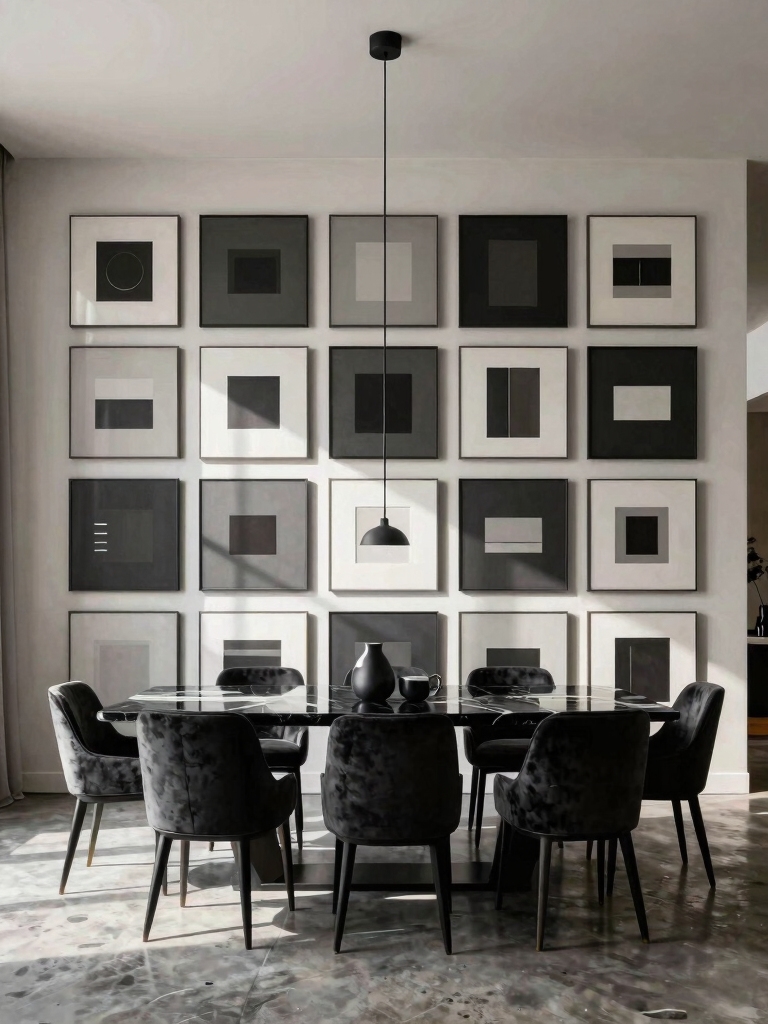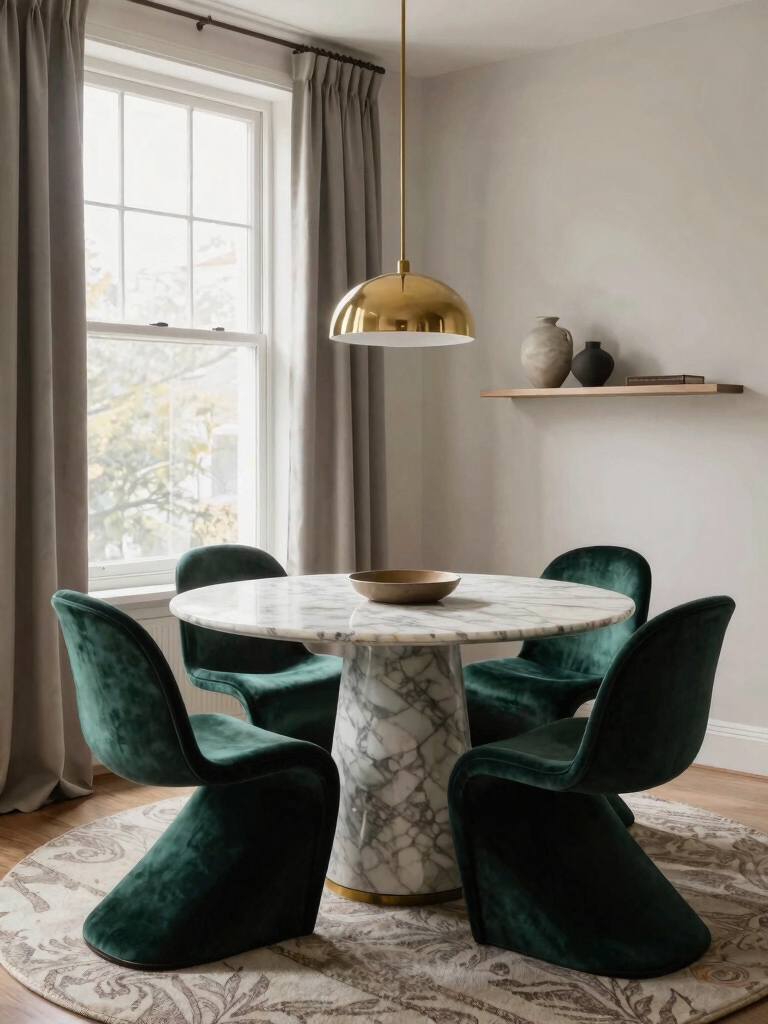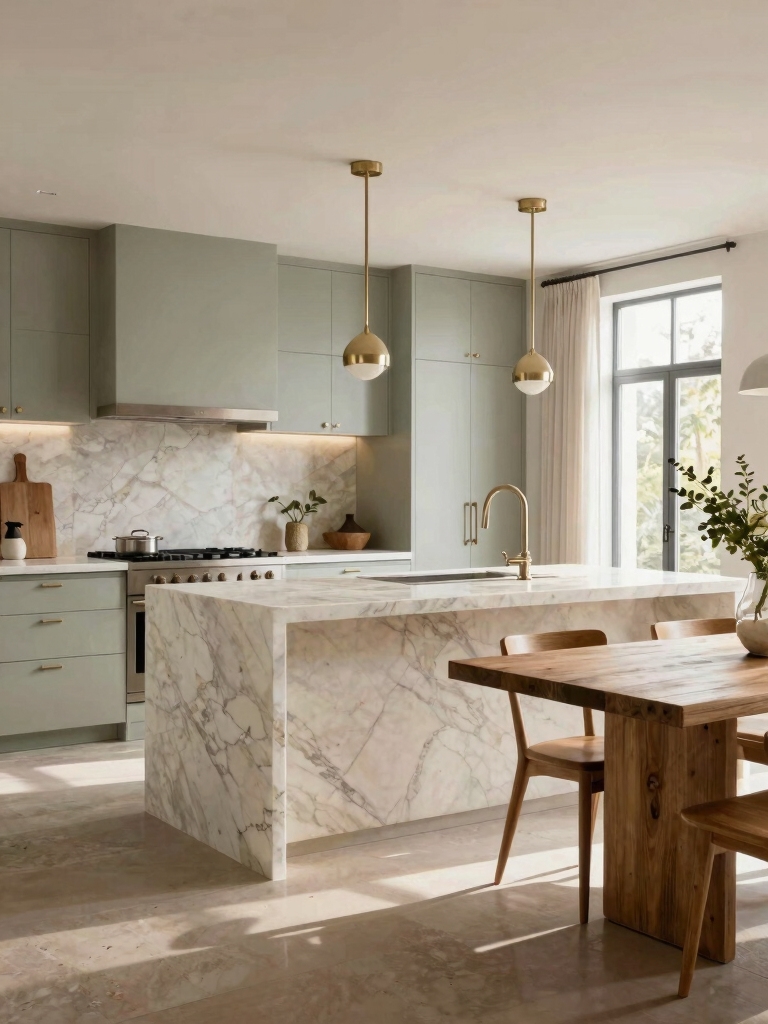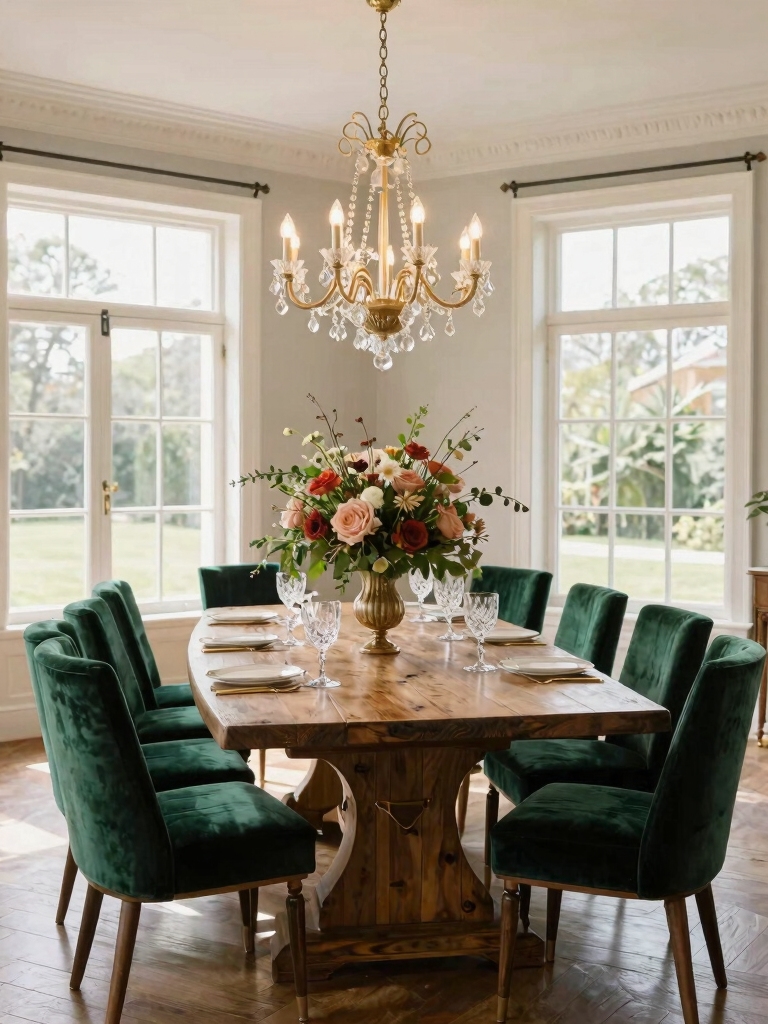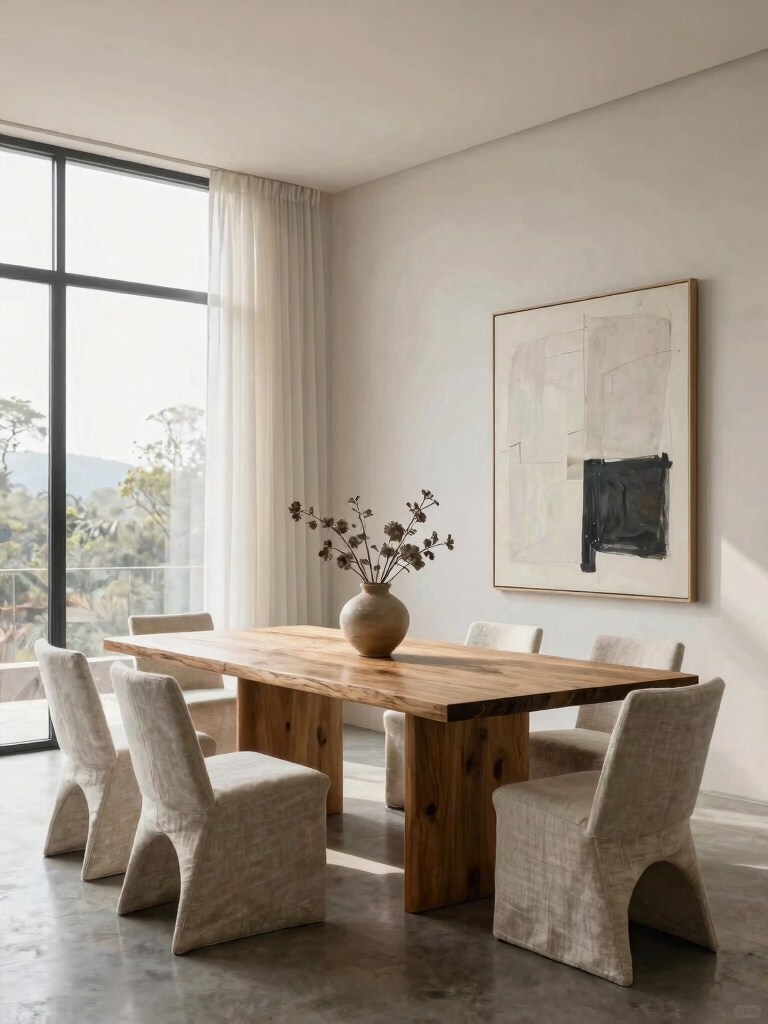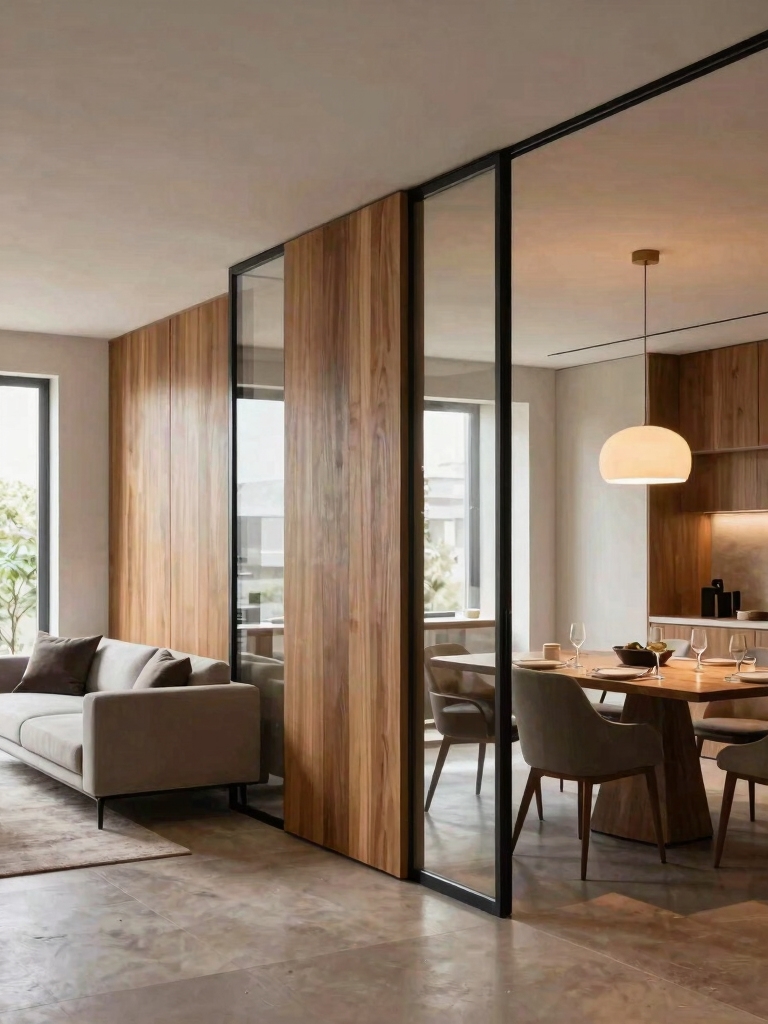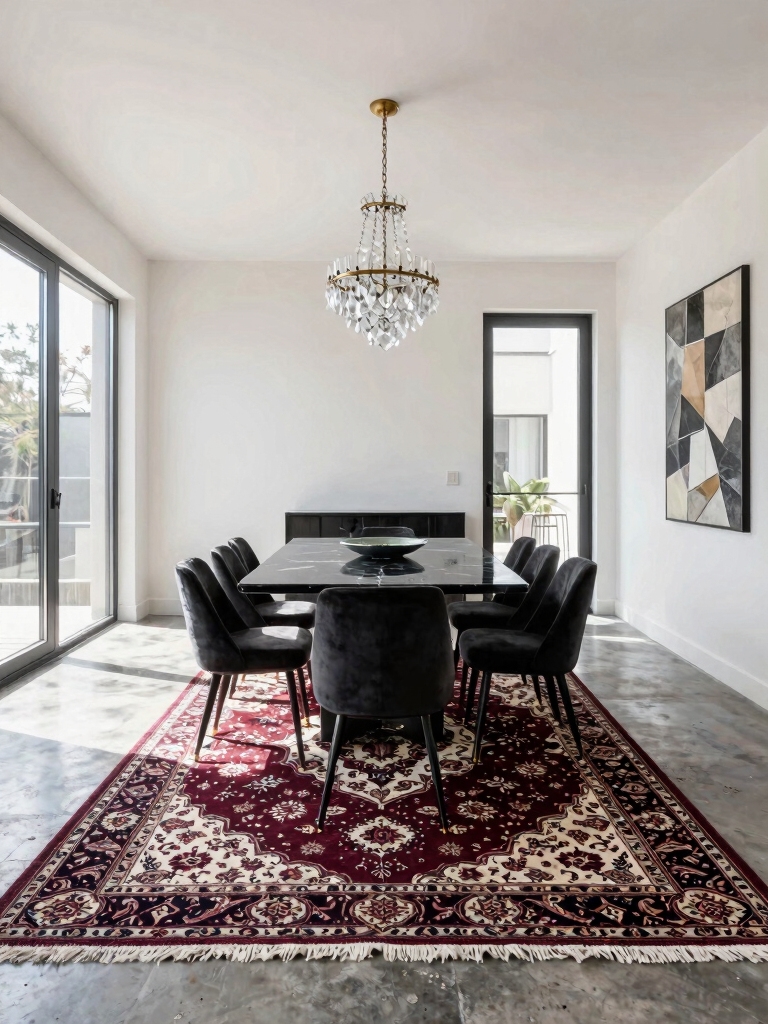
First, I match my rug’s shape and size to my table, ensuring it extends beyond it. A durable, low-pile material like wool or polypropylene in a neutral hue or forgiving pattern handles spills beautifully. I often pick a color that echoes my room’s accents to tie everything together. These simple choices truly define my dining space, and I’ve got more smart ideas to share if you’re curious.
The Golden Rule: Perfect Rug Size & Shape
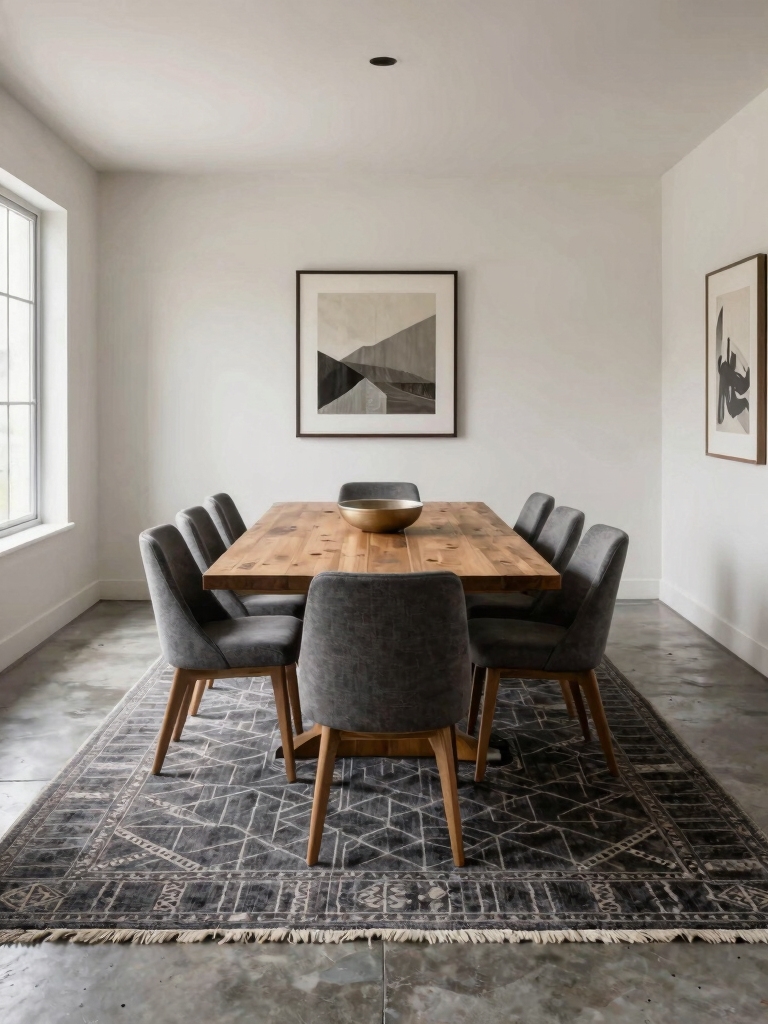
Choosing the right size and shape for your dining room rug is our most essential first step.
I always guarantee the rug extends 24-30 inches beyond my table on all sides. This keeps chairs stable when pulled out.
I match the rug’s shape to my table—a rectangle for a rectangle, a circle for a circle.
It’s a simple rule that frames the space perfectly without a huge investment.
For large dining rooms, consider filling the space with purpose by selecting a rug that complements both the table and the room’s layout.
Timeless Texture: A Large Neutral Wool Rug
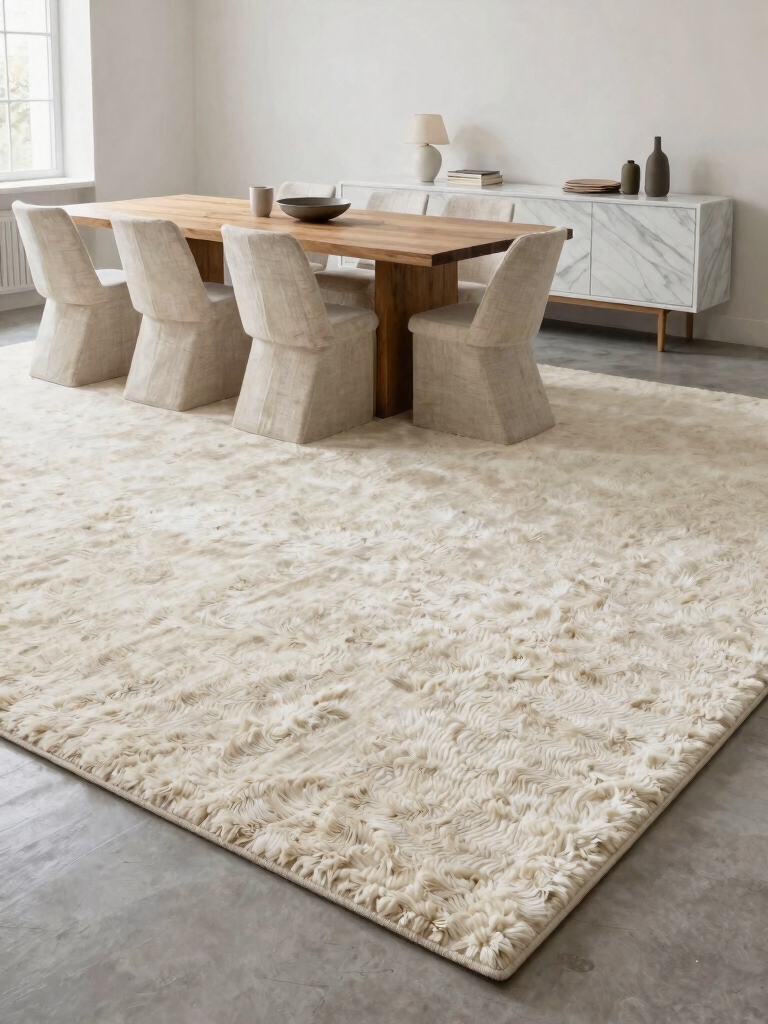
After you’ve nailed the perfect size and shape, I find that a large neutral wool rug anchors my dining room with timeless texture.
Its natural durability handles chair movement beautifully. I recommend a low-pile, solid hue—like ivory, oatmeal, or taupe—to add warmth without competing with other decor.
This choice creates a classic foundation that’s surprisingly practical and lets your tableware and gatherings shine.
Incorporating elements that elevate the whole space can make even small dining rooms feel inviting and well-designed.
Define a Long Room: The Patterned Runner
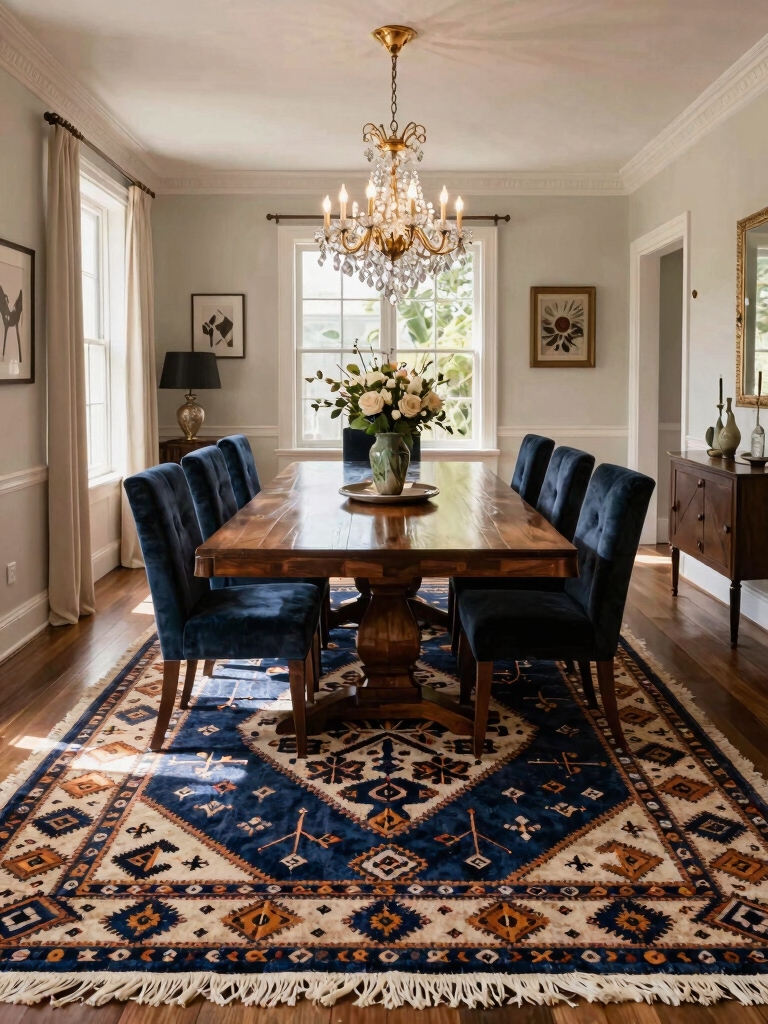
If you’ve got a long, narrow dining space, a patterned runner can anchor it perfectly.
I want to help you select the right size and a pattern that fits your vibe without breaking the bank.
We’ll also look at smart placement tips to make sure your runner defines the room beautifully.
Using a runner is also a great way to maximize your small dining room for entertaining guests without overcrowding the space.
Choosing The Right Size
For a long, narrow dining room that can feel more like a hallway, a patterned runner is your secret weapon to define the space.
I always choose a runner that leaves eighteen inches of floor visible on each long side; this frames it perfectly. Make certain it runs the room’s full length, stopping just short of the far wall.
That simple proportion creates a grounded, intentional path for your table.
Pattern And Color Selection
How should you choose a pattern for this defining runner? I treat it as a graphic element to anchor my space without a major renovation. A bold pattern can define zones in a long room beautifully.
- Pick a classic motif, like a stripe or trellis, for timeless appeal.
- Use darker hues or contrasts to ground lighter furniture.
- Coordinate a color with your existing drapes or art.
- Consider a flat-weave for easy cleaning and a lower cost.
Runner Rug Placement Tips
Think of your patterned runner as a design superpower that can visually correct a long, narrow dining room’s proportions.
I place it centrally under the table lengthwise. This draws the eye across the room, creating a wider feel.
Leave equal floor space on each long side—about six to twelve inches.
It’s an instant layout correction that’s stylish and totally achievable on a budget.
Bold Foundation: Graphic Moroccan Berber Rugs
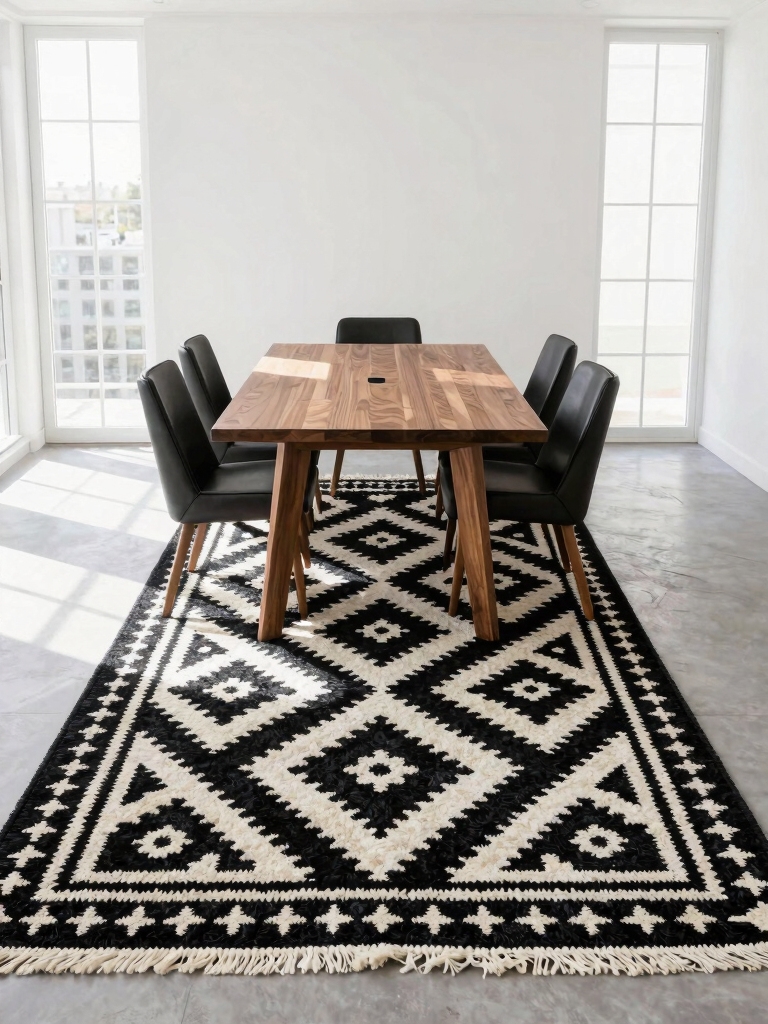
I love a Moroccan Berber rug’s authentic hand-knotted craftsmanship for its lasting quality.
Its striking geometric patterns instantly anchor a space, especially in an open floor plan where you need a clear focal point.
You can find budget-friendly versions that still give you that modern-classic look.
Many budget-friendly decorating ideas show that you don’t have to spend a lot to create a stylish and inviting space with affordable accents.
Authentic Hand-Knotted Craftsmanship
While it might seem like a splurge, investing in an authentic, hand-knotted Moroccan Berber rug actually lays a budget-friendly, bold foundation for years.
I love that its durability means I won’t need to replace it. Its timeless quality becomes a signature piece I can build my decor around.
Consider these points when you’re looking:
- Each knot is a small piece of artisanal history.
- The wool naturally resists stains and wear.
- Its structure provides lasting, day-to-day comfort.
- You’re investing in a piece that tells a story.
Striking Geometric Patterns And Motifs
Stepping into the domain of graphic Moroccan Berber rugs, you’ll find that their striking geometric patterns and motifs create an instant focal point.
I love how they’re a budget-conscious shortcut to high style. Their clean lines and bold diamonds feel modern yet timeless, anchoring a dining space effortlessly.
You can DIY your whole room’s vibe around one. They’re graphic art for your floor, turning a simple meal into a stylish event.
Perfect For Open Floor Plans
Because an open floor plan demands a bold foundation, a graphic Moroccan Berber rug defines the dining area with clean, geometric authority.
I treat it as my floor plan’s anchor.
My top tips for making it work are:
- Choose a flat-weave style for easy chair movement.
- Layer it over a larger, neutral sisal for a custom look.
- Use its lines to align your table perfectly.
- Let its pattern inspire your accent colors.
Organic Feel: Natural Jute or Sisal Dining Rugs
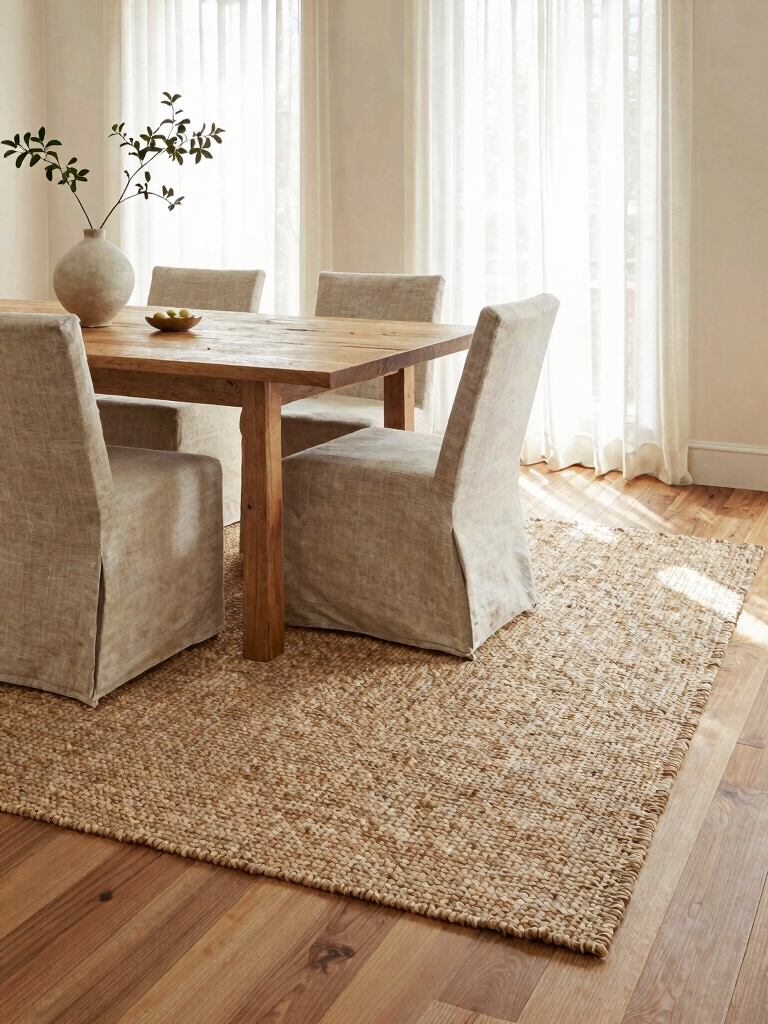
One excellent way to introduce an organic feel to your dining room is by choosing a natural jute or sisal rug.
I love their neutral tones for anchoring a space. These durable, plant-fiber rugs add wonderful texture and are surprisingly budget-friendly.
They create a relaxed yet sophisticated foundation that works with any decor.
Just remember, they’re best for low-spill areas due to their natural fibers.
Incorporating such budget-friendly options is a smart strategy for achieving elegant dining room decor on a budget.
Depth & Drama: Layering a Cowhide Over Jute
For a more dynamic look, I often layer a cowhide rug over a natural jute base. This trick instantly adds texture and a focal point without a huge investment.
- It’s surprisingly affordable.
- You protect the jute from chair scuffs.
- The hide tugs easily for vacuuming.
- Its unique shape breaks up rigid lines.
Refreshing your home with new decor can bring a fresh energy, making layering rugs a simple way to revitalize your space.
Ultimate Comfort: A Plush, High-Pile Shag Rug
Nothing transforms a room’s comfort level like sinking your toes into a plush, high-pile shag rug.
I love how its luxurious texture adds instant warmth and a modern-classic feel.
For a budget-friendly, DIY update, choose a durable synthetic fiber in a neutral tone.
Just make sure it’s large enough so your dining chairs stay firmly on top, even when pushed back.
It’s an effortless way to elevate everyday meals.
Adding cozy living room decor elements can inspire similar comfort in your dining area, creating a seamless and inviting atmosphere with cozy home decor ideas.
Spill-Proof Style: Practical Indoor-Outdoor Rugs
I’m turning to practical indoor-outdoor rugs because their easy-care materials handle spills without stress.
You’ll find their resilient design stands up to daily wear while staying budget-friendly.
I also love how their durable colors and patterns offer a modern-classic look that’s perfect for DIY updates.
Plus, these rugs provide smart and stylish laundry room solutions that enhance the functionality and aesthetic of any space.
Easy-Care Material Choices
If you want a dining room rug that can handle everyday life, spill-proof indoor-outdoor materials are a practical choice.
I love that they’re easy to clean, making them perfect for a busy household.
My top picks for their durability and affordability are:
- Polypropylene: stain-resistant and budget-friendly.
- Polyester: soft, vibrant colors, great for spills.
- Nylon: tough, fade-resistant for high traffic.
- PET Fibers: recycled, eco-conscious and sturdy.
Resilient Design Benefits
Beyond lasting materials, these rugs feature tightly woven, low-pile designs that make cleanup effortless and prevent liquid from soaking in.
I love that this resilient construction resists stains and mildew, which is perfect for busy dining areas.
It’s a smart, budget-conscious choice that gives you a classic look without the high-maintenance worry.
You can easily spot-clean most messes, keeping your space fresh with minimal DIY effort.
Durable Color And Pattern
Since you’ll want a rug that hides everyday wear while complementing your decor, consider durable colors and patterns designed for active dining spaces.
I look for indoor-outdoor rugs with forgiving designs.
- Choose a medium-toned base color to camouflage crumbs and dust.
- Opt for tight, multi-color patterns that disguise small stains.
- Pick classic geometrics or stripes for lasting style.
- Select synthetic materials that guarantee vibrant, fade-resistant prints.
Frame a Round Table: The Circular Dining Rug
Let’s look at how a circular rug perfectly frames your round dining table. This classic shape echoes the table’s form, creating a cohesive focal point.
I find it softens a room’s geometry for a welcoming feel. You don’t need a high-cost designer piece; a simple, well-proportioned circle will anchor your space beautifully.
Guarantee it extends at least 24 inches beyond the table for pulled-back chairs.
Incorporating thoughtful dining room ideas can truly elevate every meal and transform your space into a memorable setting.
Easy-Clean Choice: Low-Maintenance Flatweave
While the softness of a round rug is lovely, I also appreciate a practical option that simplifies life.
A low-pile flatweave is my easy-clean hero for a busy dining space. The benefits are clear:
- They effortlessly hide crumbs and daily dust.
- Most are thin enough to vacuum without adjusting height.
- Many are machine-washable—a lifesaver for spills.
- You’ll find affordable, durable styles that look timeless.
For those with limited space, incorporating clever solutions can maximize the functionality of your dining area without overcrowding.
Collected Charm: An Antique Oriental Statement
An antique Oriental rug can bring a profound sense of warmth and history that’s difficult to replicate.
I love how its rich colors and intricate patterns instantly ground a modern dining space. You don’t need a museum piece; hunt for a smaller, worn rug at estate sales.
Layer it over a neutral jute for a bigger look. Its character hides life’s little spills beautifully, making it a practical heirloom.
Light & Airy: Brightening With a Light-Colored Rug
Second, if you’re craving a brighter, more expansive feel, a light-colored rug can transform your dining room.
I love how it bounces light around, making the whole space feel larger and more open.
For a modern-classic look that’s easy on your budget, consider these options:
- A simple, textural jute or sisal.
- A washable, low-pile cotton rug.
- A vintage-inspired ivory medallion design.
- A flat-weave wool in pale grey or beige.
Color Unifier: Picking Up Your Accent Hues
I love how a rug can tie my room together by repeating a key accent hue.
I often match my palette tones by selecting a rug that echoes a color from my curtains or art.
This coordinated echo creates a unified look that feels intentional without costing a fortune.
Hue Repetition Technique
If you want your dining room to feel cohesive, try repeating your accent hues throughout the rug’s design. This technique visually ties your entire space together.
- Pull a color from your favorite artwork.
- Echo the trim from your curtains.
- Match your chair’s cushion fabric.
- Use the tone from a central light fixture.
It’s a simple, cost-effective way to create a modern-classic look that feels intentional.
Matching Palette Tones
While we just looked at repeating specific accent colors, truly unifying your dining room means considering the full tone of your palette.
Your rug should pick up on the overall warmth or coolness of your existing furniture and walls. You don’t need a perfect match—just a complementary shade.
This creates a cohesive, layered look that feels intentional, not just decorated.
Coordinated Color Echo
A coordinated color echo cleverly unifies a room. I use it to pull a hue from my curtains or art into a rug, creating a cohesive feel without matching everything perfectly.
- Spot an accent color in your pillows.
- Find a rug with that same tone.
- Let it be a subtle, not exact, match.
- Watch the whole space feel intentionally designed.
Durability Decoded: Materials That Handle Life
When spills, pets, and everyday traffic define your dining room life, you want a rug built to withstand it all.
I always choose synthetics like polypropylene; they’re stain-resistant and easy to clean on a budget. For a natural option, wool is wonderfully durable and classic.
Just avoid delicate materials like silk or jute in this high-traffic zone, and you’ll have a beautiful, practical foundation for years.
Conclusion
I always thought a rug was just decor. But according to a recent survey, over 60% of people say a dining rug makes a room feel more “finished.” That’s my goal: a foundation that ties everything together. Whether you splurge on a vintage piece or score a durable flatweave, the right rug truly defines the heart of your home, beautifully and practically.